Namkha: a path to harmony and spiritual well-being

In our journey of spiritual growth and well-being, we often seek practices that bring harmony and balance to our lives. Namkha, a profound tool rooted in Tibetan Astrology, holds a key to unlocking the healing power within us. A wisdom gift of the ancient Tibetan world, Namkha can help us achieve inner harmony, promote well-being, and foster spiritual growth that we seek in our modern lives.

Discovering Namkha and the Five Elements

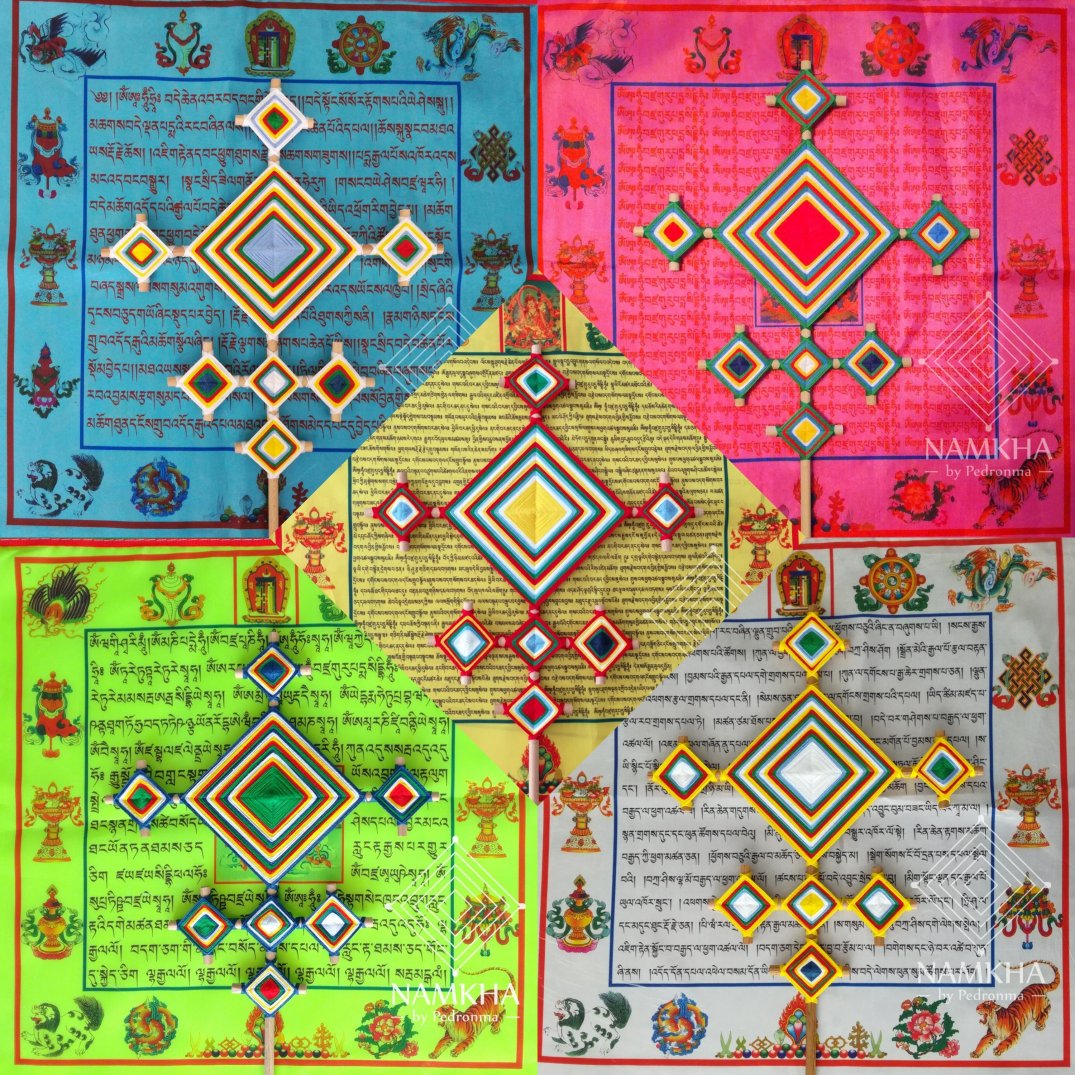
Namkha is a sacred practice that harmonizes the Five Elements—Wood, Fire, Earth, Metal, and Water—within our energetic makeup, as guided by Tibetan Astrology. These elements represent different aspects of our being, and imbalances between them can manifest as physical, emotional, and spiritual dis-ease. Harmonization is achieved through Namkha by following a specific, sacred method of contruction and empowerment by a dedicated and authorised practitioner. When empowered by mantras and meditation, a well-constructed Namkha functions to harmonize any conflict within the energetic pattern of the individual, bringing immediate and long-term benefit.

Unlocking the Healing Power

Namkha’s healing power transcends the physical realm. It operates on the energetic level, addressing the underlying causes of disharmony before they manifest as physical ailments. By harmonizing the conflicting elements within our energetic pattern, Namkha helps restore balance and promotes well-being on a profound level.

Namkha’s transformative influence extends beyond physical healing. It positively impacts our mental and emotional well-being, guiding us toward inner peace and harmony. By harmonizing the energetic aspects of our lives, Namkha paves the way for spiritual growth and nurtures our connection to the divine.

By embracing Namkha and its healing power, we embark on a transformative journey toward spiritual well-being and harmony. Namkha offers us a profound opportunity to explore the interconnectedness of our being, fostering a deep sense of balance and unity within ourselves and the world around us.

If you’re interested in diving deeper into the practical aspects of Namkha calculation and its harmonizing function, further resources are available on this website for you to explore, namely:

Namkha Explained

How Namkha Heals

Start reaping the benefits of the profound and powerful practice of Namkha and commission your own personal namkha now.

Tribute to Thrangu Rinpoche

I was saddened to hear of the passing of the beloved Khenchen Thrangu Rinpoche.

I happened to see Rinpoche during his visit in London in the early 2000s, when I was still very new to Buddhism.

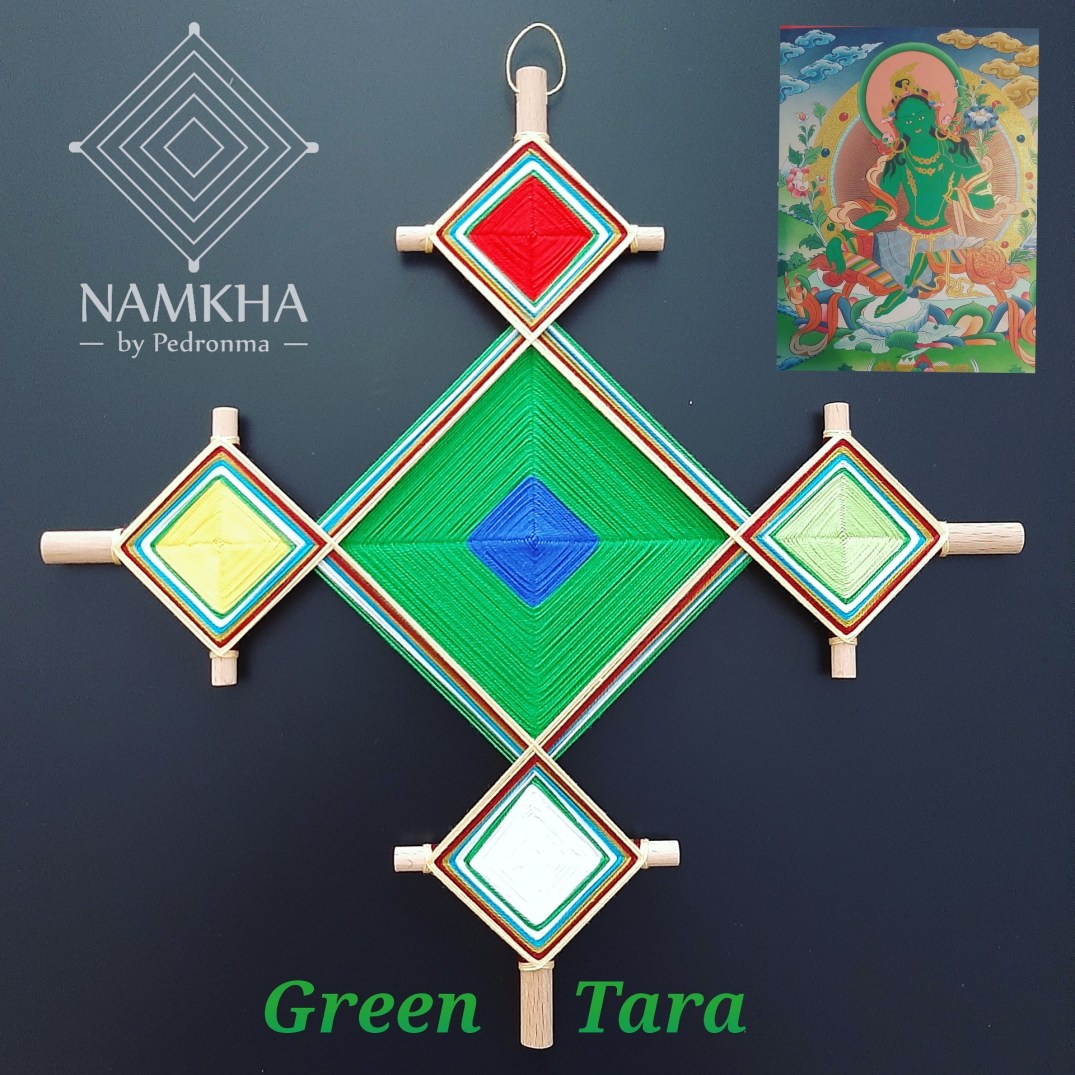
After my eye-opening trip to Tibet and Nepal in 2006, I started to mingle with the London sanghas at Rigpa, Palyul and Kagyu Samye. It was at the Kagyu Samye Dzong, which I was frequenting, when Thrangu Rinpoche visited. Althought I was only just becoming familiar with Tibetan Buddhism, my devotion was strong, and I was able to receive my very first empowerment from Rinpoche, the lovely Green Tara, and consequetly took part in the 24-hour Green Tara puja held at the London temple. My later visit to the beautiful Namo Buddha monastery of Thrangu Rinpoche in Nepal was another powerful experience full of blessings and inspiration.

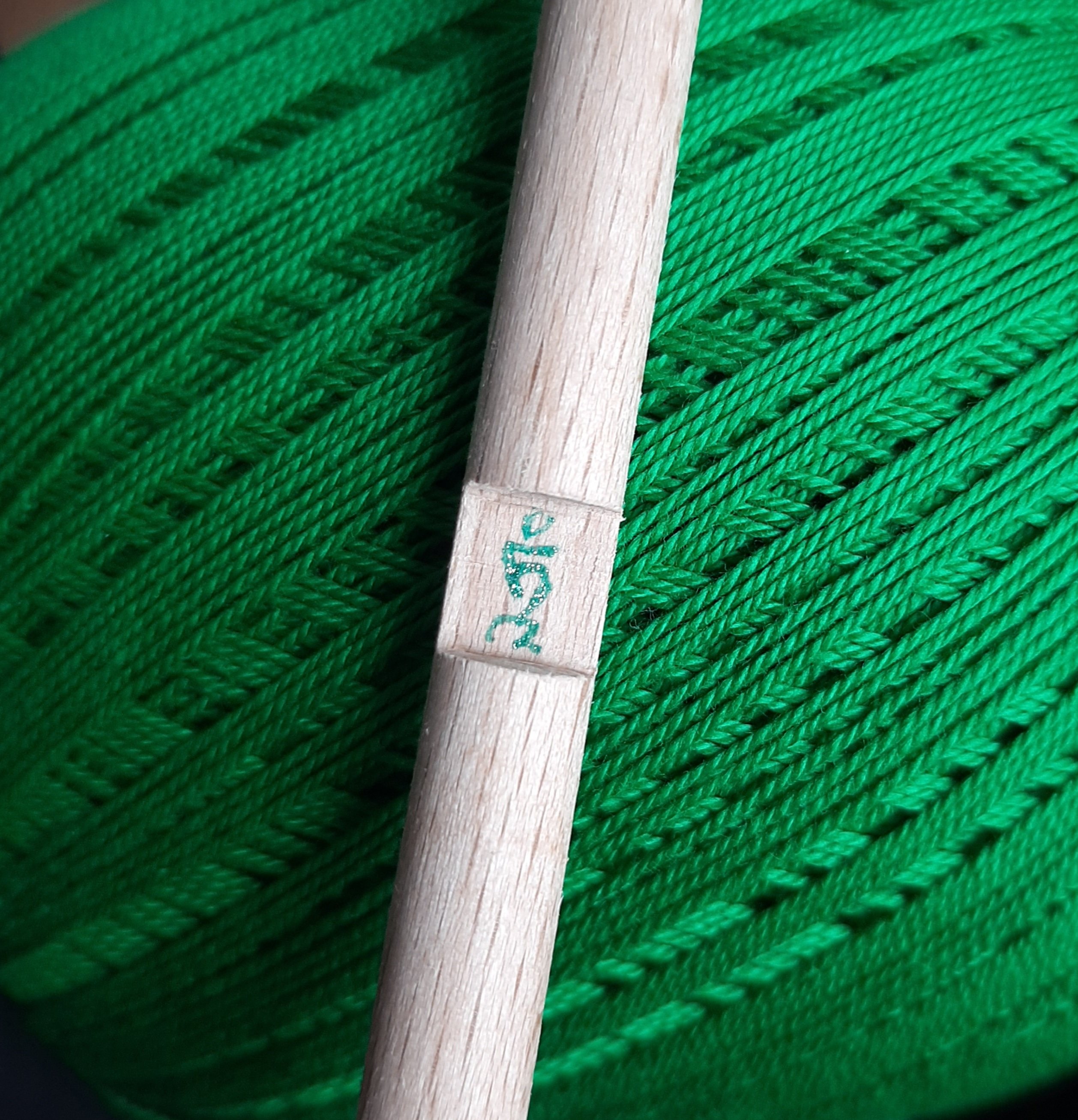
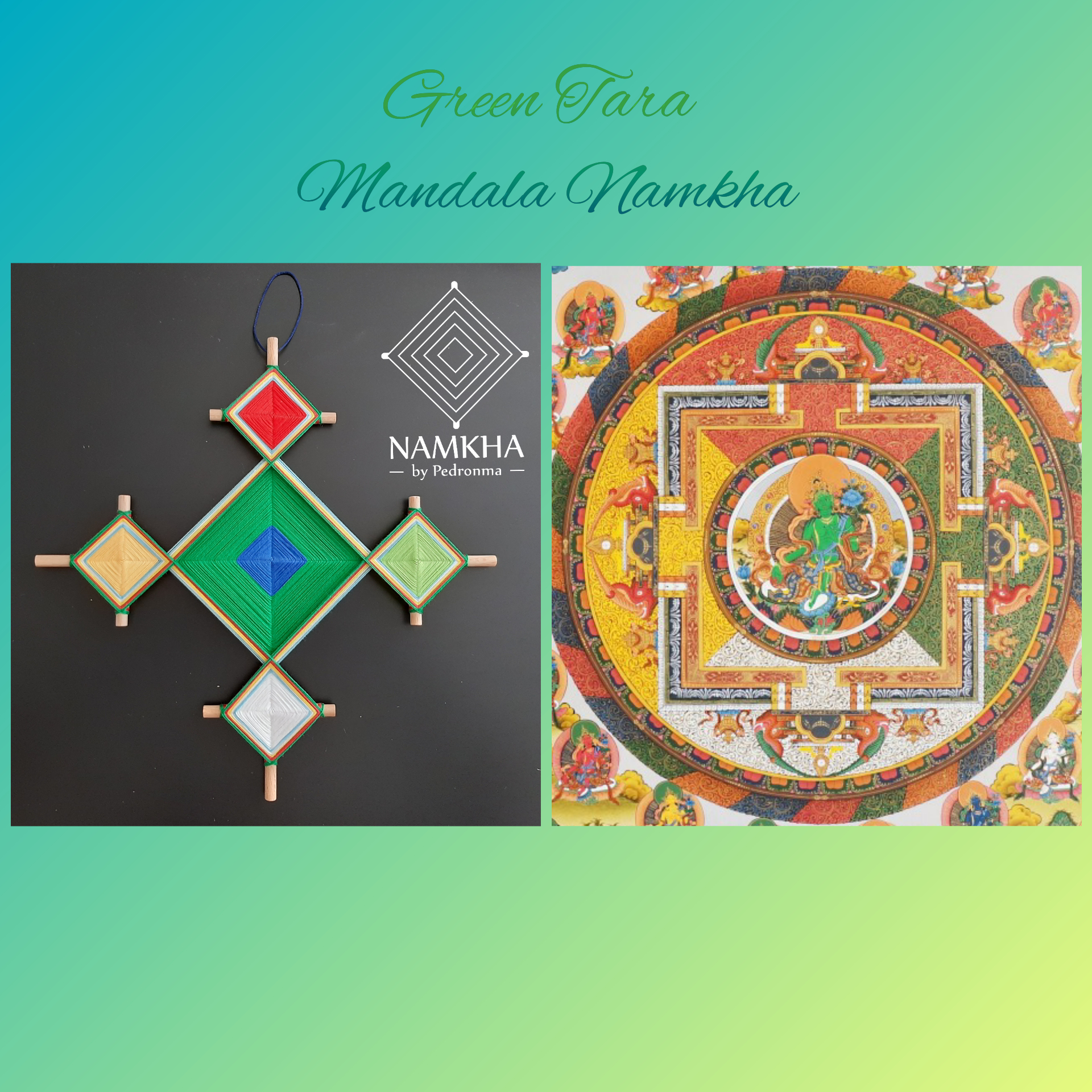
Although I eventually settled as a nyingmapa, the kagyu schools have always been close to my heart in many ways. The Green Tara empowerment of Thrangu Rinpoche is something I actualize through my practice of Green Tara Mandala Namkha. Thanks to Rinpoche’s blessings and inspiration, the manifestation of Green Tara in the form of a Namkha has benefited many people around the world. I am forever grateful to Thrangu Rinpoche for setting this in motion.

The 49 days of the Guru’s passing is a special period for students to mingle with the teacher’s unbounded enlightened mind, pray for his swift rebirth and actualize his teachings. I’m honouring Thrangu Rinpoche at this time by creating Green Tara Namkha during this time. I invite you to request a namkha made at this time for special blessings.

Namkha to balance Water Rabbit year 2023

As an astrological remedy, Harmonizing Namkha is prescribed as a way to harmonize conflicting aspects within your astrological pattern, according to Tibetan Astrology. But Namkha also has the important function to dispell the unfavourable influence of the current year. The Water Rabbit (or Hare) year of 2023 may be a perilous year for many birth-years, to lesser or greater extend.

KEG – YEAR OF THE RETURNING ANIMAL

First of all, those born in the Rabbit year are going to experience an unfavourable year. If you are born a Rabbit, this is the year of the returning animal (Tib. keg) for you. Based on the Tibetan calendar, the Rabbit year influence lasts from February 21, 2023 to February 9, 2024. In the Chinese calendar, the period is January 22, 2023 – February 9, 2024. If you are celebrating 60th birthday in that period, you were born in Water Hare year of the previous metreng (i.e. 60-year astrological cycle) and this year is particularly unfavourable. It also goes for those celebrating their 84th, 72th, 48th, 36th, 24th, and 12th birthday in that period.

DUNSUR – YEAR OF OPPOSITE ANIMAL

Bird (Rooster) is the opposite sign to Rabbit, and this is also considered unfavourable. This includes those celebrating their 78th, 66th, 42nd, 30th, 18th, and 6th birthday.

BABY BORN IN WATER HARE

Any new baby would be so lucky to get equipped with a Namkha! In fact, there are a few babies in the world now who have had their namkha made for them at birth, benefitting from having their pattern harmonized from the very start. It has been most satisfying for me to be able to serve them and their families in that way, and I highly recommend a Namkha for your baby or child.

If you are interested in harmonizing the influence of your birth-year, please get in touch.

Place your request by end of 2022 for Water Rabbit year Namkha.

Clean your Namkha today

Dear Namkha Owners,

The New Tibetan year of Male Water Tiger begins on Thursday, March 3, 2022. In the two days in the run-up, cleansing rituals and practices are performed by Tibetan Buddhists to remove inauspiciousness and avert all obstacles of the previous year, in preparation for welcoming in the new year. 

This is also the perfect time to tend to your Namkha. If you’ve had your namkha for a while, you may find it has gathered some dust.

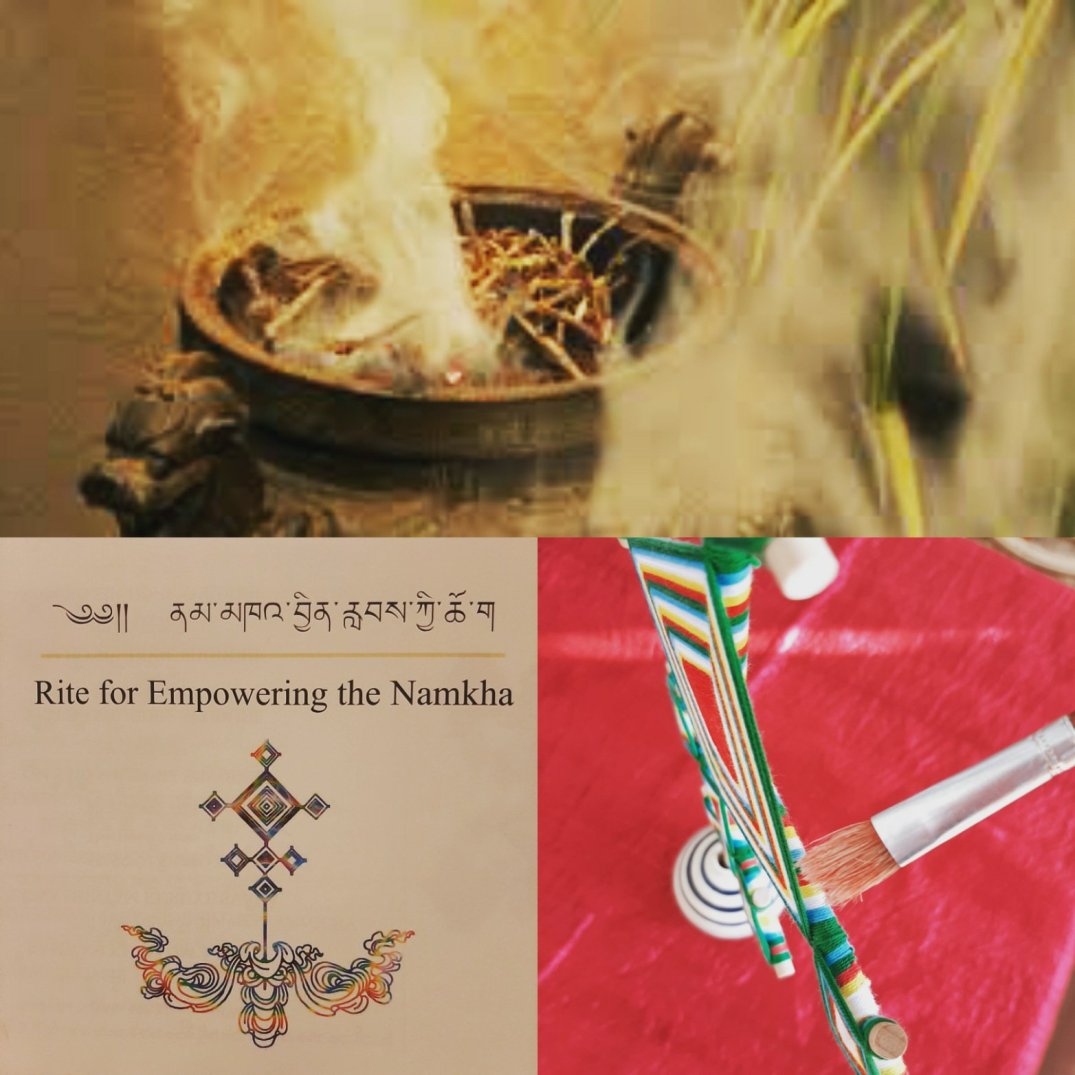
Practitioners with the transmission will, of course, perform the complete Rite for the Empowering the Namkha. But even if you cannot do this, there is an important treatment you should give your namkha as part of keeping it for life. A regular revitalization ensures your namkha remains functional and powerful.

Although Namkha is quite delicate, don’t be afraid to run a brush over it and give it a gentle tap.

To start, get a brush. No special instrument is necessary. An ordinary, soft painint brush from any store will do, as long as it’s new and unused. Take the namkha from its container and start by removing dust from the horizontal areas of your namkha with a gentle stroking motion away from the Namkha. What a satisfying feeling to see the dust particles fly away into the air! I prefer doing this outdoors. You can go on and stroke your namkha gently around any area where dust may be visible. Finally, you may give the Namkha a gentle tap against your palm: If you are right-handed, hold your namkha by its handle with your right hand facing away from you. Hold your left hand open flat and tap the face of your namkha against the outstretched palm. The gentle tap on the soft flat surface will not damage your namkha, but the force of the motion will help remove any dust particles from within the weave.

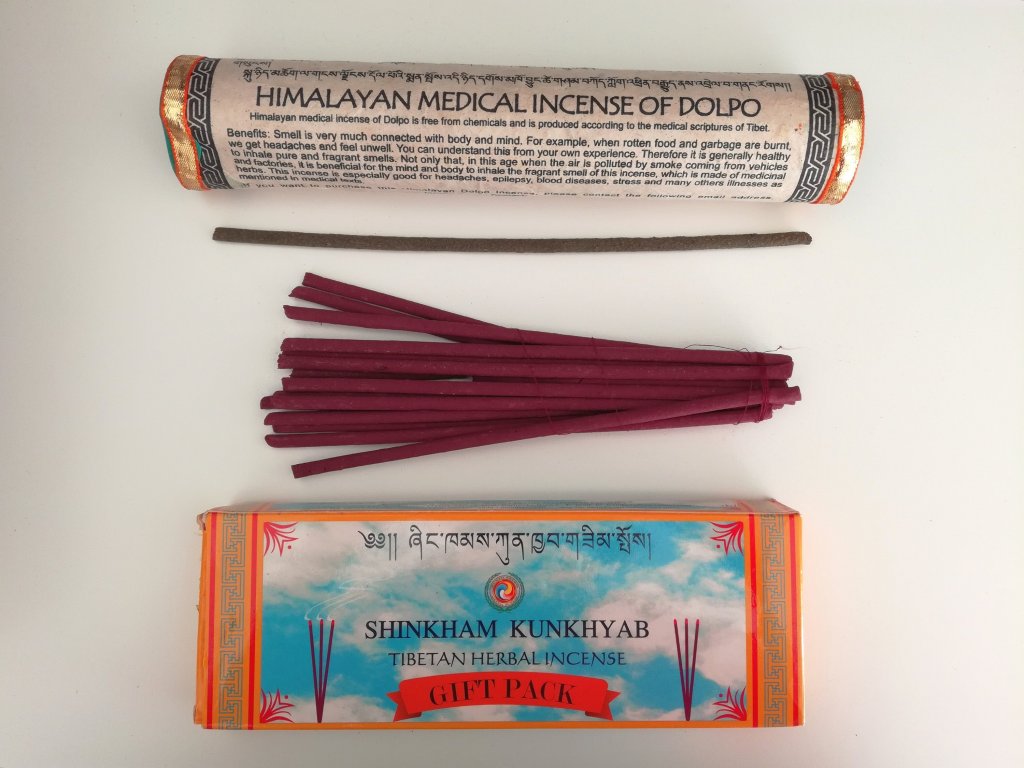
The next step is to purify and revive your namkha after the gross impurities have been removed. Use pure Tibetan medicinal incense that has been prepared according to recipes in the sacred texts, or burn pure plants and herbs like juniper, sage or lavender. Run your namkha through the smoke, making sure to maintain a safe distance from the fire. You don’t have to smoke your namkha, just run it thought the smoke there and back a few times. You can chant the Namkha mantra or any purification mantra that you can.

You can finish by cleaning the namkha’s container. If you keep your namkha in a vase with raw rice or sand to keep it upright, this is the time to change the contents and wash the vase.

This way, your namkha will be in optimal shape to keep serving you for another year.

It is recommended to tend to your namkha at least once a year and Losar is the best time. You are welcome to do this whenever and as often as you find necessary, though.

If you have had your namkha for a while and you feel it needs a complete revival, you can send it to me for consecration.

Please contact me if you have any questions.

Best wishes to you in the New Year of Male Water Tiger. May your Namkha bring you perfect harmony with all its beneficial results!

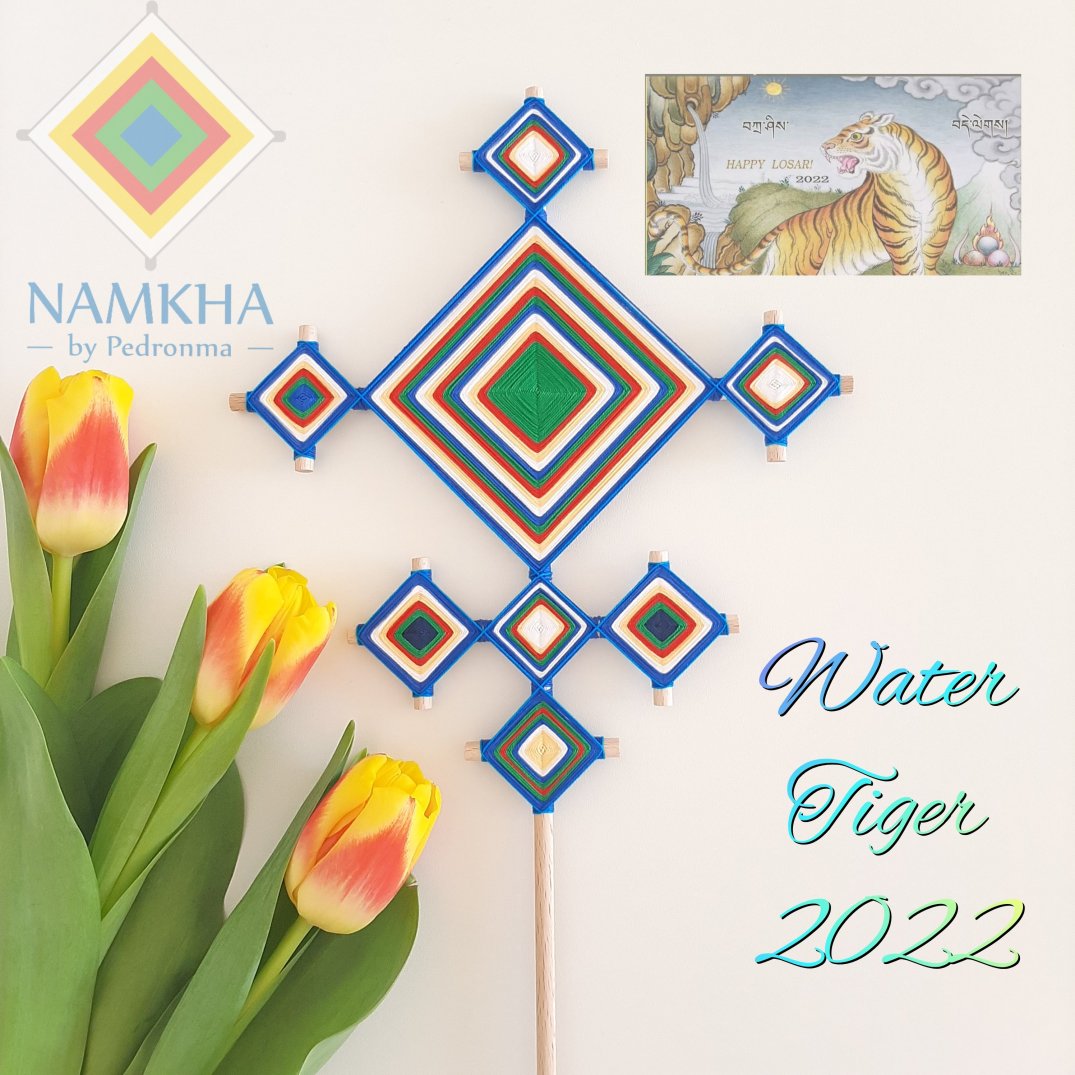
Namkha to balance Water Tiger 2022

As an astrological remedy, Harmonizing Namkha is prescribed as a way to harmonize conflicting aspects within your astrological pattern, according to Tibetan Astrology. But Namkha also has the important function to dispell the unfavourable influence of the current year. This year, Water Tiger may be a perilous year for many birth-years, to lesser or greater extend.

Keg – year of the returning animal

First of all, those born in the Tiger year are going to experience an unfavourable year. Tiger is the year of the returning animal (keg) for you. The Tiger year influence lasts between March 3, 2022 to February 21, 2022. If you are celebrating 60th birthday in that period, you were born in Water Tiger year of the previous metreng and the year is particularly unfavourable. It goes for those celebrating their 84th, 72th, 48th, 36th, 24th, and 12th birthday, as well.

Dunsur – year of opposite animal

Monkey is the opposite sign to Tiger, and this is also considered unfavourable. This includes those celebrating their 78th, 66th, 42nd, 30th, 18th, and 6th birthday.

Baby born in Metal Tiger

Any new baby would be so lucky to get equipped with a Namkha! In fact, there are a few babies in the world now who have had their namkha made for them at birth, benefitting from having their pattern harmonized from the very start. It has been most satisfying for me to be able to serve them in that way, and I highly recommend a Namkha for you baby or child.

If you are interested in harmonizing the influence of your birth-year, please get in touch.

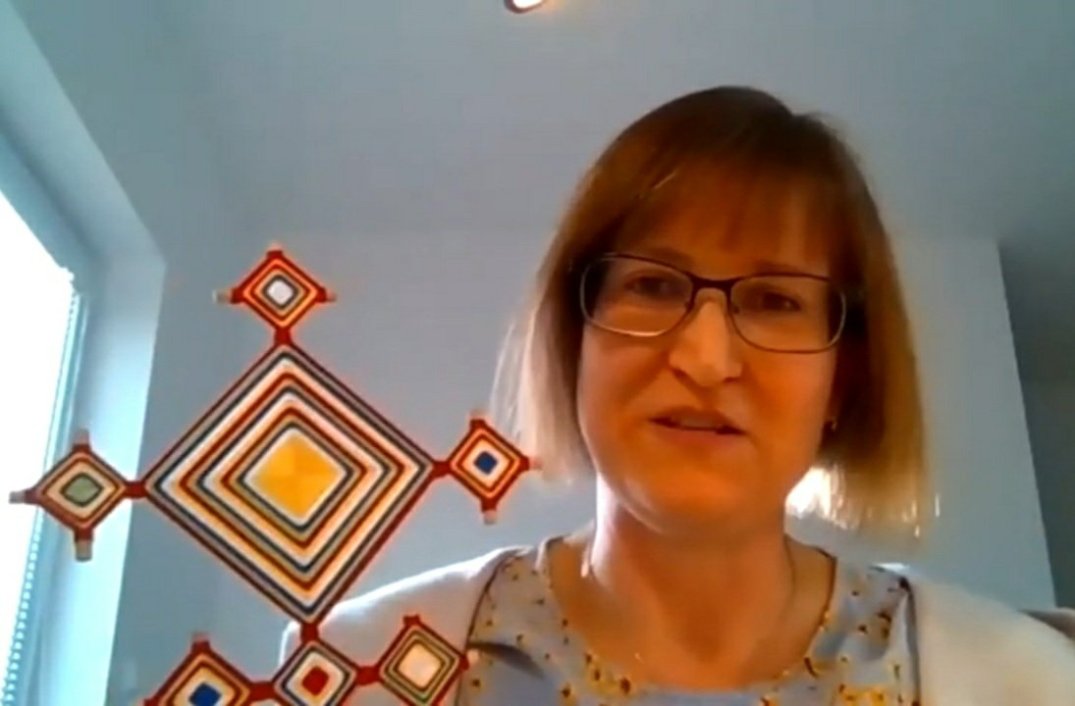
Zoom Namkha presentation

UPDATE: Recording is now available

I would like to invite Namkha supporters and friends to my presentation.

February 19, 2022 10am Philadelphia, 16:00 Prague

It’s an honour to have been approached to talk about Namkha to the sangha of the Chenrezig Tibetan Buddhist Center of Philadelphia. I thank the director, the illustrious Lama Losang, and Jen for the invitation in appreciation and support of Namkha and my practice.

I would like to extend this invitation to my friends. Please, fill in the RSVP to receive the Zoom link, and I look forward to meeting you there on February 19 10am EST, 16:00 CET

Zoom link and information: https://www.tibetanbuddhist.org/event-details/namkha-presentation-by-pedronma

Benefits of Namkha

Namkhai Norbu’s Namkha is a Tibetan Buddhist practice based on an ancient Tibetan ritual practice and Bön heritage. Namkha means

  • the precise method to calculate the pattern based on Tibetan Astrology,
  • the method of construction,
  • and the consecration ritual with meditation and mantras.

Sacred and functional

Namkha is a mind terma of Chogyal Namkhai Norbu Rinpoche, an enlightened master. Namkha is an authentic Buddhist tradition imbued with blessings of Buddha. Your namkha is made with care in the authentic way by an authorised practitioner. The blessing stream of the lineage is intact, so you can trust you are getting a functional, sacred object.

Astrological remedy

Namkha is a sacred object created for you personally to harmonizes conflicts in the Sog, Lu, Wangthang, Lungta, La and the Mewa and Parkha, according to Tibetan and Chinese Astrology, as well as conflicts deriving from astrological influences of the current year. There are always imbalances in every person’s chart, and your astrologer will tell you about yours. Namkha is one of the most effective ways available to harmonize it.

Merit

Namkha is beneficial for you and everyone because it is a source of merit. Especially if you are a Buddhist practitioner, you understand about accumulating merit that you can dedicate. 

Namkha for everyone

Namkha is not only for Buddhists, shamans, meditators or astrologers. The great thing about Namkha is that although it is hard to come by and make, once you have it, it will work for you for the rest of your life without much engagement on your part. It only needs to be treated with respect as a sacred object. Everyone should have their namkha. The more we harmonize our own energies, the more harmonized the world will be. Feel free to gift a namkha to your loved ones.

Namkha not only for persons

Namkha can also be created for anything with a starting date. It is often advised for new ventures, relationships, weddings, business, project etc. to harmonize any obstacles that can derive from astrological conflicts.

Read more about How Namkha Heals and Namkha Explained

More about Namkha

More about my work

For consultation / commission, contact me

Namkha goes to Bhutan

The Bhutanese Buddhism blogger Phub Dorji Wang contacted me about commissioning a namkha. He graciously accepted the namkha as an offering from me for his public service in running his Dharma blog about Tibetan Buddhism and Bhutanese culture.

He wrote on his Facebook timeline in October 2019:

“Today I am very happy and truly blessed to receive a Harmonizing Namkha of my birth sign especially made for me by Madam Zuzana Čerňáková. She sent through a registered post from Czech Republic.

Namkha is a very special harmonizing and protection amulet for an individual. Bhutanese use Namkha intensively in various rituals ceremonies but the one use in amulets is not known since they are enclosed in stitched cloth.

Read more Testimonials

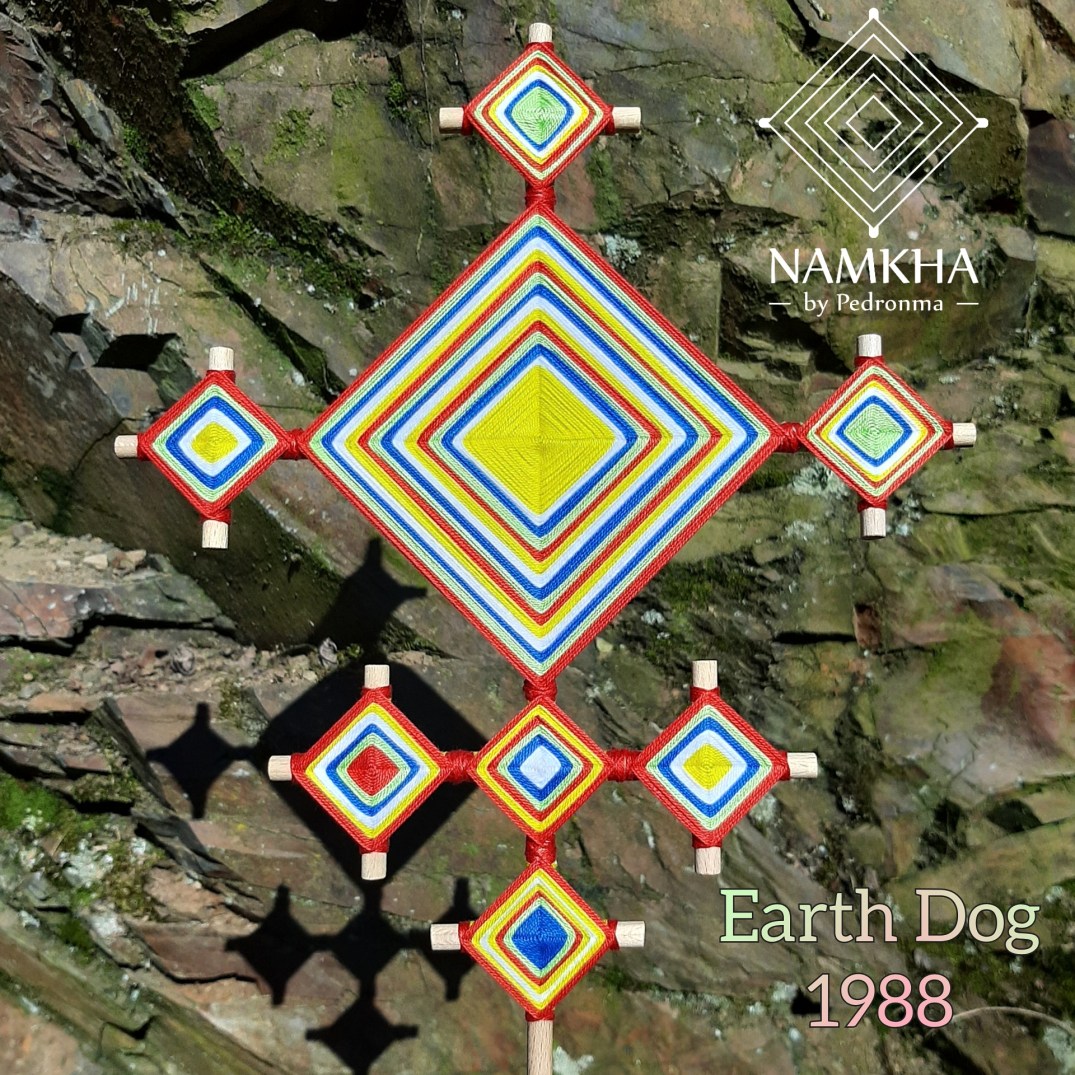
According to Madam Zuzana, she prepares the Namkha by writing the LAM seed syllable first at the central notch and yellow Earth rhombus is than formed. Harmonization bands are added as per calculation based on individual birth sign and element. Each colour is tied by a knot to the following one, the last one left hanging loose. In the end, when all rhombi are completed, the loose threads are joined by a single Harmonizing Thread, which also represents the LA aspects. LA is the 9th aspect of the Namkha – protection. Mine is a Fire and represented by the red thread that goes around the whole of Namkha. If the Namkha were to be unwound, you’d get a single unbroken thread.

She explained that the namkha of the birth year takes into consideration 8 aspects of the individual calculated on the basis of Element – Animal – Mewa number of the year of birth.

Each aspect is ruled by an element (green Wood, red Fire, yellow Earth, white Metal, blue Water). The central colors of the 8 rhombi represent the 8 aspects of the individual; the coloured bands around them are the “harmonization bands”. If the aspects around the central SOG aspect are in mother-son relationship with it, harmonization bands are wound in mother-son sequence. If they’re in friend-enemy relationship, the harmonization bands are in friend-enemy sequence, until harmonization between them is achieved.

According to her in my Namkha, the body, capacity, lungta and life mewa are in harmony – all happen to be Metal. Metal is in mother-son relationship with my Earth in SOG.
The only conflict to be harmonized is the Fire in Capacity Mewa against the Life Mewa. Otherwise all the other aspects in my pattern are in harmony. Great to know that.

Thank you so much

About Madam Zuzana Cernakova

Madam Zuzana Čerňáková has received the Namkha Rite from late His Holiness Chogyal Namkhai Norbu. She has been making and authenticating Harmonizing Namkhas precisely according to late Rinpoche’s method. She also undertook a personal Namkha retreat to connect with the practice. The result of the retreat fully convinced her of the power of the Namkha. She has been making namkhas tirelessly for her friends and family as well as to satisfy any requests that came from all around the world from both Rinpoche’s students and others feeling drawn to Namkha like me.

With the passing of His Holliness Namkhai Norbu last year she has further intensified the practice, to honour the master from whom she received this practice. She made around 50 namkhas in year 2018. Since the start of 2019 she continued making namkhas when requested, conduct research into the Namkha tradition and history, and expand her Namkha practice.

Apart from the specific Namkhai Norbu namkha, she also create namkhas based on other traditional designs from Tibet, both Bon and Buddhist. Tibetan shamanic namkha tradition has been around for centuries, may be even millennia. With the spread of Buddhism in Tibet from the 8th century, the woven thread cross became incorporated into Buddhist practice and to a certain degree still practiced today.

Her workshop bears the name Pedronma, a derivation of my Tibetan name Pema Drolma.
The woven mandalas she make incorporate the principles of the Buddhist Tantra, which means they are made with a particular activity in mind.

• Power Namkhas produce a specific power of action while they make a nice decoration.

• Medicine Buddha Namkha, for example, is empowered by mantras for powerful healing and protection against disease.

• Five Buddhas Mandalas are designed to produce a specific powerful activity, according to one’s needs and wishes, for example magnetizing action.

• Multipurpose namkha, ideal for Reiki healing

• Bardo Namkhas bless the passage of the deceased and are made in connection with the ritual for liberating the consciousness of the deceased.

• Mini-Namkhas and Pendants are a portable blessing.

• I also create replicas of historical namkhas for unique-art collectors and as exhibits.

Explore the https://namkha.space on this web for a comprehensive overview. She regularly updates her blog, so please subscribe to receive the news.

Namkha is a great gift for the world and us. It’s a powerful Buddhist practice with huge benefits.

According to her blog Namkha is not just a pretty decoration – it’s a functional object. Anyone can attempt to make a namkha, but to give it its power; the finished object needs to be authenticated through a ritual done by a tantric practitioner who has received the practice from an authentic master of the lineage.

Plesae don’t forget to learn more on Namkha. You will gain huge knowledge by visiting the blog, which again I give the link https://namkha.space.”

Namkha at Karmapa’s Black Hat Dance

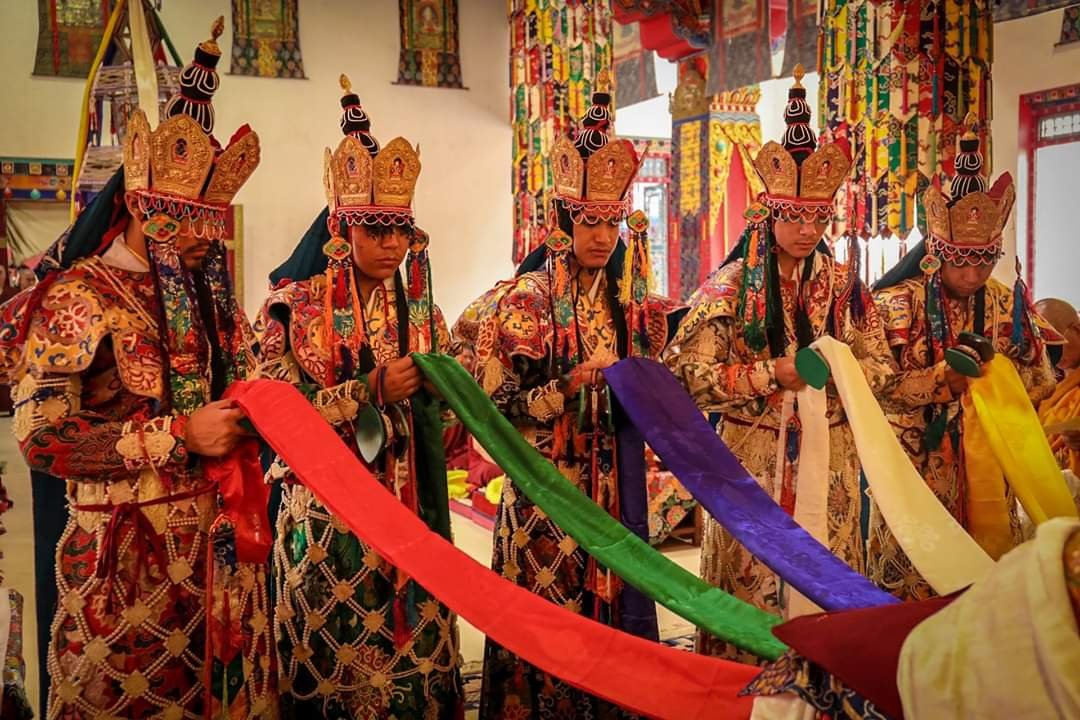
The last month of each Tibetan year is dedicated to clearing negativity accumulated throughout the year. It culminates with Gutor, an extensive ceremony featuring Lama Dance (Cham). By performing traditional rituals, Tibetan monks and yogis clean the ground for an auspicious, fresh New Year (Losar) to enter.

Losar – the Tibetan New Year – is celebrated in February or March each year, as based on the Lunar calendar. In 2020, Losar falls on the 24th February.

A large namkha structure is part of Gutor in the old traditions of Tibetan Buddhism, mainly Nyingma, where it is constructed as prescribed in the sacred texts known as terma (hidden treasures). I wrote a bit about that here.

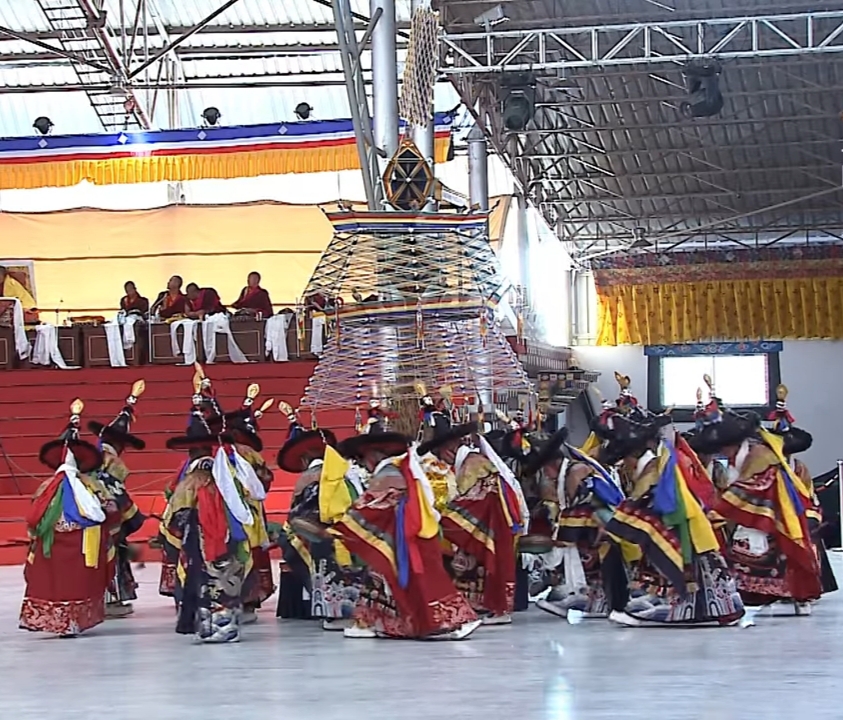
At Kagyu Monlam in Bodhgaya in 2012 and 2017, His Holiness the Karmapa performed the extensive Black Hat Dance at Gutor time. A tall, woven construction could be seen on both occasions towards the right-hand side of the stage of the Monlam Pavilion.

Namkha at 34th Kagyu Monlam
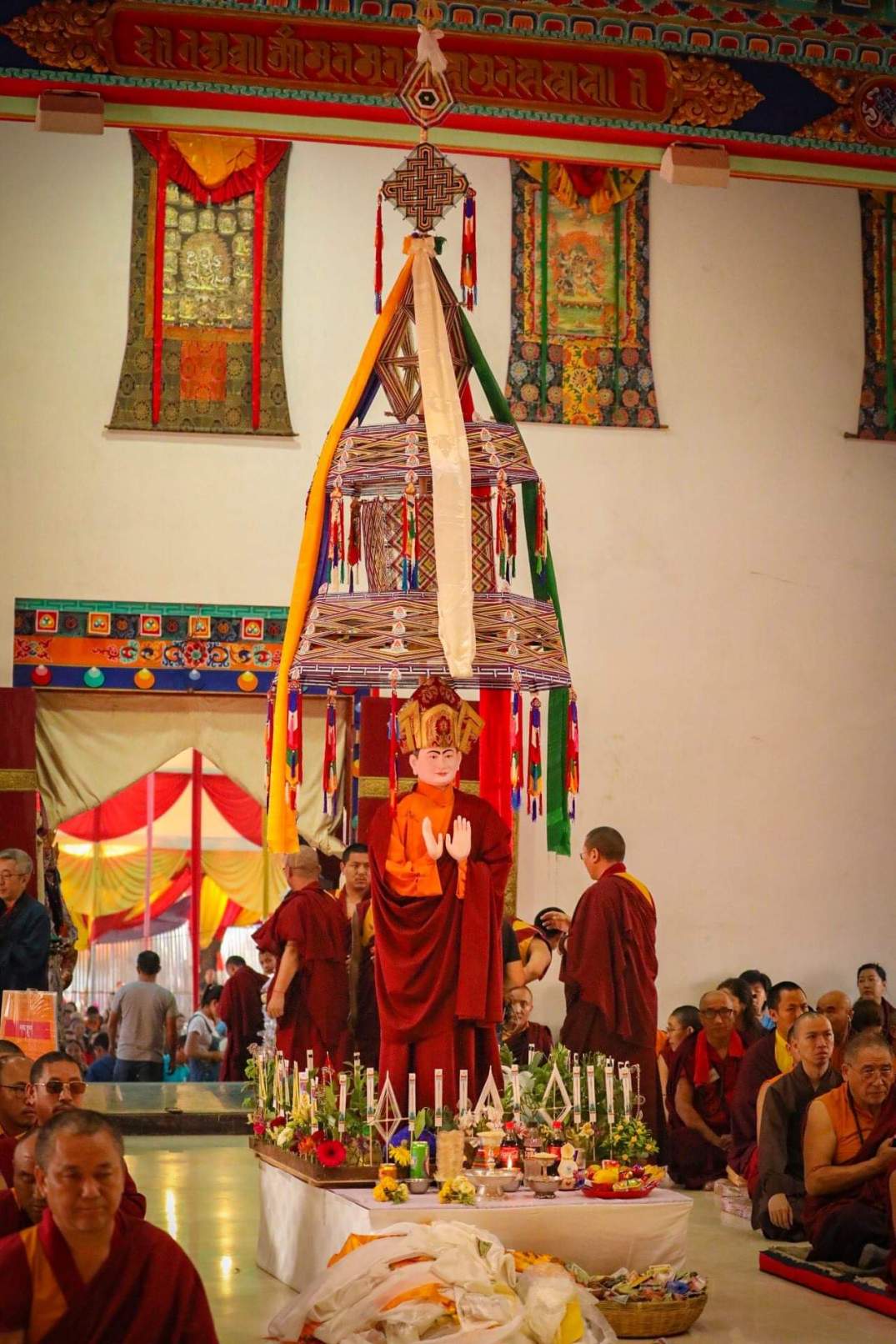
A torma and large effigy made of thread are installed on stage at 34th Kagyu Monlam, 24th February 2017.

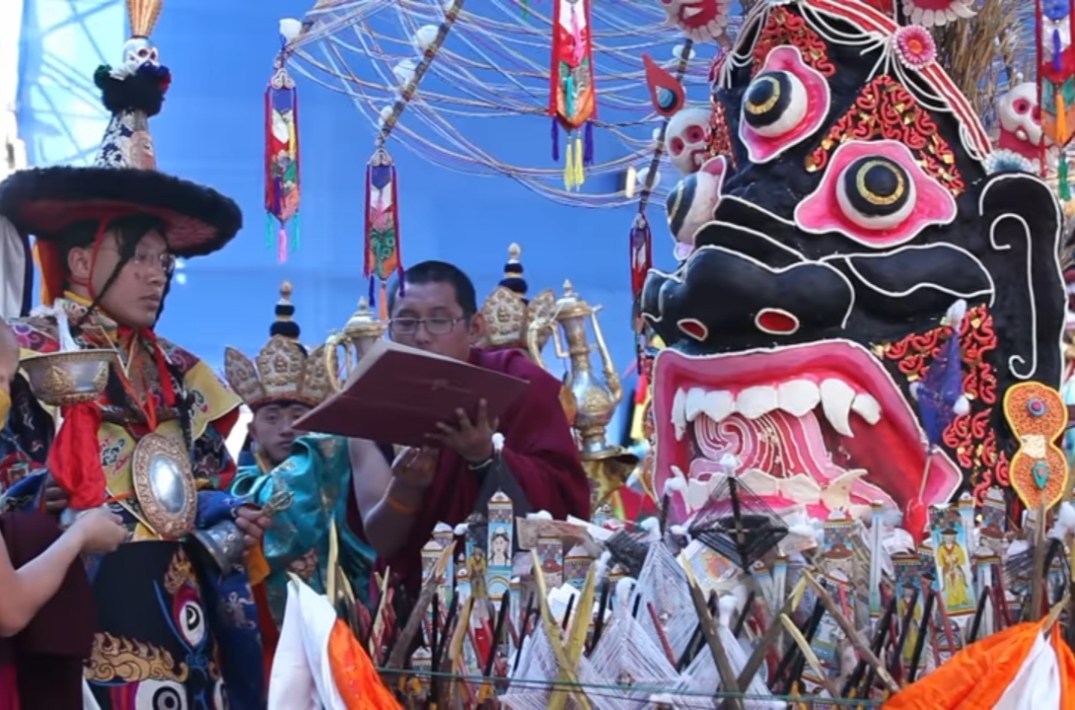
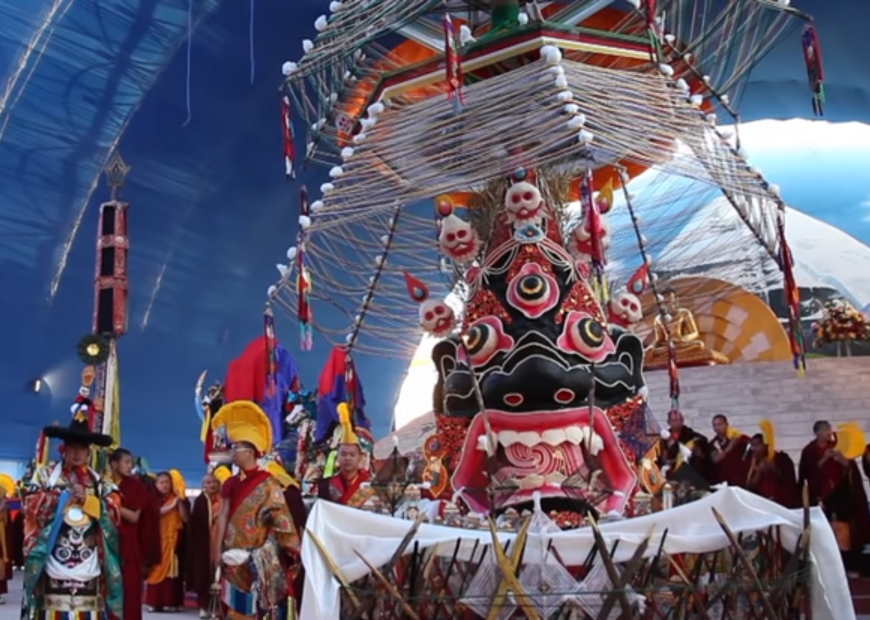
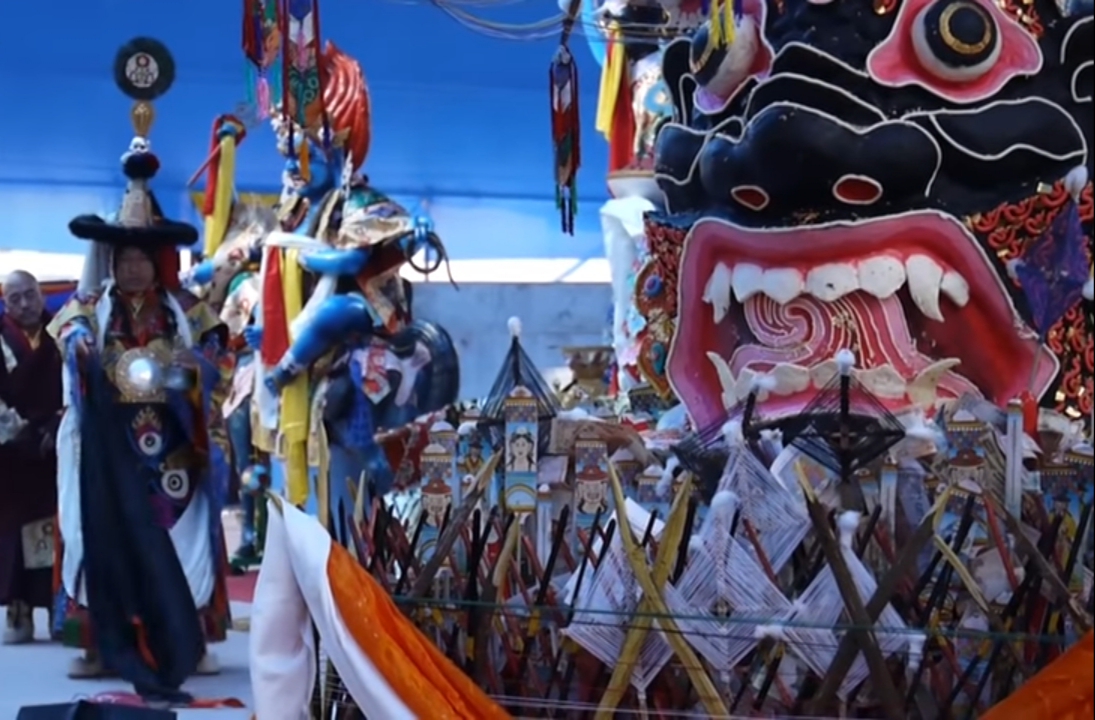
This effigy made of five-coloured threads wound in intricate patterns around a wooden frame was installed together with an impressive torma – an offering made out of dough, shaped as a giant head. The function of the thread construction, called namkha, is to entrap negative energies into its webs, having been lured there by the irresistible torma. His Holiness the 17th Karmapa, Ogyen Trinley Dorje presided over this offering ritual.

gutor torma at kagyu monlam
The Karmapa (left) approaches the great torma with the effigy made of thread above it.

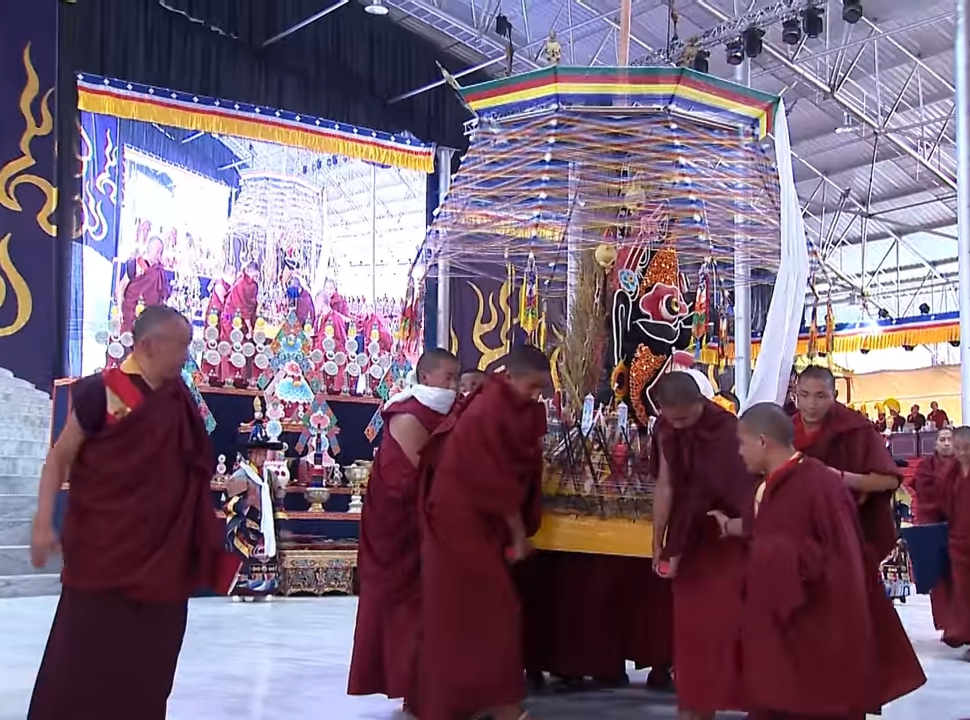
On the day: The Karmapa performs several sacred dances together with other Lamas. Before the start of the dance, the great Hazhel torma is brought in with a great procession by monks from Rumtek Monastery and lay members of Tsurphu Labrang the stage. The Vajra Master, dressed as the Guardian of the Gate, swirles a black cloth to keep any spirits from escaping as the torma installation is moved.

cham

The Karmapa (left) presiding over a dance. The namkha structure on the right.

Several dances are performed before the Karmapa approaches the rituals involving the torma. The Karmapa blesses the torma and effigy. 

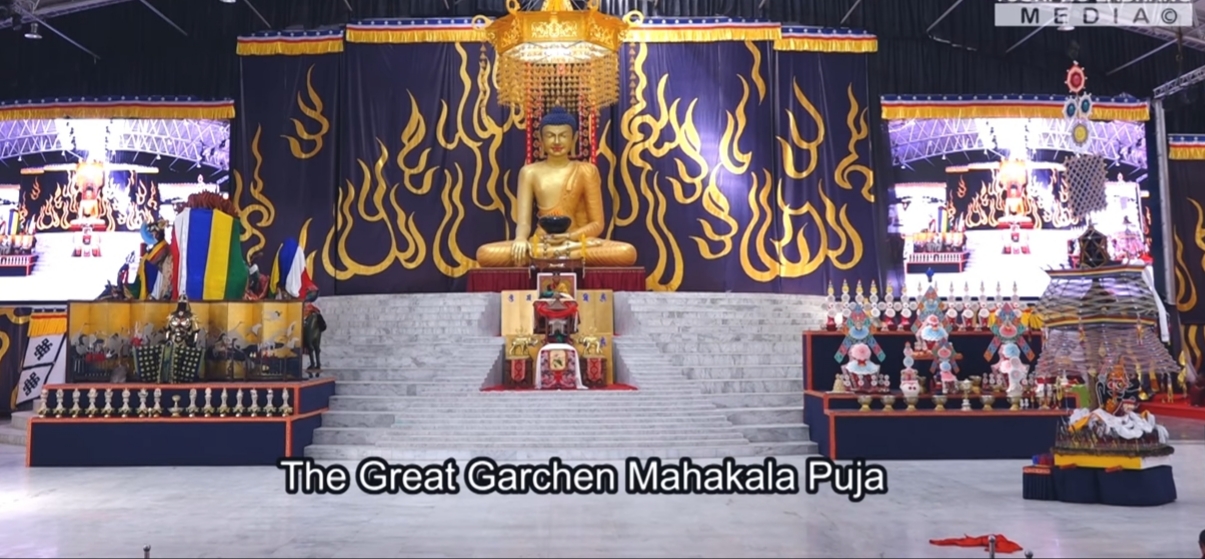
Mahakala Puja with Namkha
His Holiness 17th Karmapa performs Mahakala Puja and Cham for the first time in India.

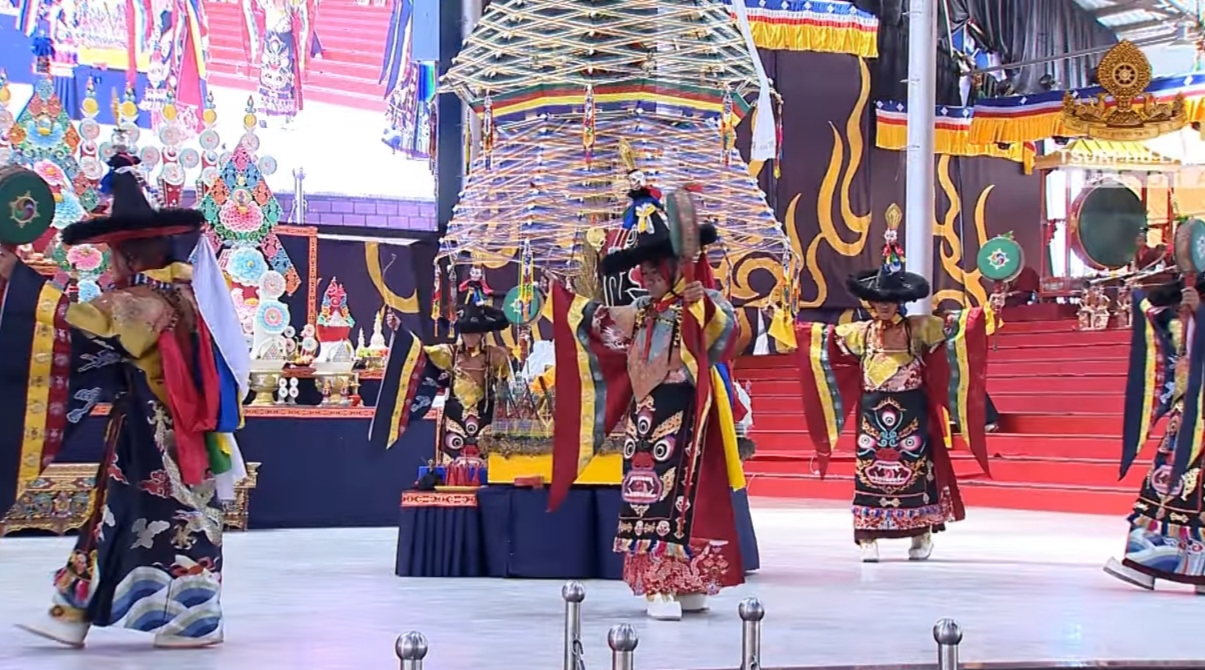
Cham dancers, in constant meditation, circle around the construction for a short time.

Namkha at Kagyu Monlam 2017
Dancing Lamas encircle the effigy.

Namkha at Kagyu Monlam 2012
Dancing Lamas encircle the namkha construction

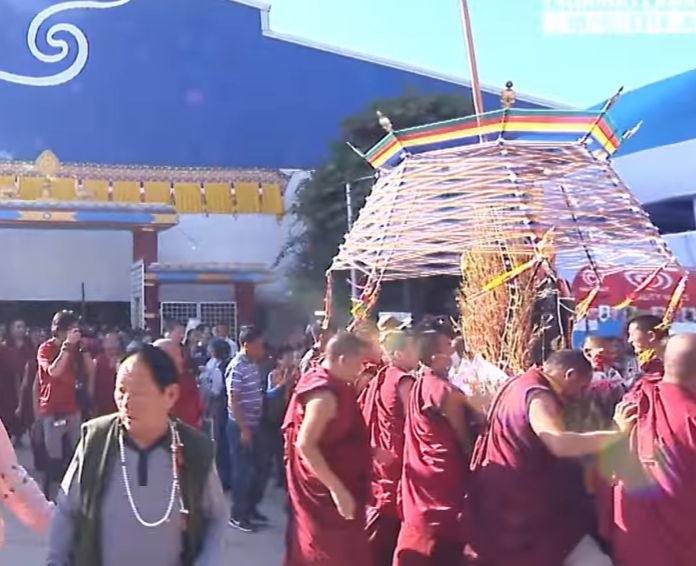
The negative energies of the past year, attracted by the offering of the torma, are now considered entrapped in the web. A group of monks takes the effigy out of the pavilion.

Namkha at Kagyu Monlam
Torma with namkha taken off the stage

Namkha outside Pavilion
Effigy and torma carried out of the Monlam Pavilion

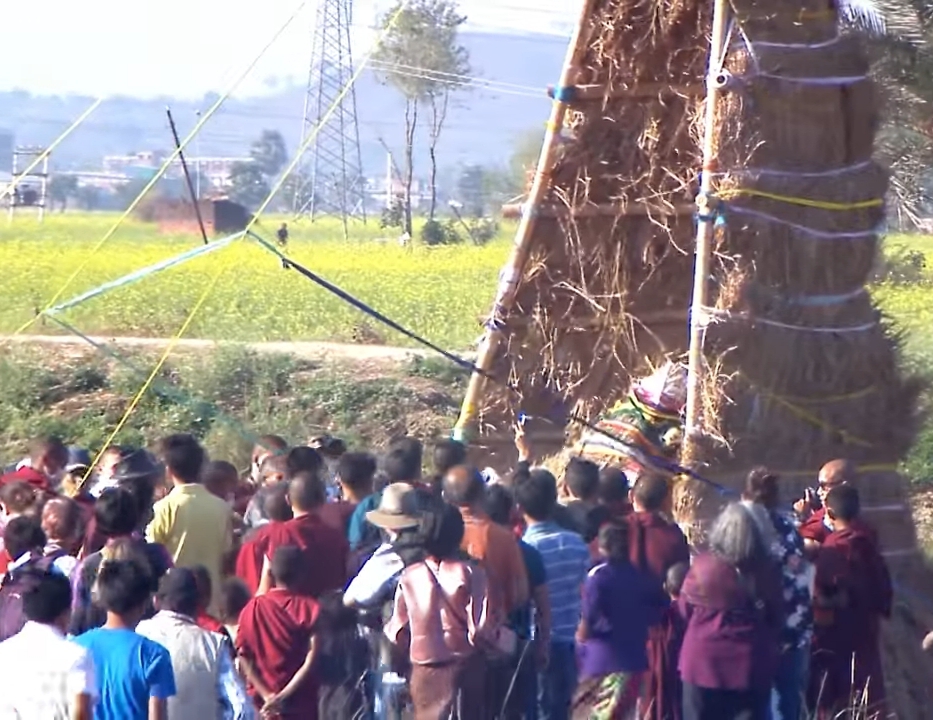
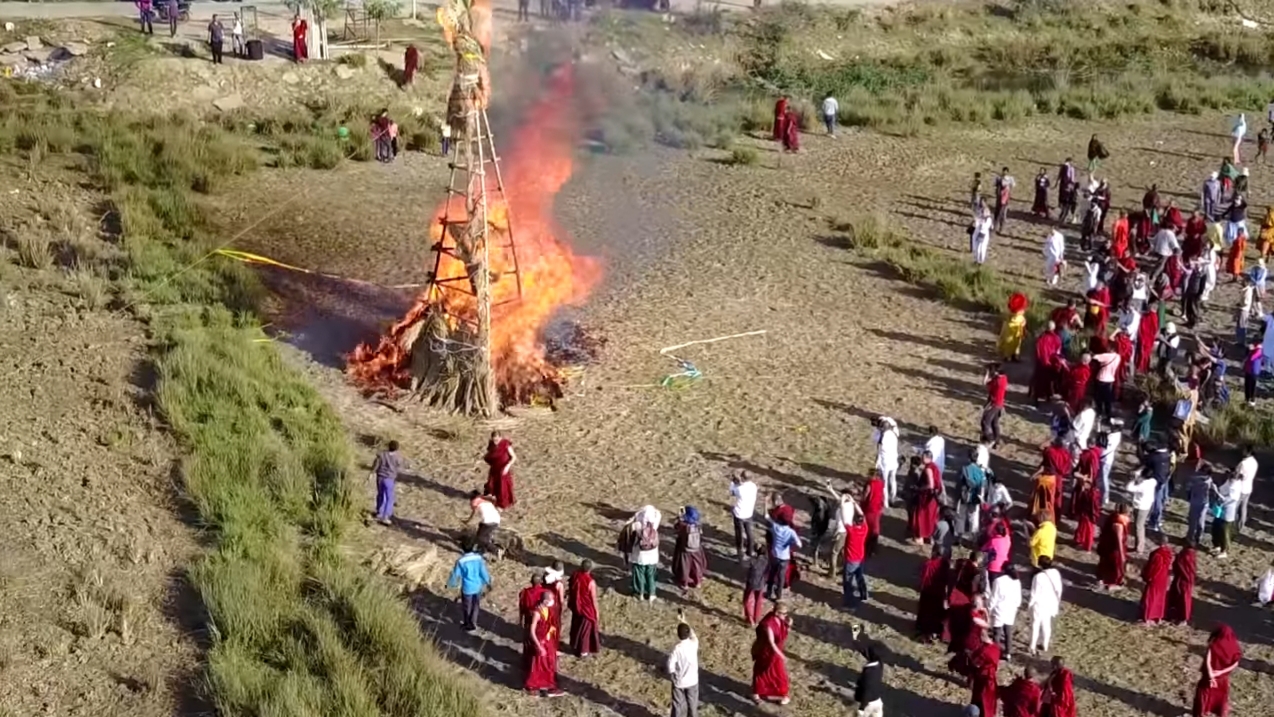
The monks then bring the construction to a nearby field, where a tall pile of clean hay has been prepared. The effigy is thrown on the pile and quickly burned, as a symbol of cleansing negativity.

Namkha discarded
The torma and namkha discarded on a pile of hay for burning.

 During the so-called torma attack, the accumulation of negativity and obstacles ‘trapped’ in the effigy is destroyed. 

Namkha burned
The effigy containing entrapped negative energy is incinerated and negativity purified.

Negativity released in that way, the ceremony inside the pavilion gradually bears to an end, and everyone may now start looking forward to the New Year’s festivities!

Namkha is an ancient Tibetan tradition of weaving the threads of five colours into a ritual object or a protection amulet. Explore my website to learn more: Research / Overview

Read more about the ceremony on the Kagyu Monlam website

Photos in this post are sourced from the following videos:

Related:

Monks build the Gutor Namkha at Losar

Namkha as a gift

You love Namkha. You know how beneficial this precious practice is. You are having one made and you’d also love to give it to your near and dear ones. No wonder: you’re one of those generous souls who want everyone they care for to have the best. But have you thought whether THEY’d appreciate it?

You know that Namkha is not a regular object, a pretty ornament or dead “amulet” you can buy at a market. Because it’s a sacred practice, its power depends on its treatment. There are accounts of Buddha’s relics multiplying when treated with devotion. Similarly, sacred objects live and grow powerful with faith and respectful treatment.
Namkha is an extremely personal, sacred object. It is a representation of your energetic constitution, your energy mind-body. People have expressed how intimate namkha is to them. Some feel that showing off their namkha is like revealing their nakedness. It’s personal, intimate, and for some even private.

If you feel your loved one is in dire need of a namkha, you should consider gifting it if you know they will have a similar attitude. At the minimum, they should have a natural tendency to respect it and be able to give it basic care, like handling and keeping it with respect. The beauty of the namkha practice is that it will benefit even without engagement, i.e. just by keeping it. So it is in fact perfect for people who don’t have an active spiritual practice. They will benefit just by having a namkha made.

If you are unsure, we can always talk about it. I am not stopping anyone from owning a namkha. In fact, it’s my commitment to make Namkha as widely available as possible. This practice was conceived and taught by the Buddhist master Chogyal Namkhai Norbu to benefit today’s world, and it is my promise to him to carry on and spread his vision. So my commitment is both to you and the sacred practice. My attitude has always been to thrive to get a namkha out to anyone who’s asked for one. If you’re asking on someone’s behalf, I must trust your own discernment.

Thank you for considering this.

If you you’d like to gift a namkha, please send your request

What makes Namkha special from other amulets?

Q: I perceive you explain namkha is a sort of amulet but at the same time different amulet then most – did I get that correct? Can you tell me more about why namkha is special?

A: You could say namkha is an amulet because it has a protective function.

There are many different kinds of amulets in the world. Some originate in ancient cultures, like the American Indian dream catcher, for example. These days, dream catcher is sold to tourists as amulet, but it’s just a souvenir without any function.

Namkha, on the other hand, has a living lineage of power. That power is what makes a namkha alive when it’s first constructed. Without that, a namkha would just be a decoration without any function.

Namkha is an ancient tradition from Tibet, originating in indigenous Bon religion, but this particular Namkha tradition is a Buddhist practice. There is a sadhana text with meditation and mantra recitation that need to be done by a practitioner who has received the transmission from a qualified master. I received the transmission from the great Tibetan master Namkhai Norbu Rinpoche.

So, when you have a correctly constructed namkha, which has been authentically empowered by ritual, it is a sacred, functional amulet with a specific and real function.

Read about Namkha and the lineage

How Namkha Heals

The Healing Power of Namkha: Going Beyond Physical Symptoms

In the realm of Buddhist healing, we recognize that physical suffering is a result of karmic ripening. Every aspect of our existence and all that we experience are interconnected through cause and effect, known as karma.

The law of karma is a fundamental truth: our present experiences are the outcomes of causes we have set in motion, even spanning across lifetimes. The seeds of karma lie within the subtle mind and when conditions align, they solidify into the five elements and further into matter. This continuous process manifests as our physical bodies, complete with their unique features and imperfections. This intricate cycle is unfolding every second.

Namkha operates on the energetic level, just before matter takes shape and our energetic constitution is affected. Similarly, any Buddhist practice seeks to transform karma. Rather than healing the physical body itself, which represents the visible manifestations and symptoms, Namkha addresses the underlying causes before they materialize.

The direct understanding of the illness’s cause and the extent of karma to be purified lies solely within the enlightened mind. As ordinary beings, we cannot perceive this until we attain Buddhahood. Nevertheless, we trust in the efficacy of Buddhist practices based on the unwavering truth of cause and effect, as taught by the Buddhas.

ASTROLOGICAL REMEDY

Astrological calculations based on your birth date hold significant insights, as your karma determined the specific circumstances of your birth, including the arrangement of the elements. For instance, an astrological pattern may reveal the presence of an autoimmune disease. While Western medicine excels in treating physical injuries, it often falls short in addressing autoimmune conditions beyond symptom management. This is because the root cause of autoimmunity lies in the energetic realm, which allopathic medicine does not fully encompass.

Namkha serves to harmonize the conflicting elements within your energetic pattern that contribute to the autoimmune reactions. By working on the energetic constitution, Namkha facilitates healing at the core level of the illness, on the energy plane.

The impact of Namkha extends beyond the physical realm. Our mental-intellectual faculties, fortune, and life force can either be in harmony or disharmony. Elemental conflicts within these aspects can lead to suffering, ranging from discomfort and worry to severe mental illness. Namkha’s purpose is to restore harmony and promote healing across all facets of our lives. Additionally, in cases where the destructive potential has not yet manifested, Namkha serves as a preventive measure.

If you are interested in delving deeper into the practical aspects of how Namkha is calculated and how its harmonizing function is achieved, I invite you to explore my additional resources.

By embracing the healing power of Namkha, we venture beyond the superficial and address the profound interconnectedness of our being, fostering a holistic path to well-being and harmony.

To enquire about commissioning a personalized Namkha, click on the button below

Read more practical information about How namkha is calculated and its harmonizing function achieved.

General information about Namkha and lineage

Namkha at Shechen

April 29, 2019 was the conclusion day of the historic public transmission of Nyingthik Tsapöd and the entire works of Künkhyen Jigme Lingpa and Dza Paltrul Rinpoche, which had taken place over the 17 days at the Shechen Monastery in Kathmandu, Nepal.

This day was dedicated to expressing gratitude to Shechen Rabjam Rinpoche for his immense kindness in imparting this precious transmission. It included a mandala offering and the longevity ceremony of Khandro Sundok (Averting the Calls of Dakinis) Sadhana, suplicating Kyabje Rinpoche to remain firm with good health and long life for the benefit of Dharma and all of sentient beings.

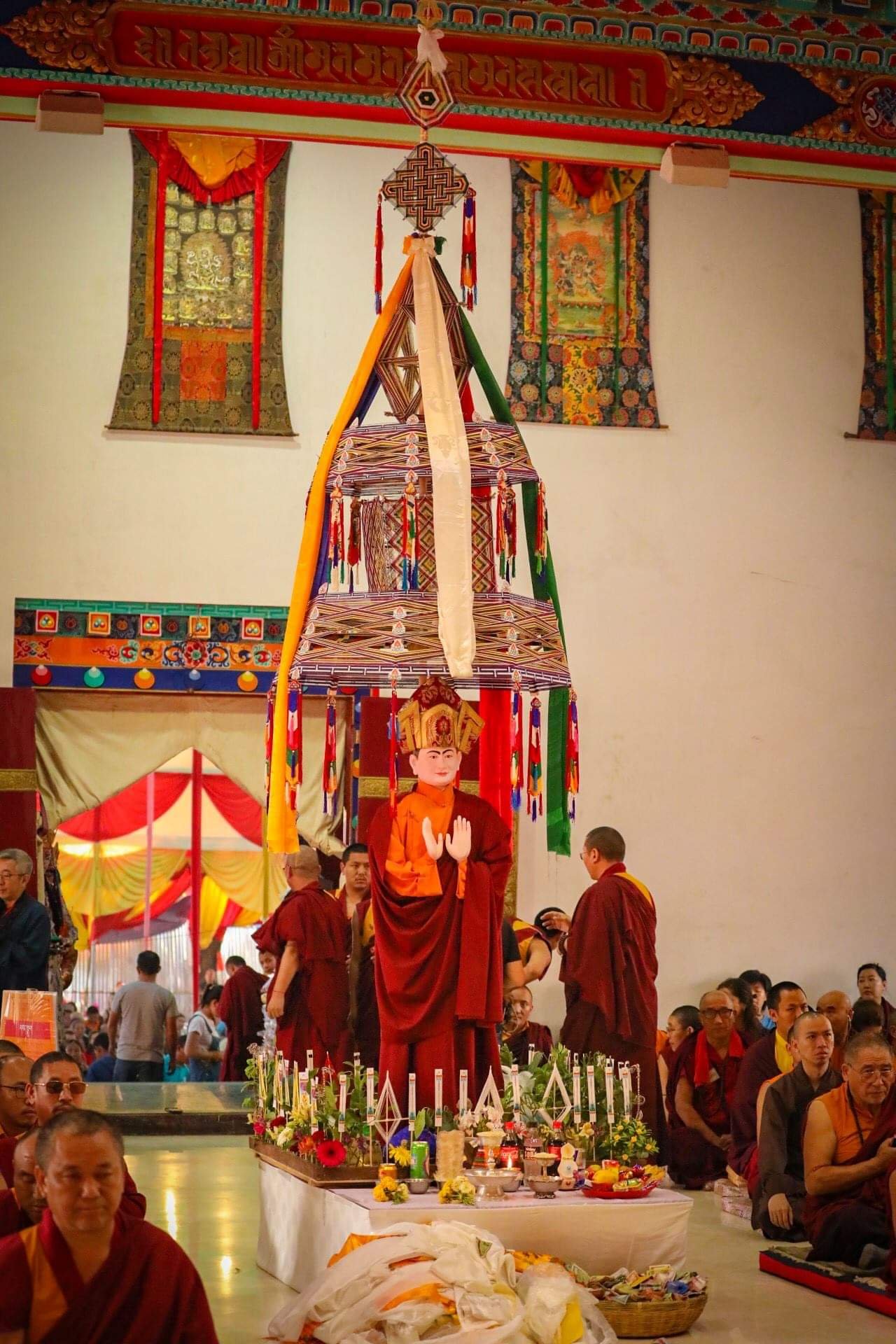
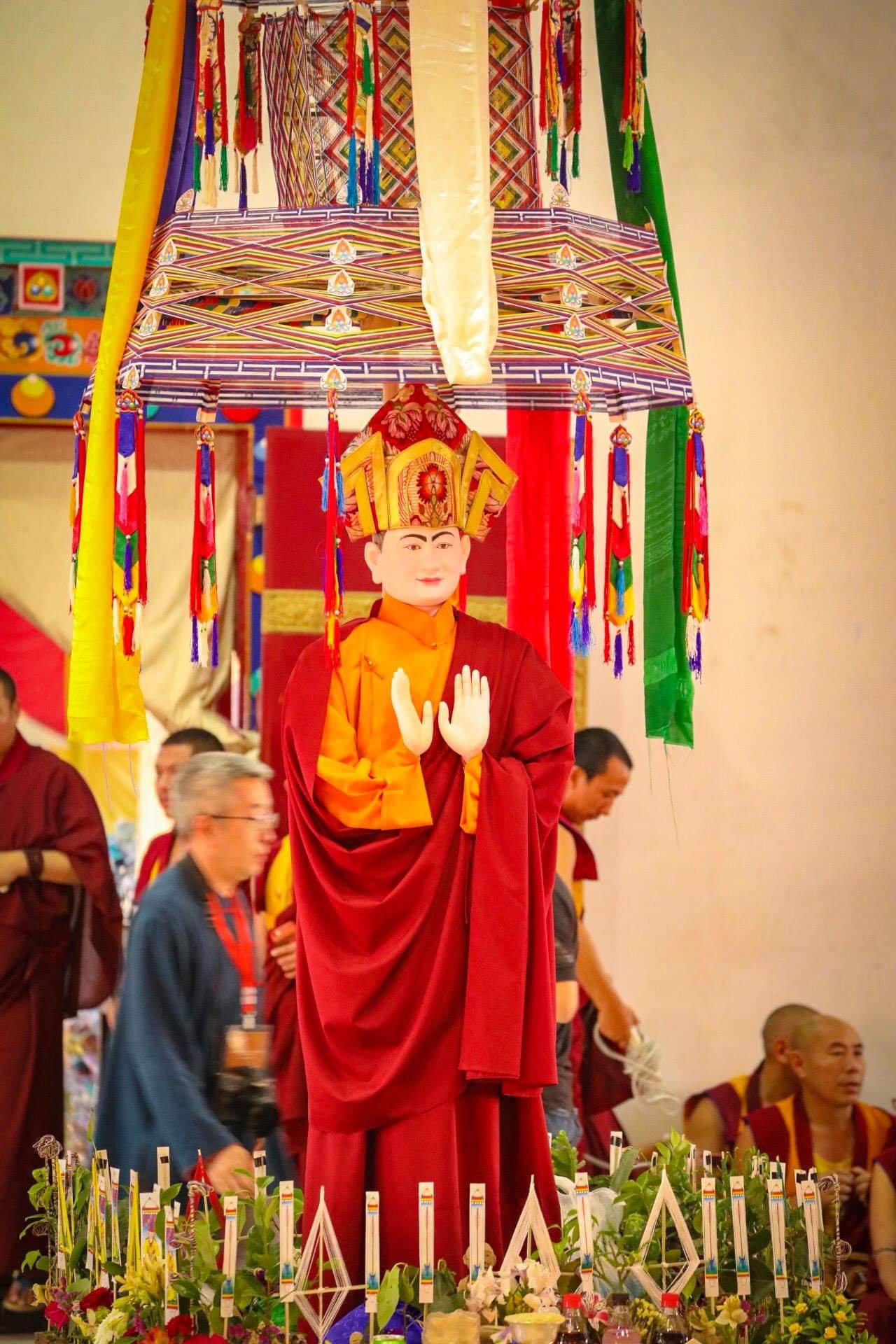
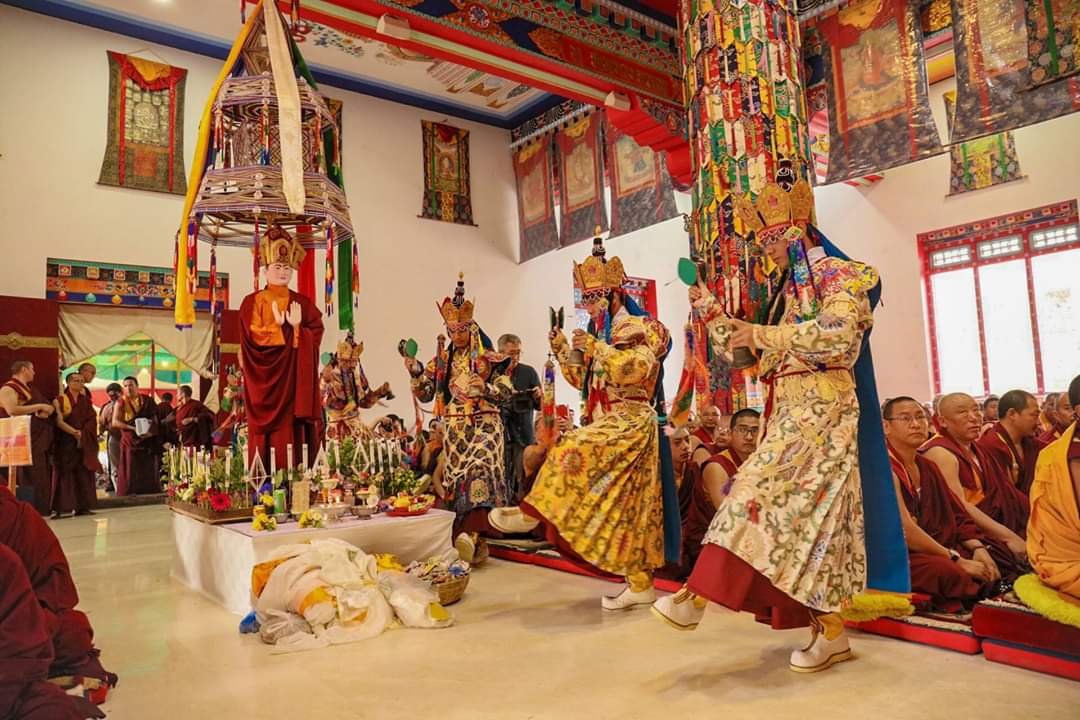
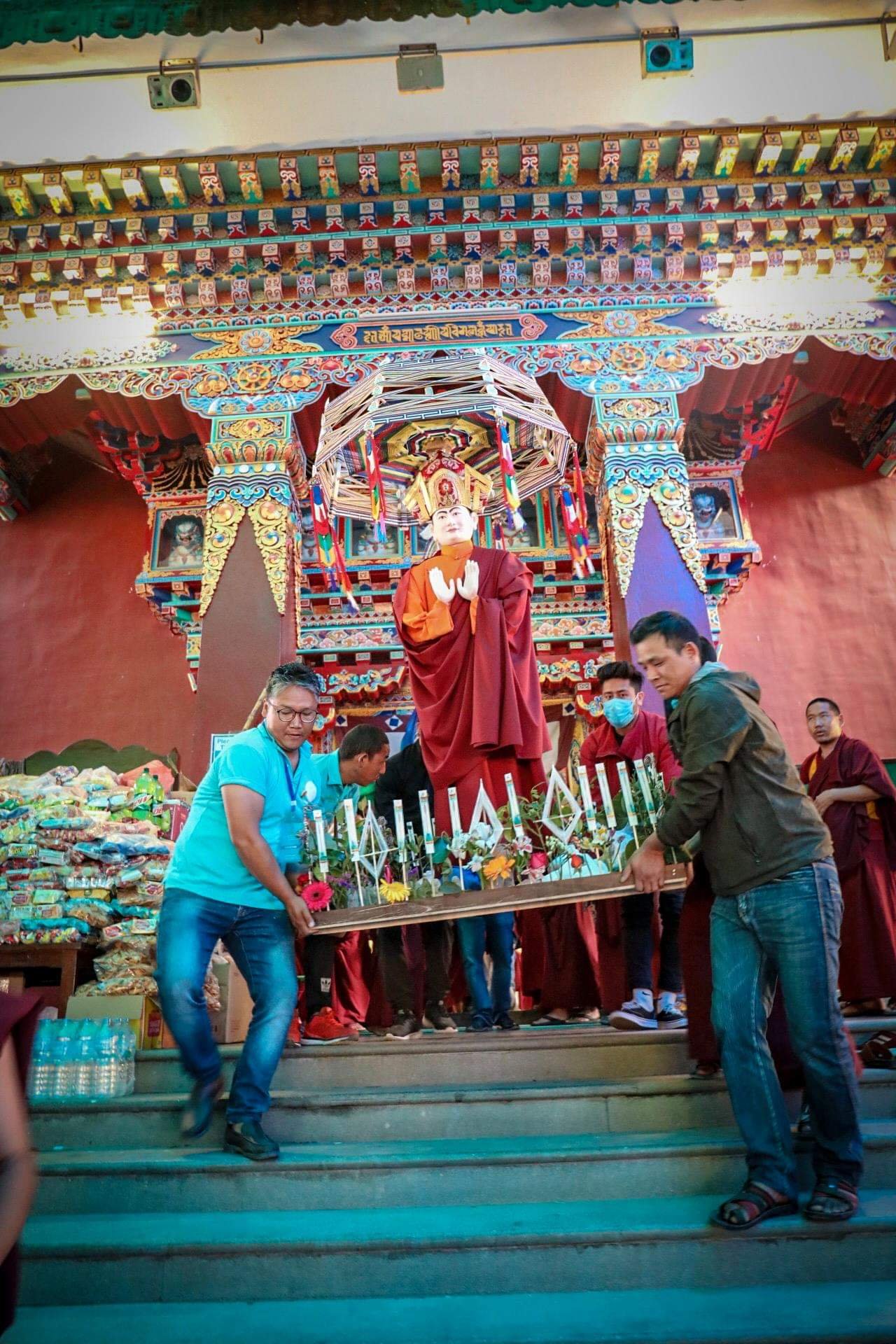
A complex namkha was constructed for the ritual. A life-like effigy represented the body while the woven construction imbued with the 5 elements represented Rinpoche’s life energy. The whole structure was ritually offered to remove obstacles to Rinpoche’s life.

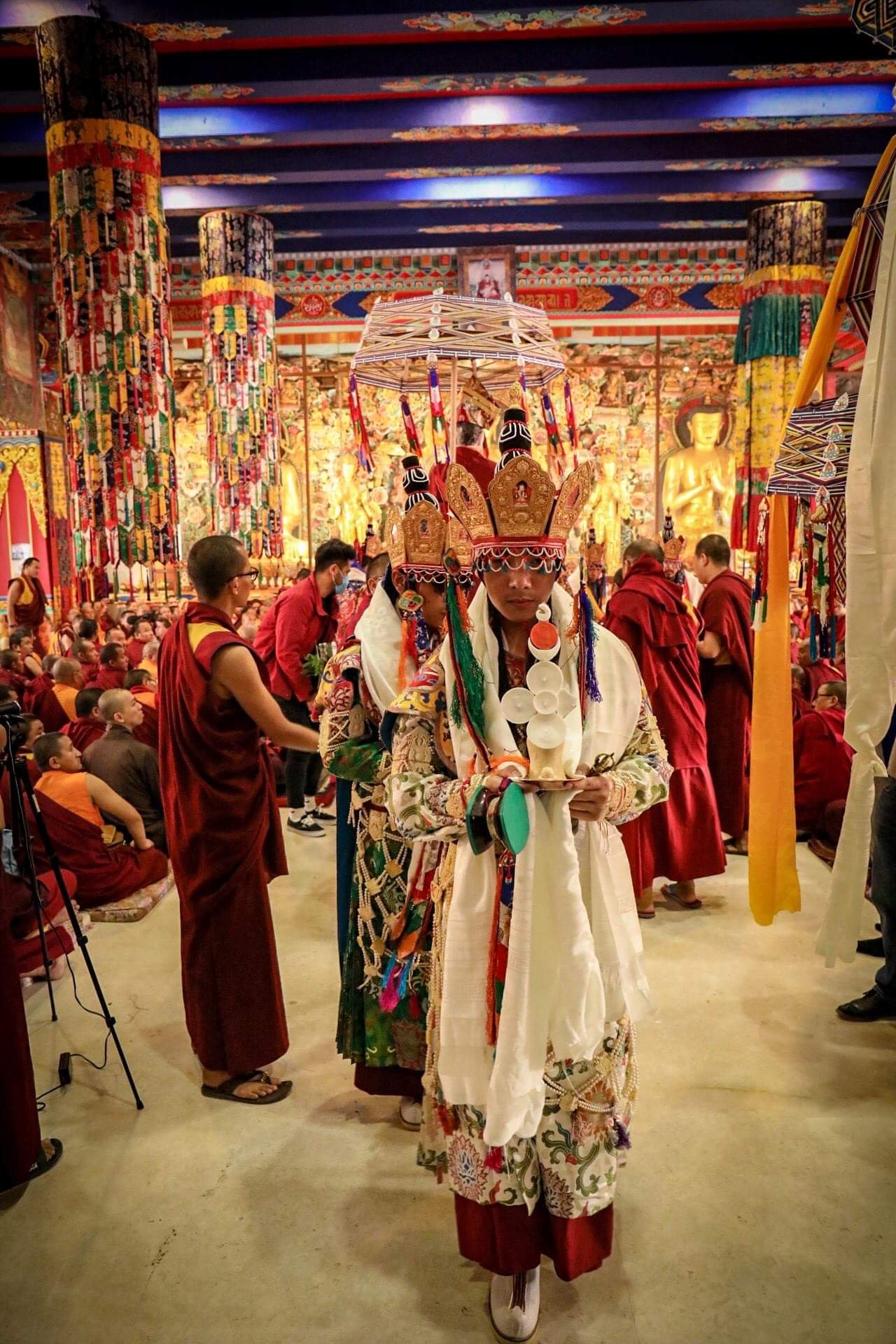
The ritual dance of the Five Dakinis was a way to enact the actual blessing of Rinpoche by the five sacred energies: space, air, fire, water and earth, in their respective colours of blue, green, red, white and yellow.

When the life of a Tibetan Buddhist master might be nearing its end, Dhakinis come to escort him/her out of this life. In this case, the Sangha took the opportunity of this auspicious occasion to carry out this ritual for Rinpoche.

The namkha and the effigy are taken out of the temple to be discarded, considered accepted by the potential obstructors, who are thus satisfied and demotivated to cause harm to Rinpoche.

Sechen Rabjam Rinpoche having received the Tenshug – long-life ritual

Photo: Shechen Monastery Nepal

Read more about Namkhas of Tibet

Losar and Day of Miracles

Losar – Tibetan New Year

Two weeks ago we welcomed the New Year of Earth Boar.

A namkha functions not only to harmonize conflicts between the aspects of one’s astrological pattern, but also with the energies of the current years.

Therefore, in addition to the regular Namkha ritual I do for all the namkhas I have made, at Losar I am particularly focusing on harmonizing the namkhas with the New Year’s energies.

When your birth year is Boar (1947, 1959, 1971, 1983, 1995, 2007 and babies born this year), there’s a particular danger. As Namkhai Norbu Rinpoche says:

All those arriving at the year of their birth animal are in keg, the return of the animal of their year of birth, which is not favourable. It is advisable to avoid situations which may pose a risk. For example, one should avoid visiting the sick, avoid construction work etc. Dedicate yourself as much as possible to spiritual practice and particularly to long life practice, receive the tsewang (longlife empowerment), carry out actions that benefit the community of practitioners, read the Prajnaparamita Sutra in the long, medium and short versions, recite Togzung and Sitatapatra sutras, do the Gyazhi and Kegdog rituals.

As Rinpoche teaches us, having a namkha made is one easy and effective way to harmonize the conflicts between your personal energies and the energies of the current year, to minimize the risk. To request a namkha, contact me.

Read more about Losar >>> Namkha at Losar >>> Losar – Blessing namkha for New Year

Chotrul Duchen – Buddha Miracle Day

The first 15 days of the New Year is called the Month of the Miracles. It culminates with Chotrul Duchen, the Day of Miracles at Full Moon.

It is a major Buddhist festival, commemorating the life of the Buddha. Shakyamuni Buddha performed several miracles throughout his life for various reasons. Not to show off his qualities, but to serve the Dharma and sentient beings. This is a good day to practise, as the merit is multiplied by 100 thousand.

So, I’m empowering the Harmonizing Namkhas and the Magnetizing Mandalas made in the New Year, in the period of the first two weeks in the run-up to this day, which are considered particularly auspicious. At this time I’ve also started several namkhas that I will work on until the waxing moon period of the next month, when they’ll be authenticated (empowered to function).

My dedication is towards the well-being of the namkha recipients, the preservation and spread of the Namkha practice and Buddha Dharma, the long life of Buddhist teachers and liberation of all beings.

May the Buddha come to this world and his teachings shine brightly as the sun. May beings encounter these teachings. May they all achieve perfect enlightenment, the ultimate liberation!

Namkha at Losar

In the past few days, Tibetan Buddhist monks have been busy creating a huge namkha as part of the Tibetan New Year rituals.

Losar time, 29th day of 12th Tibetan month


Gutor is an important event that closely precedes Losar, the Tibetan New Year. I witnessed this ritual twice in Namdroling. The monks work for several days preparing for this elaborate ritual. Some prepare tormas, some practice lama dances and others prepare the namkha. The offering items are arranged in the temple and empowered by chanting and visualization practice by hundreds of monks lined up sitting in the temple. Two days before Losar, the main item, gegtor, a huge torma made of flour, is ceremoniously taken out of the temple and ushered by the monks to a nearby field outside the monastery wall. (See more photos of this on my other blog here). There, the ceremony continues with more chanting and lama dances. In the end, the offerings are thrown away or burnt. The energies of the old year thus considered cleaned away and the spirits appeased, the Losar festivities are free to begin.

Gutornamkha1

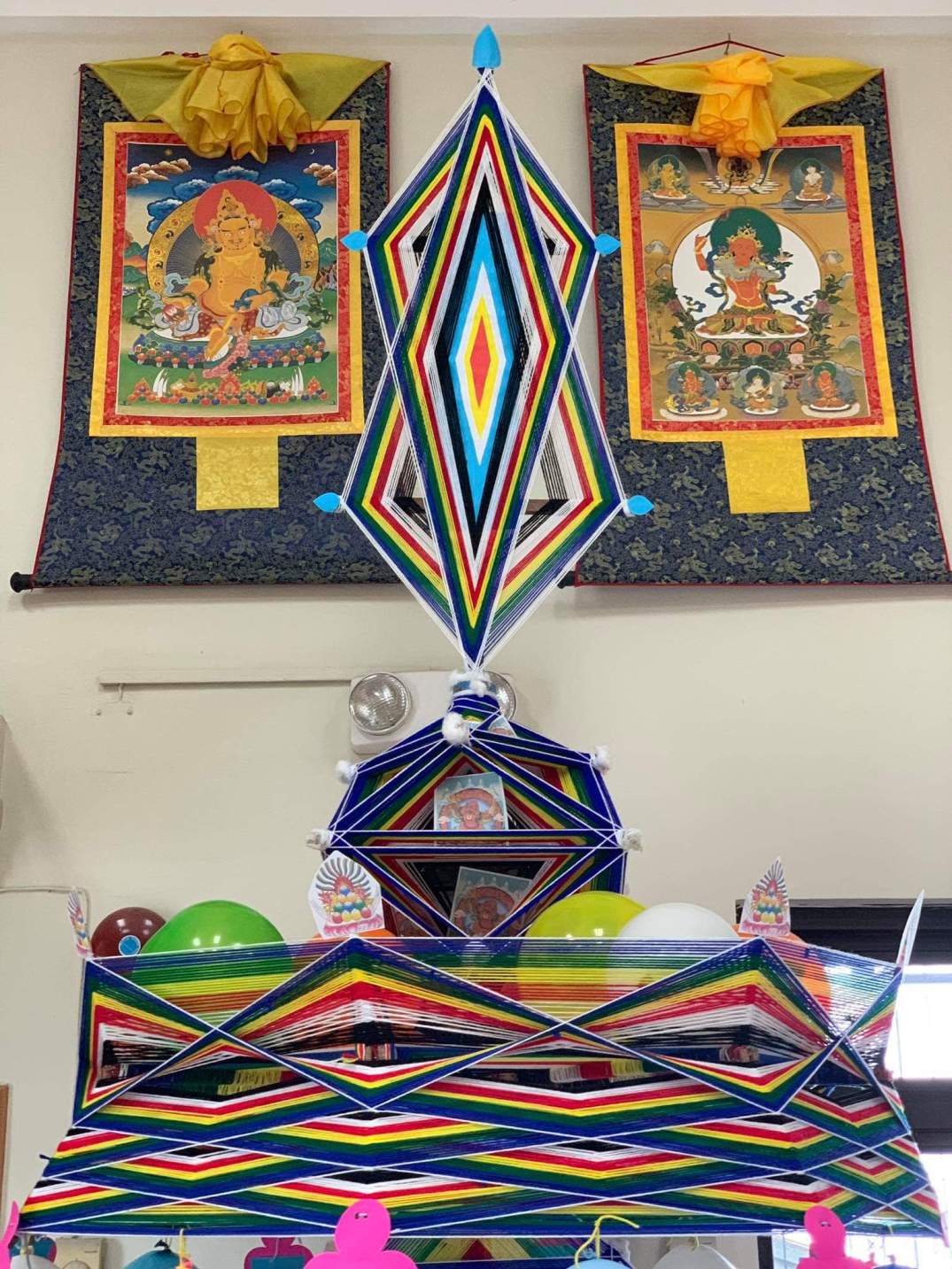
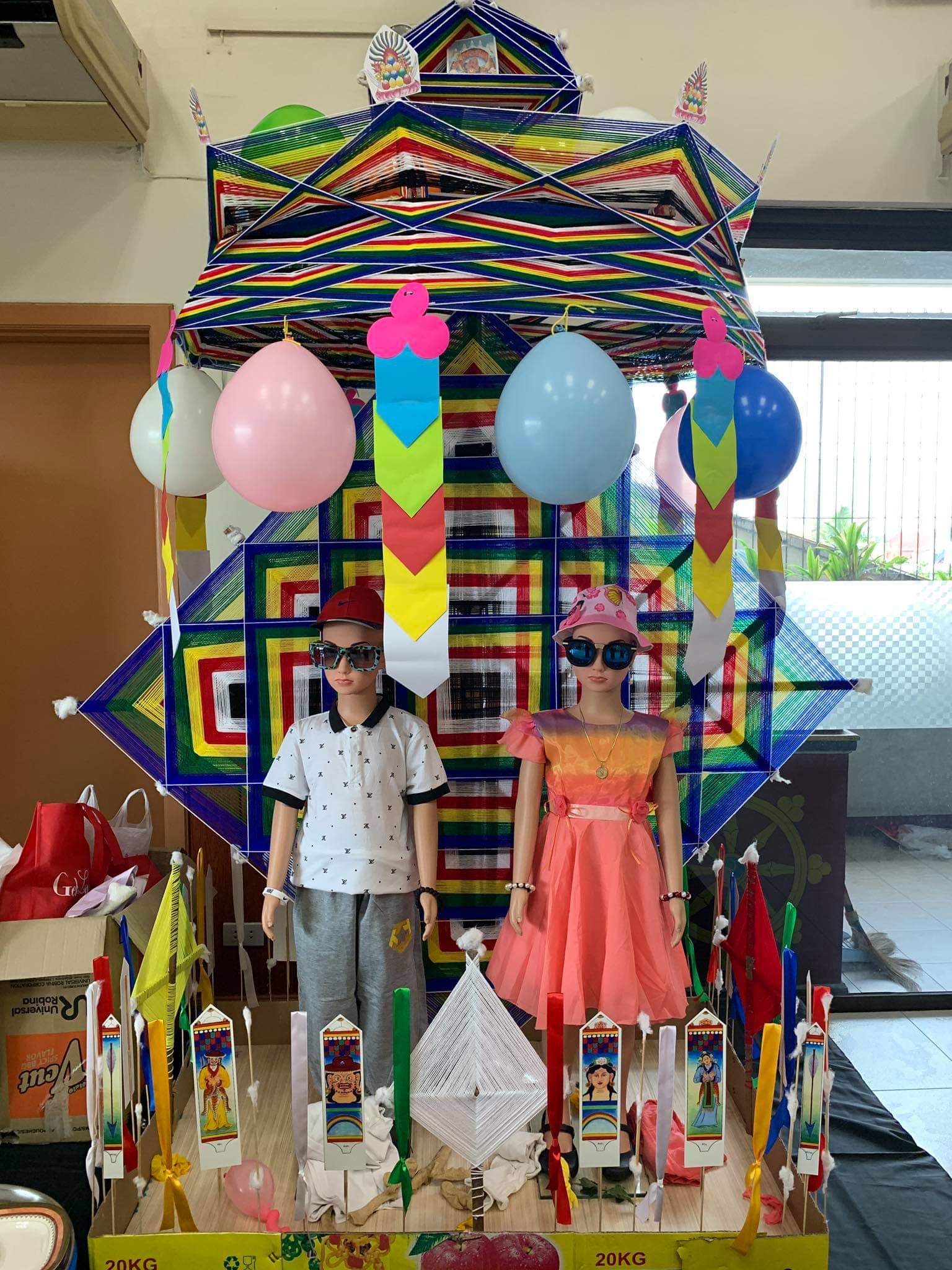
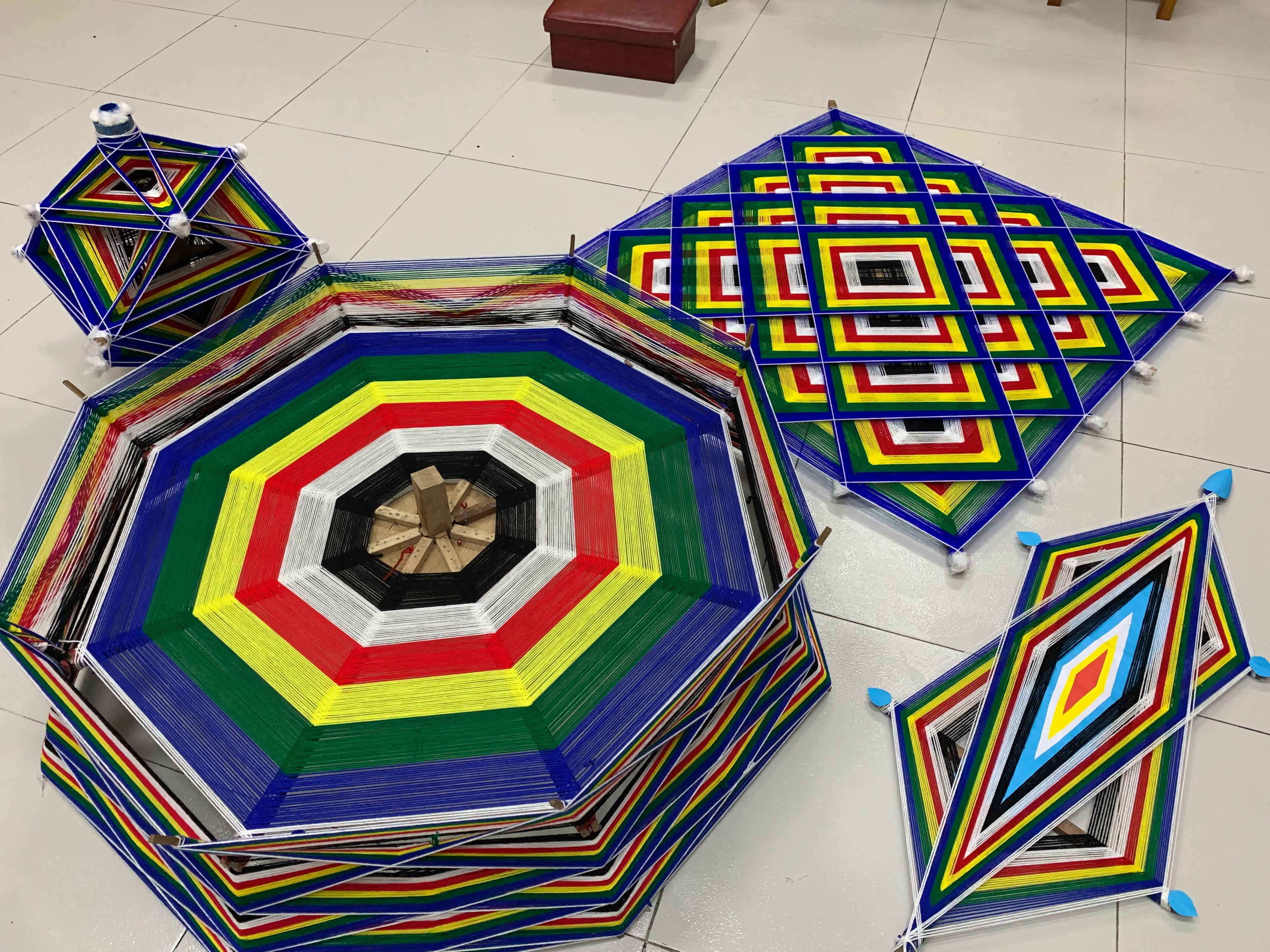
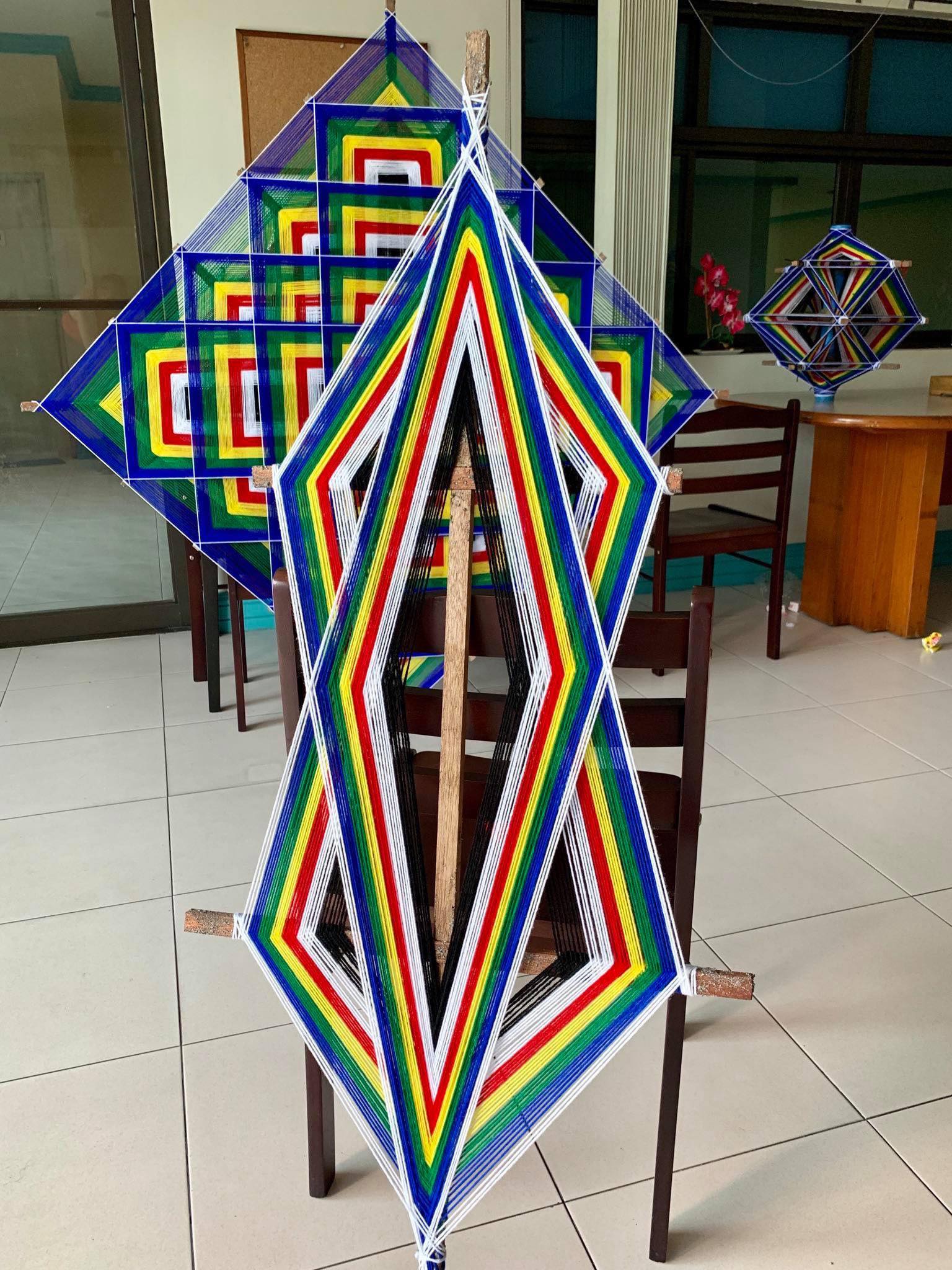
Namkha are thread cross constructions made with coloured strings. They are part of a display called dö [mdos], which includes namkha and other symbolic representations.

Gutor has been the same every year for centuries. Like any Tibetan Buddhist practice, it closely follows a prescribed step-by-step procedure written in ancient Buddhist texts called terma and no deviation is favoured. Creativity is bound by the sacred limits of the revered scriptures. The procedure for constructing of the “gutor” namkha, for example, is described in the Ratna Lingpa terma and is part of the Lü (Naga) offering ritual. The Lü are important beings to be on good terms with.

ratnalingpanamkhaparts.jpg


The namkha is constructed specifically as an offering to the Lü for prosperity and fortune in the coming New Year.


The shapes, colour-sequences and the whole procedure follow the description in the treasure text of Ratna Lingpa from 14th century.

ratnalingpanamkha

This is a fine example of a namkha thread cross of the Tibetan Buddhist tradition, and we are fortunate to be able to see these rare photos courtesy to my dear friend, Lama Tsultrim Palyul of Namdroling monastery, who supervised the construction of this particular namkha at the Palyul Centre in the Phillipines for Gutor this year (2019). The photos are used with his kind permission.

Brigid’s Cross

My search for Tibetan Namkha-equivalent art in world cultures takes me to Ireland today.

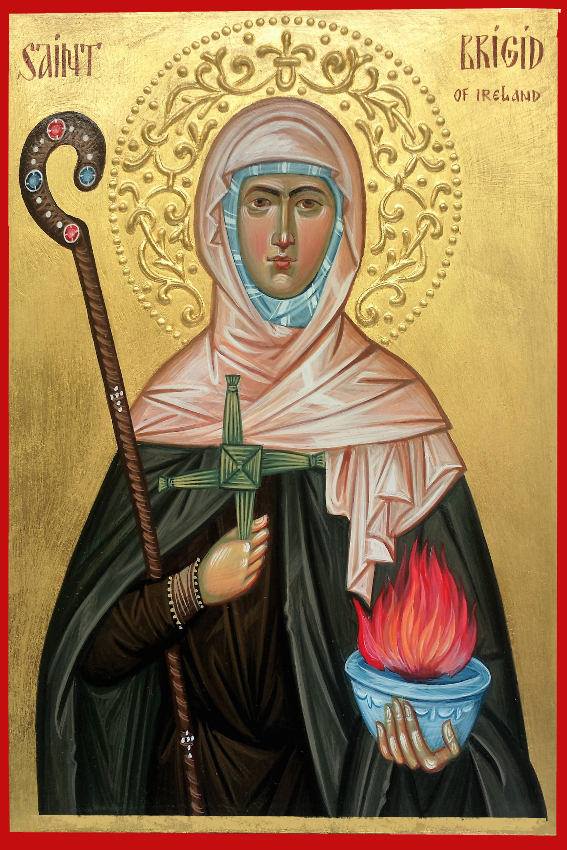
It’s St. Brigid’s Day, celebrated each year on 1 February in remembrance of Brigid of Kildare, a Christian patron saint of Ireland.

brigidcross

The Goddess of Brigid, her pagan festival Imbolc and the rushen cross are all old folk tradition, most probably of Celtic origin, that was incorporated into Christianity.

The cross has become a symbol of Ireland, similar to the shamrock and harp, the four-armed cross being the most recognizable, though there are regional varieties, such as the three-armed cross.


The materials vary from rushes, reed, straw to wood, grass, hay, goose quills, wire and fabric.

In all its variety, Brigid’s cross is very similar in design and function to the Tibetan Namkha and the Eye of God (Ojo de Dios) of the Huichol indigenous culture of Mexico.

crosses

Varieties of Brigid’s cross Source


Tibetan namkha

The cross seems to have become no more than a mere symbol of a culture today. We’re told that, historically, the crosses were hung up in homes and animal sheds. Newlyweds and those with a new home would commonly receive a cross as a gift for protection and good luck. There’s probably a lot more depth to the tradition than what can now be recollected.

crosshanging

Source

In Ireland, the tradition is honoured today by doing the Brigid’s cross weaving.


feile-bride-weavingjpg

 Source

Brigid’s cross weaving tutorial:

https://youtu.be/29ZbwPRXwis


The featured photo pictures His Holiness the Dalai Lama with a Brigid’s cross presented to him. 

Do you know more about this tradition? Please, share!

Sources:

Wiki

National Museum of Ireland

Solas Bhríde Centre and Hermitages

Follow my blog for more interesting research on the world’s woven crosses coming up: Huichol, Bon Tibetan, Nepalese Silamsakma and more …


Medicine Buddha Namkha

The Medicine Buddha Namkha is empowered by the Namkha ritual and imbued with the power of the Medicine Guru mantra.

The namkha is an endless knot, which serves as a support for the deities of the Five Elements and the Medicine Buddha blessings. The mantra’s healing power radiates from the namkha and blesses everyone who comes into contact with it.

Based on a personal consultation, I custom-design a namkha to tackle a particular disease, or make it connected to one particular person, for a more focused and powerful effect.

What owners have reported

I have distributed namkhas to nearly 30 countries around the world. Here are some insights from the feedback I have received.

Owners experience their namkha:

  • as a healing and protection tool against an existing or potential disease
  • easing physical and mental symptoms
  • supporting the body’s natural healing power
  • powerfully cleansing one’s karmic obscurations and clearing away obstacles, immediately and/or in long term
  • working on all levels: physical, mental, and spiritual, wherever the source of the ailment resides.

Your namkha

If your namkha has been made as a result of your request, you are the cause of your namkha’s existence. Your mind has given birth to your namkha and so the two of you share a special bond. Many owners are very excited about the prospect of having their own personal namkha made and watch with delight as their namkha becomes manifest in my hands. When their namkha finally arrives, the moment of first physical contact is very powerful, like holding your baby in your arms for the first time.

Namkha’s power can be magnified in relation to how much you choose to interact with it. If you have a strong faith in its healing potential or use it as a meditation tool, while reciting the mantra, you can have a particularly transformative experience, as has often been reported.

But even if you doesn’t process blessing through emotions, don’t worry. Namkha works just by being present in the environment. That’s why it’s such a wonderful tool for bringing blessings to places and people who do not consider themselves particularly spiritual.

For Namkha to work, no active engagement is necessary. It easily benefits a distracted mind or people who don’t practice Dharma at all, children, those who suffer with a mental or physical disability, animals, or the elderly, just by having the namkha around. It can be displayed at a public place to bless anyone who comes into contact with it.

Namkha use is so versatile. You can find your own ways of using your namkha, especially if you practice massage or energy healing. I sweep it over my kids’ sleeping bodies, and put it on the body during healing sessions, for example.

Uses and benefits of Namkha are endless. Whether you display a Medicine Buddha mandala, carry a Mini-Namkha or wear the Pendant, the blessing will work for your benefit and the benefit of the world, just as Medicine Buddha intended.

Medicine Buddha Mandala and mini-namkhas (center)

Parameters:

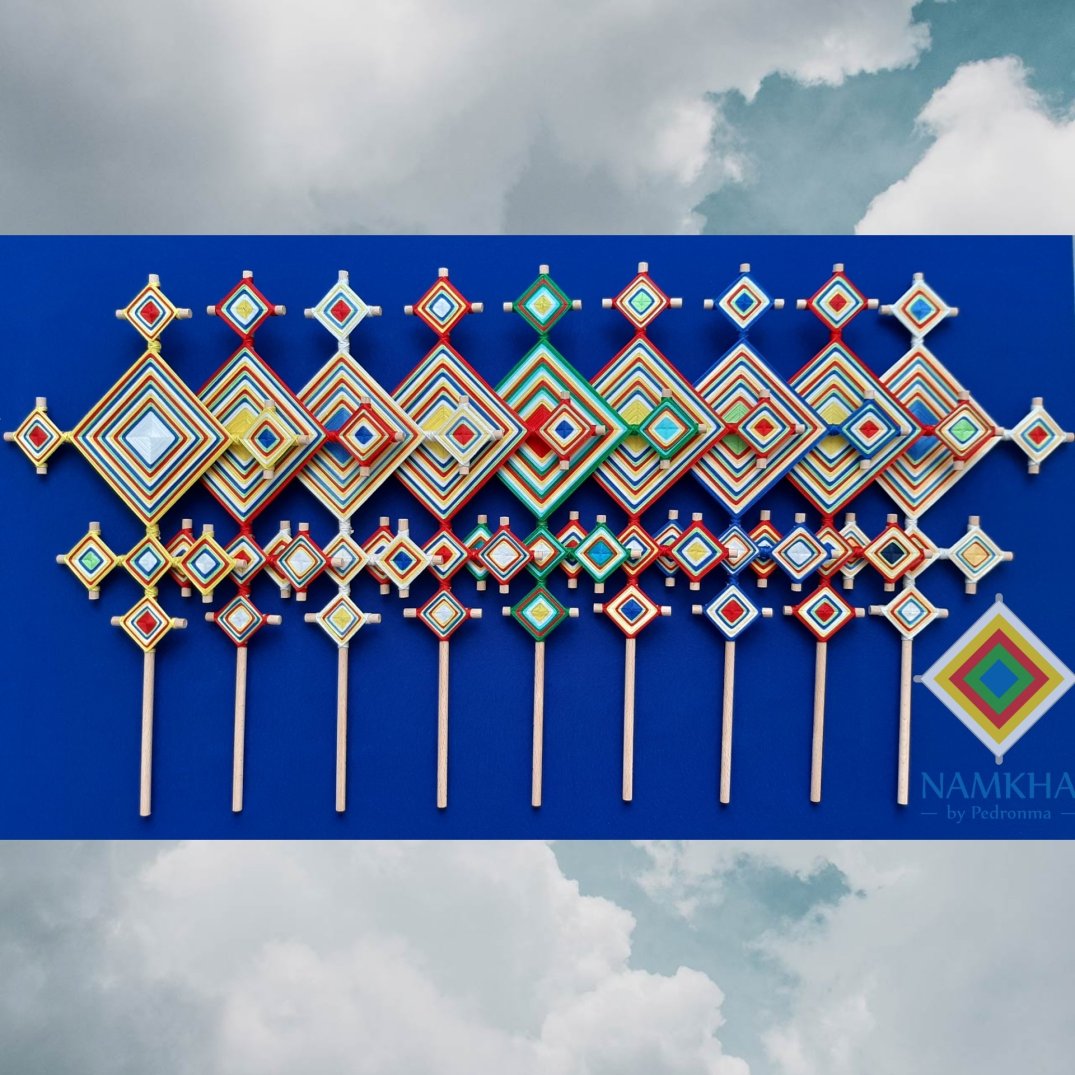
All my namkhas are made with 100% natural wood and cotton only. No glue or chemicals are used at any stage. Authentic method of construction and blessing (more info)

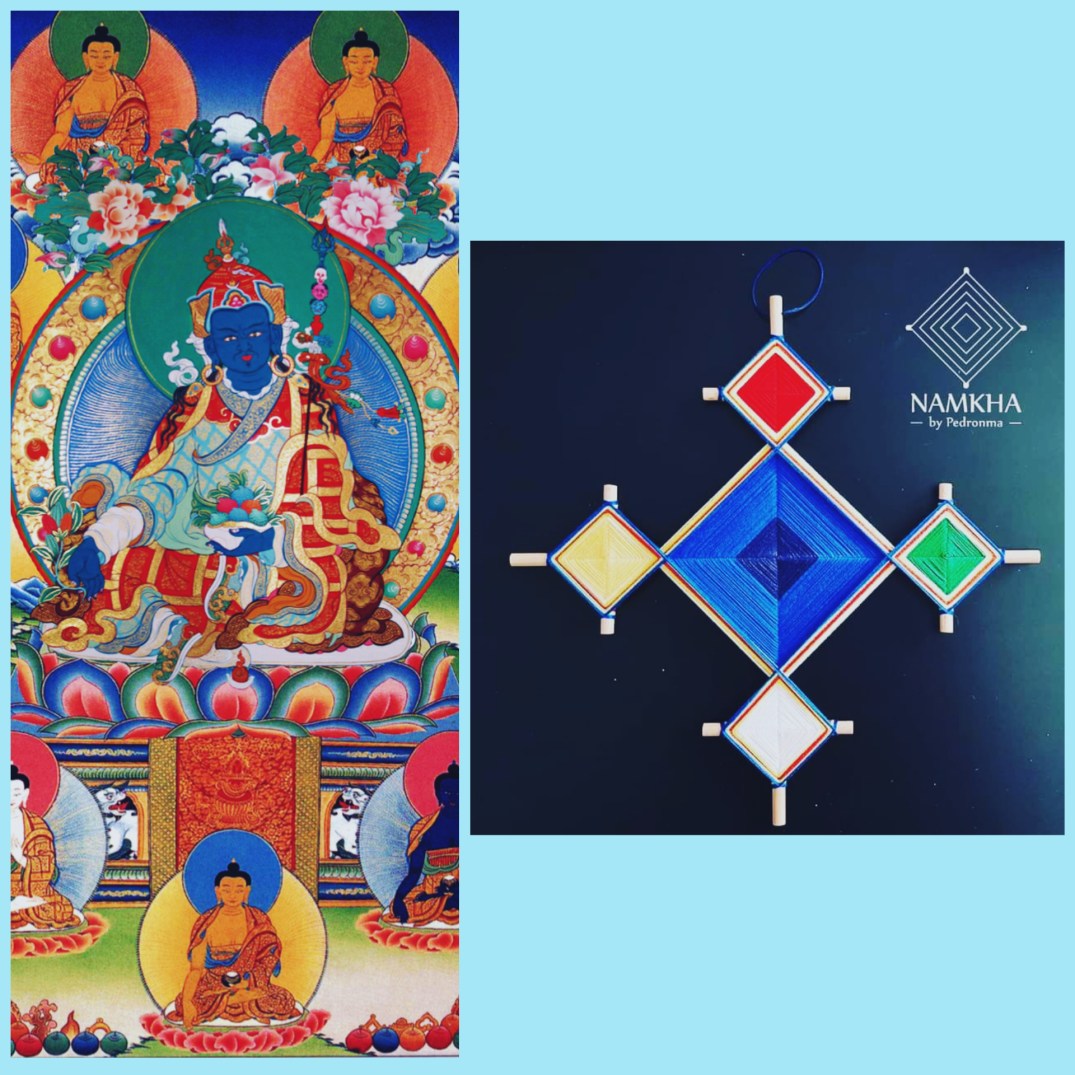
  • Mandala makes a lovely display on the wall or your shrine. The mandala namkha represents the deity in the same way as a statue or painting. Roughly 10 inches across, it manifests the Medicine Buddha of Guru Rinpoche within His Mandala of the Five Buddhas. These Buddhas (represented as the central blue and one to each of the 4 cardinal directions) are energies of the mind that arise from basic space, “namkha” in Tibetan, which the object itself represents. This namkha is finished with an endless knot of 5 colours – 5 elements of wood, fire, earth, metal and water – in harmonized sequence. This is a way to harmonize discordant energies of the mind and the environment. Manifesting this namkha, then, represents the creation of perfectly harmonized, pure energies, and it serves as a support for the actual energies to manifest, here in particular the healing and purifying energy. To activate this power, the namkha is consecrated by the Namkha Rite and Medicine Buddha practice and mantra on 8th day of Tibetan calendar. During this ritual, the colorful threaded parts of the namkha become seats for the sacred energies to remain and function in the specific way assigned to them. A consecrated namkha is a sacred object, a cause for blessings to manifest on our relative level of existence. Therefore, it needs to be treated with due respect.
  • Similarly, the smaller namkhas are imbued by the same power, but are made portable. A Mini-Namka is great for carrying around or to hang unassumingly. You can hang it in your office, pop it into your handbag or your kid’s school bag. It’s so versatile, and makes a great gift. It’s made of the same materials as the Mandala, the diameter is 6-8 cm, decorated with a tassel or a string of 3 wooden beads, if desired, as comes with a pouch to carry in.
  • The Pendant is a variation on the Mini-Namkha, same material, a cotton string and 3 wooden beads for decoration.

Custom design is available upon consultation.

What is “Guru Rinpoche manifesting as Medicine Buddha”?

I received the full Medicine Buddha empowerment by His Holiness the Dalai Lama in Sera monastery in southern India in 2009. The mantra has been a practice of mine for many years.

It is stated in the Tantras that during the degenerate times, the sutra mantras need to be recited more times in order to get the same effect as used to be necessary in the past. That’s why in 8th century, Guru Rinpoche spread tantric practices that were going to be more efficient in the future and hid them to be revealed at future times, when most needed.

These terma (hidden treasures) have more recently been revealed and taught by destined masters, some in the living memory. Since the 1980s, for example, Dudjom Rinpoche propagated in the West the revealed treasure Dudjom Tersar, which contains the practice of Orgyen Menla. I received this practice from Kamala Rinpoche, Dudjom’s disciple. Medicine Buddha Namkha is consecrated with this practice as a way to spread the blessings, especially at these times of a global pandemic, for which this practice was particularly intended. The namkha is a simple yet powerful way to bring the Orgyen Menla Medicine Buddha healing and protection to your home and environment.

The mantras

Manjusri, if you come across any person suffering illness, you should single-mindedly recite this mantra 108 times on his behalf. If the patient has a particular wish and single-mindedly recites this mantra, his wish will be fulfilled. He will be free of disease, enjoy longer life and, at death, be born in the Medicine Buddha’s paradise. He will then not fall back, but eventually realize Supreme Enlightenment.“

∼The Buddha’s words in the Medicine Buddha Sutra

Tathagata of the Lapis Lazuli Light (the Healing Buddha) mantra:

oṃ bhaiśajye bhaiśajye mahābhaiśajye bhaiśajyarāje samudgate svāhā

Orgyen Menla (Guru Rinpoche Medicine Buddha) mantra:

OM BHEKANDZE BHEKANDZE MAHA BHEKANDZE BHEKANDZE RADZA SAMUDGATE SOHA

Get in touch

If you feel drawn to the namkhas or are thinking of someone who might need them, don’t hesitate to contact me for more information or a consultation.

Namkhas

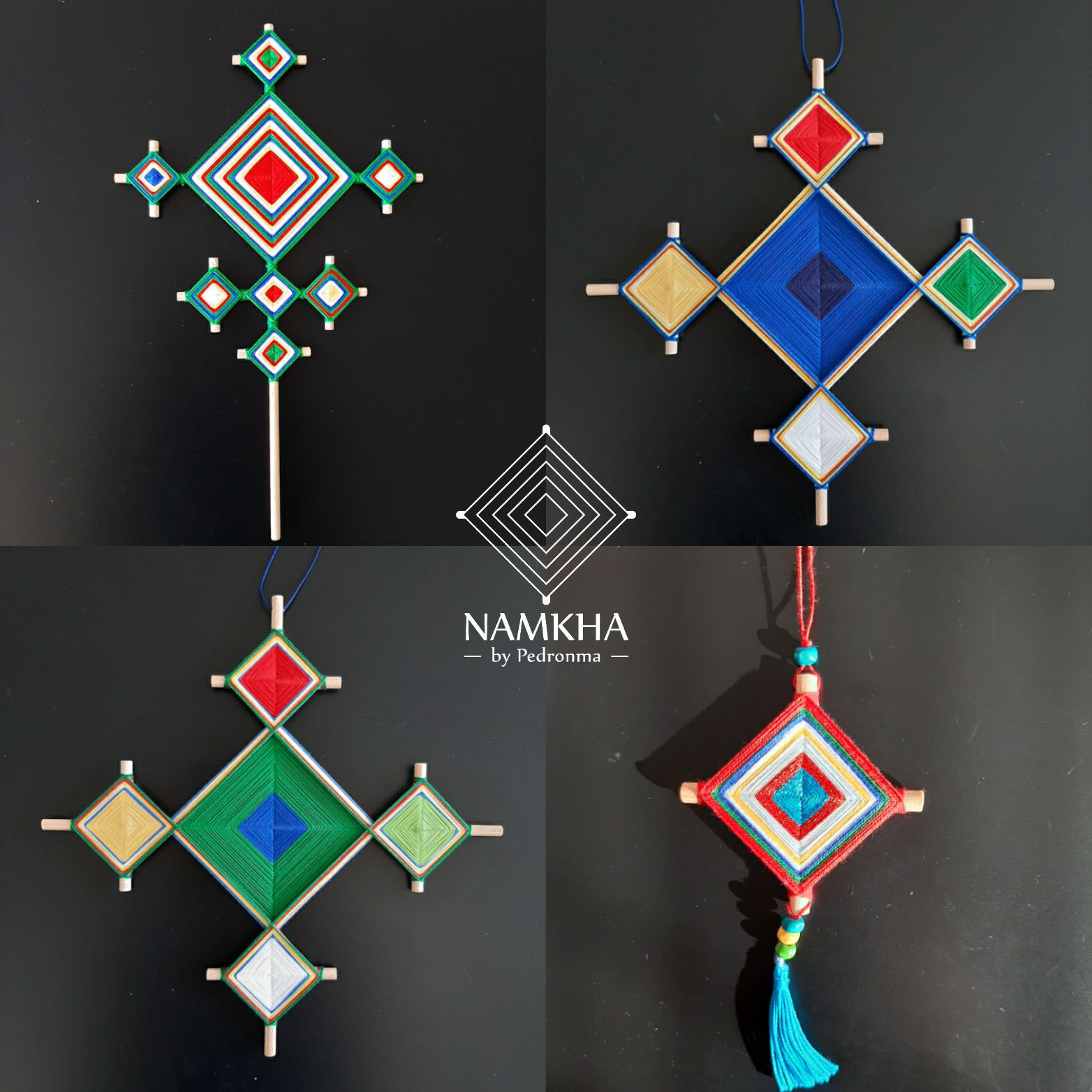
Other namkhas: Tara and personilized protection and activity custom-made namkha (right), available upon consultation. Enquire here

Links ->

General information about Namkha and the different types I make

How to care for your namkha

Home page

Contact

Starting a namkha

With the new lunar month my workshop is busyagain after a two-week break, which was spent getting the Saga Dawa namkhas to their owners and my other projects. Several namkhas were distributed around Prague, three were posted to Germany and two to France. It was deeply moving to receive the powerful responses and I’m strongly encouraged to continue this extremely meaningful work. In fact, I’ve made a commitment to care for my namkhas for life. Whoever has such karma as to receive a namkha from me is entitled to a lifelong service and I’ll be empowering their namkha regularly. I bow to them: though they have requested tge namkha for their own benefit, in fact they are also supporting this precious, potent practice and create a lot of good karma to benefit the world, as well. I’m forever their servant.


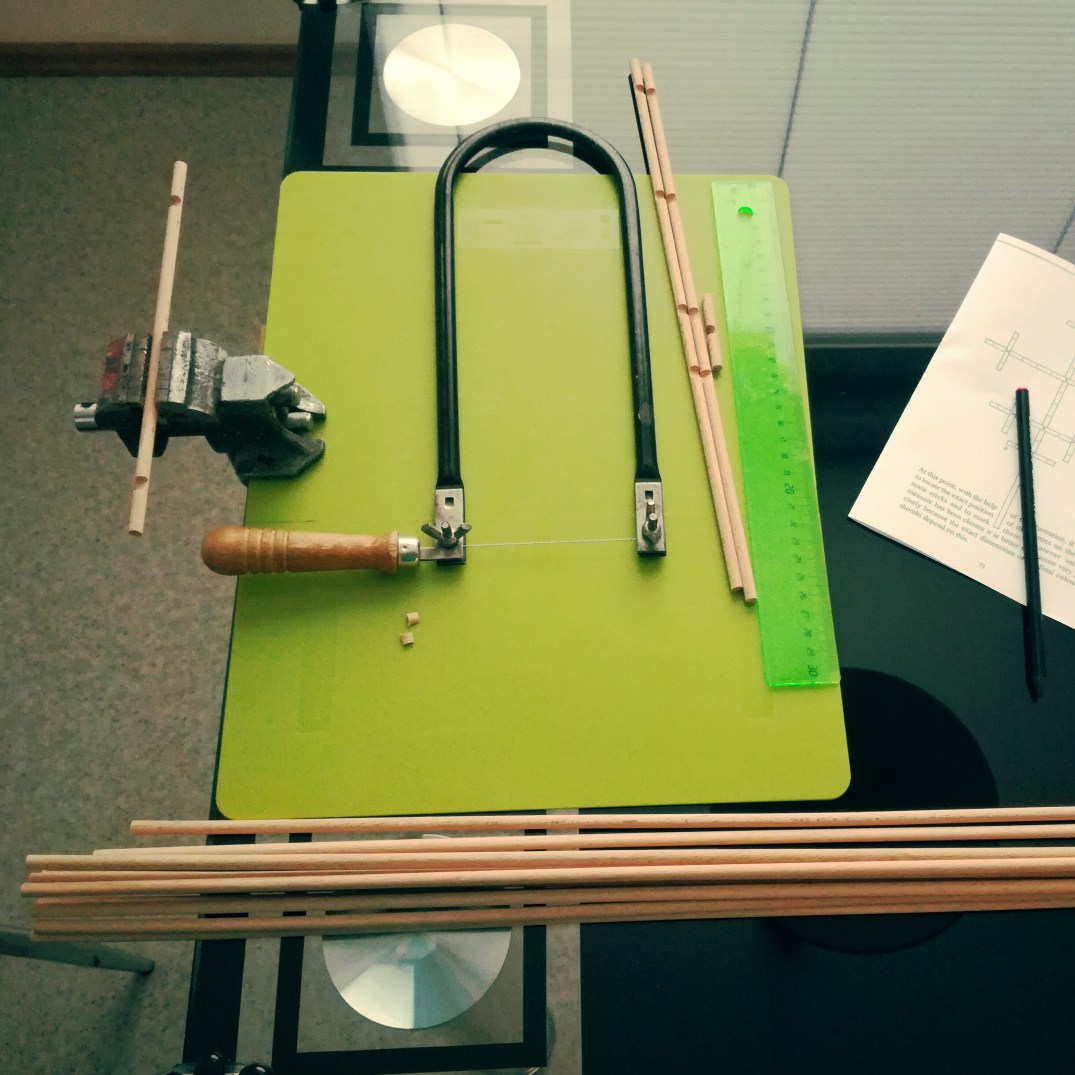
I have three namkhas planned for this month, so as to ease down after last month’s Saga Dawa namkha retreat, when I made 9. I start with cleaning the rods with a damp cloth. Then I measure each of the one-metre beechwood rods and cut them to size. Each 1m rod (6mm diameter) is enough for one 35cm namkha. Grooves are sown to allow for the joints. Them all the rough edges are filed smooth. With practice, it takes about an hour to prepare one namkha frame.

The frame segments are then cleansed by Tibetan incense smoke. Then it’s time for meditation before I mark the central joint with the seed syllable of one of the Five Elements and start weaving. The namkha is woven with a special kind of mind engrossed in meditation, supported by mantra recitation. I follow exactly the method taught by the Tibetan master Chögyal Namkhai Norbu.

Read more about How Namkha Heals and how it’s constructed.

Saga Dawa Namkha Retreat

I am grateful to all those who have allowed me to carry out the Saga Dawa Namkha semi-retreat by ordering a namkha in the last month. The Saga Dawa is the holiest month for Buddhists and within my worldly daily duties I have been able to devote several hours each day engrossed in meditation on the five elements, and my manual skills have also very much improved. The holy beings were close and gave clear signs that the Namkha is a powerful practice that creates much benefit and merit quickly. I will therefore remain devoted to this practice in my lifetime.

Why Saga Dawa

Saga Dawa Düchen, the most important Buddhist festival, took place on Tuesday, 29 May 2018, this year. It commemorates the life and enlightenment of the Buddha. On that holy day, I consecrated the namkhas I had prepared that month. They’ll be just as powerful as any of my namkhas, yet the merit that’s been accumulated this time is greatly multiplied by having done the practice during Saga Dawa. I dedicate it with gratitude to the special beings, who have ordered the namkhas and so allowed me to make progress in my namkha practice. The namkhas will be finding their rightful owners in the coming week or so. Two will be going to France, three to Germany and the remainder will be dispatched personally here in the Czech Republic.

There are still a few custom namkha orders to carry out, which will be authenticated next month. After that, I would like to focus on bringing to life the namkhas that have entered my mind in meditation, inspired by traditional designs.

How it started

The idea for the Namkha Retreat came when I received several orders for custom-made namkhas in April. I devoted a few weeks purely to the namkha practice. During that time, I experienced signs and inspiration of a force that I have experienced in other practice retreats before. This has completely dispelled any doubts whether the Namkha practice is authentic or not and I can safely accept it amongst my close practices.

Do you want to practise?

This is a Buddhist practice. If you’d like to do this practice, it’s absolutely necessary to have Refuge and receive transmission from a qualified master, which these days will be Chogyal Namkhai Norbu, best have completed the preliminary practices of Tibetan Buddhism, and have an understanding of Emptiness and the Five Elements philosophy, in order to get some results. Otherwise it’s just a child’s play with sticks and yarn, which might give you some worldly pleasure, but which without Wisdom and the motivation of Bodhicitta will not be of much benefit or a cause of spiritual realization and Enlightenment.

The two classifications of elements

Namkhas (or dö) are functional woven ornaments based the symbology of the 5 elements that constitute life. I make different kinds of namkha according to two ways the five elements are classified:

One classification (the Jyungtsi system) represents the following 5 elements signified by the colours

yellow – Earth, red – Fire, green – Wood, blue – Water, white – Metal.

This system comes from the explanation of Manjushri, from ancient systems of both Tibet and China, and is used in the practice of creating a Harmonizing Namkha by Chögyal Namkhai Norbu Rinpoche based on Tibetan Astrology calculations, though in the authentication ritual practice the two systems are brought together.

Another classification (the Kartsi system) comes from ancient Buddhist scriptures like the Kalachakra Tantra and others, and it also exists in the Bön tradition (though Bönpos do use the other classification, too). Here, the element Space is the basic condition for the arising of the 4 elements, while being considered an element in itself. (The word Namkha itself means “space”) It replaces the Metal from the other classification, which here is considered a rough, unyielding quality of the Earth element. The colours relating to the elements are:

yellow – Earth, red – Fire, green – Wind, white – Water, blue – Space.

Note: The name “Namkhai Norbu” means the Jewel of the Space)

Source: Namhka book by Chogyal Namkhai Norbu and a Facebook link

Learn more> What is Namkha?

Harmonizing and Power Namkhas

Losar – Blessing namkha for New Year

With the Tibetan year turning, it’s essential to remember to empower the harmonizing namkhas.

I try to bless my namkhas at least once a month. The ones that are not physically present are blessed by proxy of their images. Blessing is always done in the first half of the lunar month as the moon is waxing and the energies are on the increase. If I have time, I do the longer blessing from the Namkha book by Namkhai Norbu, or I do the shorter version from the Thun book. But at Losar, empowering the namkhas is especially important so a puja can be done, too.

The New Year blessing should be done in the first half of the first Tibetan month, this year it was the period between 16 February and 1 March, 2018. This period is also called Losar Bumgyur Dawa in Tibetan and it’s a very blessed time for any Dharma practice, which commemorates the 15 miraculous deeds that the Buddha performed to convince his rivals, and the result of actions if multiplied by millions. The 15th day (full moon) is called the Day of the Miracles and it fell on the 1 March this year.

The harmonizing namkhas especially need to be done as their function is connected with the birth year of the individual and its relationship with the energies of the current year. Each year has its own energy that influenced the health and fortune aspects of each individual born in different year differently. The harmonizing namkha has been constructed to harmonize the conflicting energies and its function is set in motion by the empowering ritual.  So as the energies of the old year wane and the energies of the New Year start to be felt, it’s important to empower the namkhas for their proper harmonizing function to be maintained.

I do a puja of Mipham’s Shower of Blessings and the complete empowering ritual from the Namkha book, as if the namkhas were brand new. (Remember, you can do the ritual if you’ve received the transmission from a qualified master. )

Five Buddhas

I’ve designed and created this namkha representing the mandala of the Five Dhyani Buddhas.

The five colours represent the Five Buddha Families. In Tibetan Buddhism, these represent the five energies of the mind – the coarse ones with their enlightened equivalents. Each buddha is related to element, colour, cardinal direction, function and activity, as described in the tantras (ancient Buddhist scriptures) and commonly used in Tibetan Buddhism.

Mandalas of the Five Buddhas namkha with magnetizing function, Medicine Buddha, and Green Tara

I’ve woven in the balance of the Five Buddha energies by following a sequence of colours – from blue, representing the space element and Buddha Vairochana, through green (air – Amoghasiddhi), red (fire – Amitabha), white (water – Vajrasattva), and yellow (earth – Ratnasambhava).

To cause a certain function, in this case attracting a certain situation into the person’s life, I add the magnetizing aspect, signified by the red. Each sequence of the five colours in the namkha can be concluded again by red, as if radiating out of the mandala. The red harmonizing thread then goes around the whole finished mandala shape to stabilize and reaffirm the intention.

Actions that can be affected are signified by a certain colour added to the base mandala, based on the classical tantric system>

Activities that can be caused by a namkha:

  • magnetizing (bringing in a desired object or situation, finding a suitable partner, place, customers etc.)
  • enriching & increasing (bringing prosperity, material accomplishment for business or Dharma efforts, inspires generosity, increases what’s already there, improves business and worldly and Dharma efforts)
  • pacifying (removing obstacles, purifying stale energy in places)
  • increasing wisdom
  • protection & destruction (removing obstacles, bad energy, spririts, obstructing forces, illness, danger of harm, if present etc)

Each of these desired functions are communicated by colour choices. The colour schemes and the 5 buddha design are sourced from ancient Buddhist tantras (holy scriptures) and are in common use in Tibetan Buddhism.

During the authentication process I perform, the deities of the five energies are asked to reside at their respective places on the namkha, which serves as a support for their presence on our material plane. Its power activated in that way, a namkha then serves to act on the energies of individuals and environment wherever it is displayed. It affects the activation of causes to achieving the desired activity. It is a sacred object that requires dignified care.

May this object benefit the world. May peace prevail. May all beings achieve enlightenment.