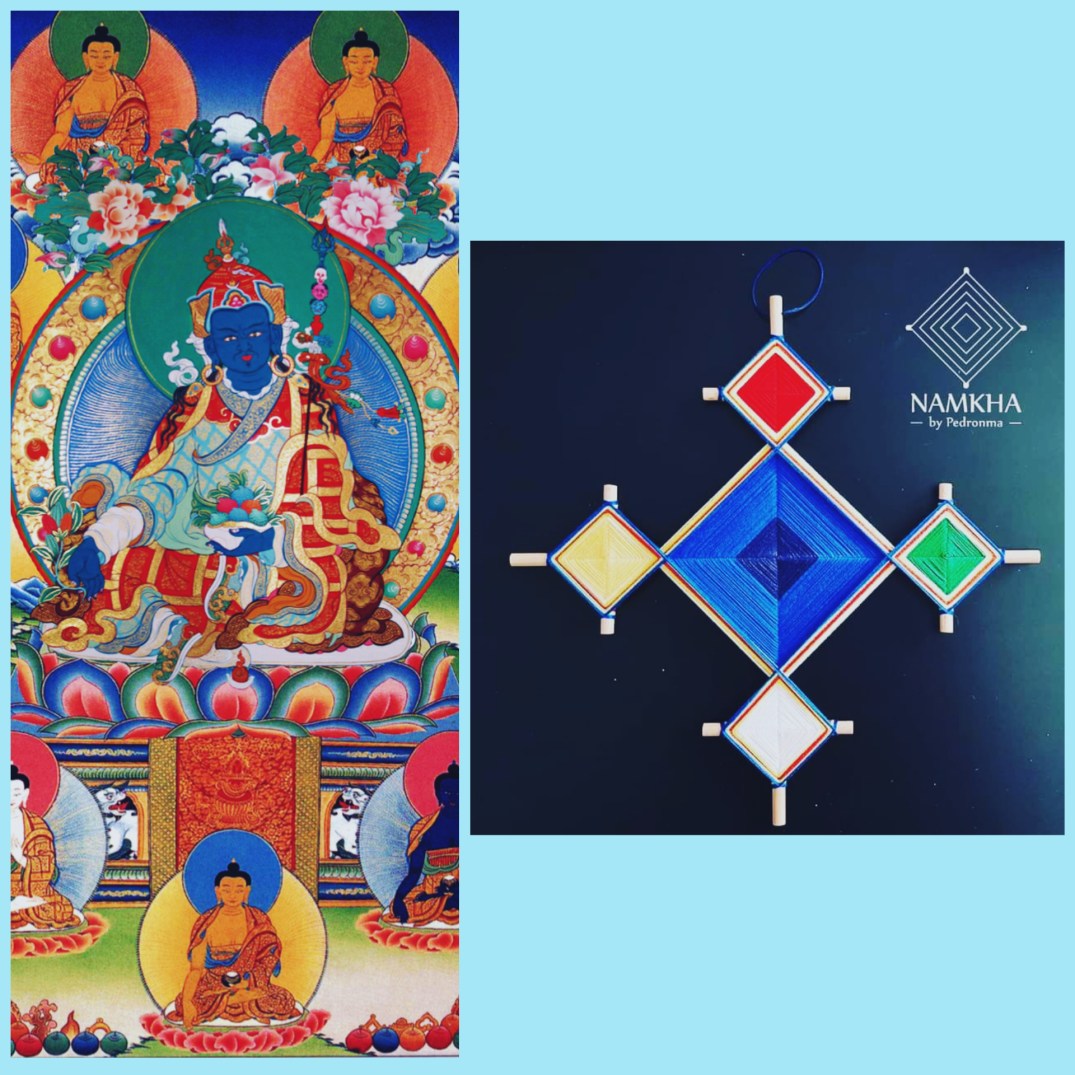
The Medicine Buddha Namkha is empowered by the Namkha ritual and imbued with the power of the Medicine Guru mantra.
The namkha is an endless knot, which serves as a support for the deities of the Five Elements and the Medicine Buddha blessings. The mantra’s healing power radiates from the namkha and blesses everyone who comes into contact with it.
Based on a personal consultation, I custom-design a namkha to tackle a particular disease, or make it connected to one particular person, for a more focused and powerful effect.
What owners have reported
I have distributed namkhas to nearly 30 countries around the world. Here are some insights from the feedback I have received.
Owners experience their namkha:
- as a healing and protection tool against an existing or potential disease
- easing physical and mental symptoms
- supporting the body’s natural healing power
- powerfully cleansing one’s karmic obscurations and clearing away obstacles, immediately and/or in long term
- working on all levels: physical, mental, and spiritual, wherever the source of the ailment resides.
Your namkha
If your namkha has been made as a result of your request, you are the cause of your namkha’s existence. Your mind has given birth to your namkha and so the two of you share a special bond. Many owners are very excited about the prospect of having their own personal namkha made and watch with delight as their namkha becomes manifest in my hands. When their namkha finally arrives, the moment of first physical contact is very powerful, like holding your baby in your arms for the first time.
Namkha’s power can be magnified in relation to how much you choose to interact with it. If you have a strong faith in its healing potential or use it as a meditation tool, while reciting the mantra, you can have a particularly transformative experience, as has often been reported.
But even if you doesn’t process blessing through emotions, don’t worry. Namkha works just by being present in the environment. That’s why it’s such a wonderful tool for bringing blessings to places and people who do not consider themselves particularly spiritual.
For Namkha to work, no active engagement is necessary. It easily benefits a distracted mind or people who don’t practice Dharma at all, children, those who suffer with a mental or physical disability, animals, or the elderly, just by having the namkha around. It can be displayed at a public place to bless anyone who comes into contact with it.
Namkha use is so versatile. You can find your own ways of using your namkha, especially if you practice massage or energy healing. I sweep it over my kids’ sleeping bodies, and put it on the body during healing sessions, for example.
Uses and benefits of Namkha are endless. Whether you display a Medicine Buddha mandala, carry a Mini-Namkha or wear the Pendant, the blessing will work for your benefit and the benefit of the world, just as Medicine Buddha intended.

Medicine Buddha protection amulet

Medicine Buddha Mandala
Medicine Buddha Mandala and mini-namkhas (center)
Parameters:
All my namkhas are made with 100% natural wood and cotton only. No glue or chemicals are used at any stage. Authentic method of construction and blessing (more info)
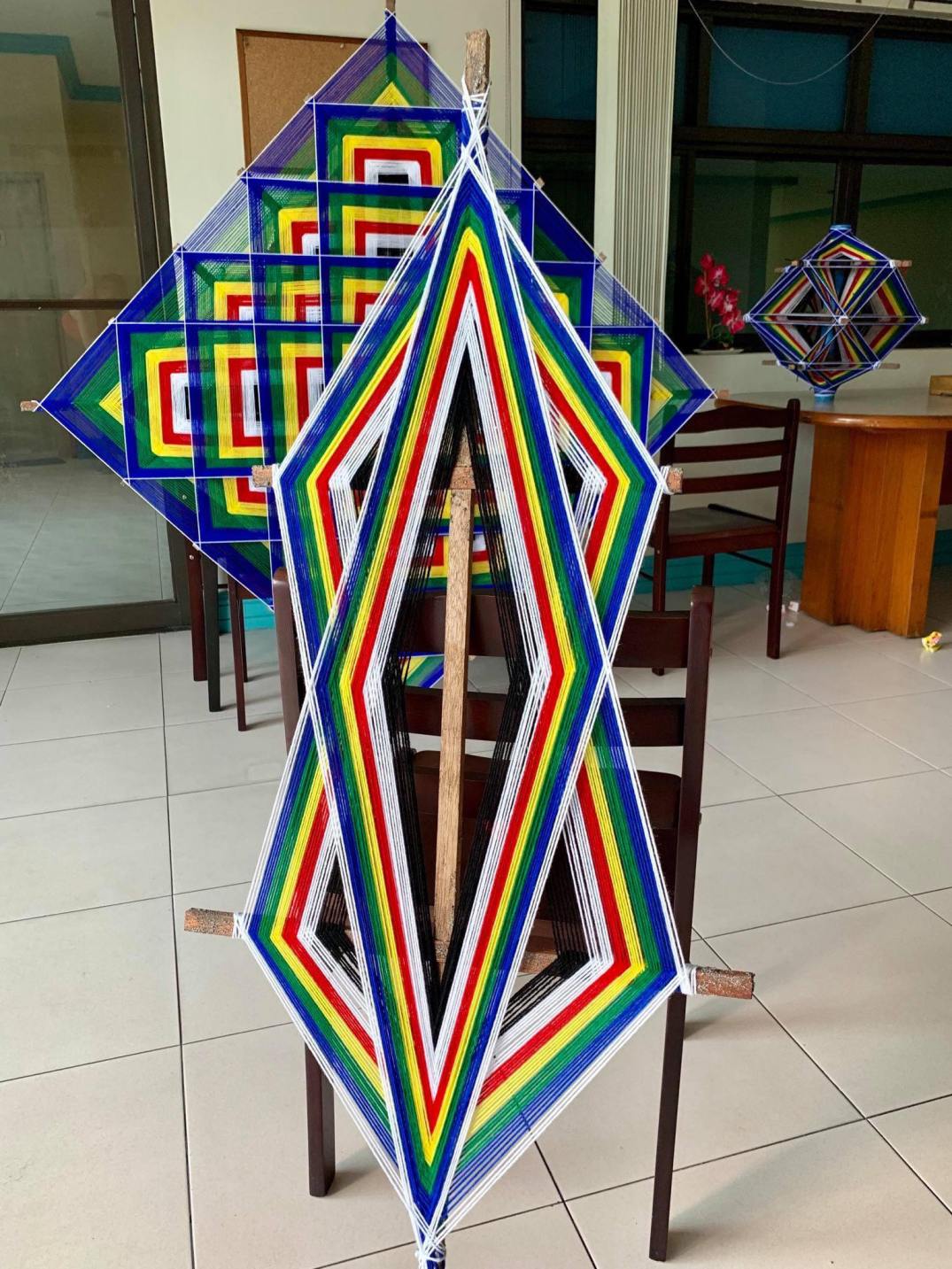
- Mandala makes a lovely display on the wall or your shrine. The mandala namkha represents the deity in the same way as a statue or painting. Roughly 10 inches across, it manifests the Medicine Buddha of Guru Rinpoche within His Mandala of the Five Buddhas. These Buddhas (represented as the central blue and one to each of the 4 cardinal directions) are energies of the mind that arise from basic space, “namkha” in Tibetan, which the object itself represents. This namkha is finished with an endless knot of 5 colours – 5 elements of wood, fire, earth, metal and water – in harmonized sequence. This is a way to harmonize discordant energies of the mind and the environment. Manifesting this namkha, then, represents the creation of perfectly harmonized, pure energies, and it serves as a support for the actual energies to manifest, here in particular the healing and purifying energy. To activate this power, the namkha is consecrated by the Namkha Rite and Medicine Buddha practice and mantra on 8th day of Tibetan calendar. During this ritual, the colorful threaded parts of the namkha become seats for the sacred energies to remain and function in the specific way assigned to them. A consecrated namkha is a sacred object, a cause for blessings to manifest on our relative level of existence. Therefore, it needs to be treated with due respect.
- Similarly, the smaller namkhas are imbued by the same power, but are made portable. A Mini-Namka is great for carrying around or to hang unassumingly. You can hang it in your office, pop it into your handbag or your kid’s school bag. It’s so versatile, and makes a great gift. It’s made of the same materials as the Mandala, the diameter is 6-8 cm, decorated with a tassel or a string of 3 wooden beads, if desired, as comes with a pouch to carry in.
- The Pendant is a variation on the Mini-Namkha, same material, a cotton string and 3 wooden beads for decoration.
Custom design is available upon consultation.

Medicine Buddha protection amulet
What is “Guru Rinpoche manifesting as Medicine Buddha”?

Medicine Buddha

Medicine Guru Rinpoche
I received the full Medicine Buddha empowerment by His Holiness the Dalai Lama in Sera monastery in southern India in 2009. The mantra has been a practice of mine for many years.
It is stated in the Tantras that during the degenerate times, the sutra mantras need to be recited more times in order to get the same effect as used to be necessary in the past. That’s why in 8th century, Guru Rinpoche spread tantric practices that were going to be more efficient in the future and hid them to be revealed at future times, when most needed.
These terma (hidden treasures) have more recently been revealed and taught by destined masters, some in the living memory. Since the 1980s, for example, Dudjom Rinpoche propagated in the West the revealed treasure Dudjom Tersar, which contains the practice of Orgyen Menla. I received this practice from Kamala Rinpoche, Dudjom’s disciple. Medicine Buddha Namkha is consecrated with this practice as a way to spread the blessings, especially at these times of a global pandemic, for which this practice was particularly intended. The namkha is a simple yet powerful way to bring the Orgyen Menla Medicine Buddha healing and protection to your home and environment.
The mantras
Manjusri, if you come across any person suffering illness, you should single-mindedly recite this mantra 108 times on his behalf. If the patient has a particular wish and single-mindedly recites this mantra, his wish will be fulfilled. He will be free of disease, enjoy longer life and, at death, be born in the Medicine Buddha’s paradise. He will then not fall back, but eventually realize Supreme Enlightenment.“
∼The Buddha’s words in the Medicine Buddha Sutra
Tathagata of the Lapis Lazuli Light (the Healing Buddha) mantra:
oṃ bhaiśajye bhaiśajye mahābhaiśajye bhaiśajyarāje samudgate svāhā
Orgyen Menla (Guru Rinpoche Medicine Buddha) mantra:
OM BHEKANDZE BHEKANDZE MAHA BHEKANDZE BHEKANDZE RADZA SAMUDGATE SOHA
Get in touch
If you feel drawn to the namkhas or are thinking of someone who might need them, don’t hesitate to contact me for more information or a consultation.
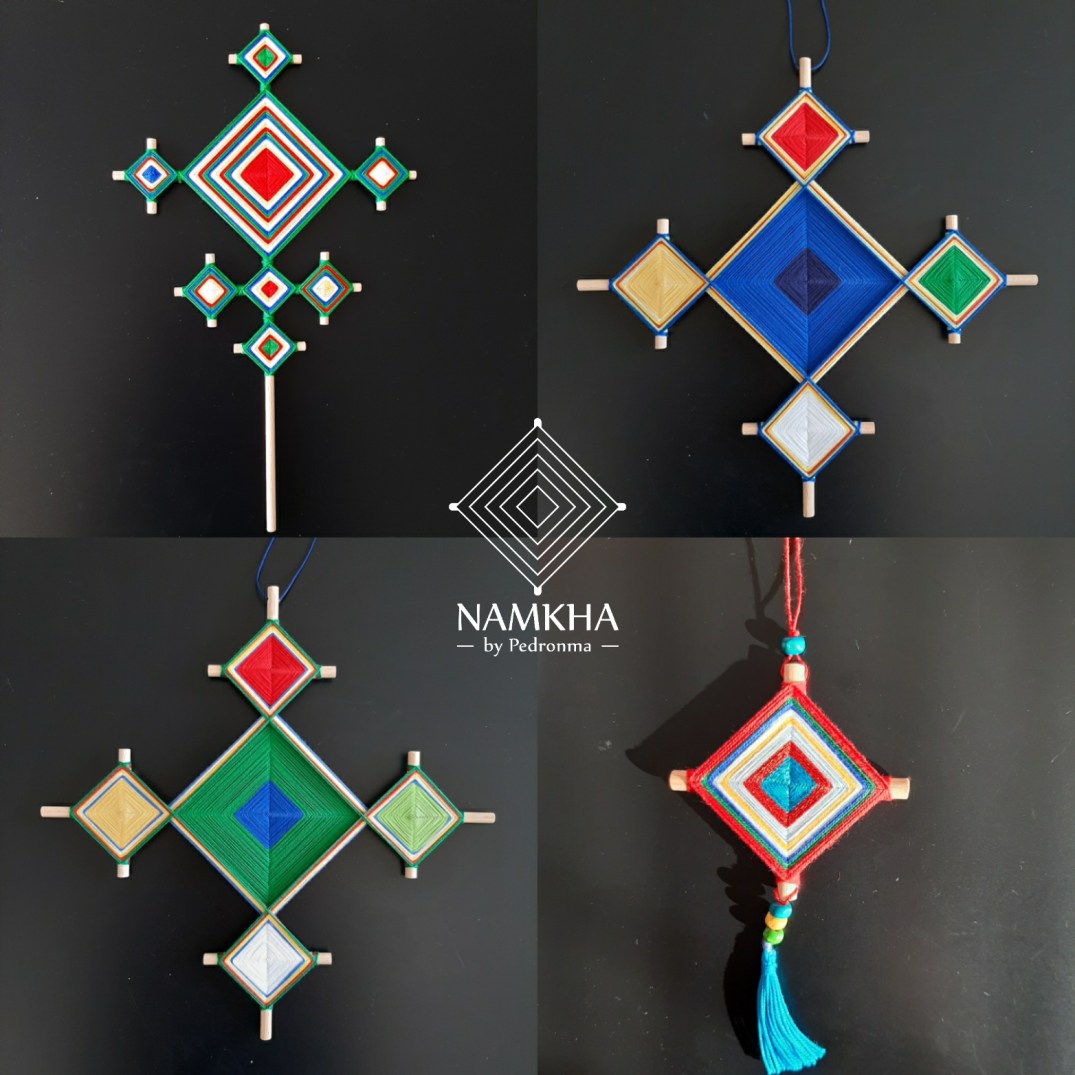
Other namkhas: Tara and personilized protection and activity custom-made namkha (right), available upon consultation. Enquire here
Links ->
General information about Namkha and the different types I make
How to care for your namkha
Home page
Contact









 NAMKHA