
Namkha is a practice in both Tibetan Buddhism and Bön. Originally, Namkha was a religious tradition practised in Bön, but with the advent of Buddhism, Namkha was incorporated into Tibetan Buddhism.
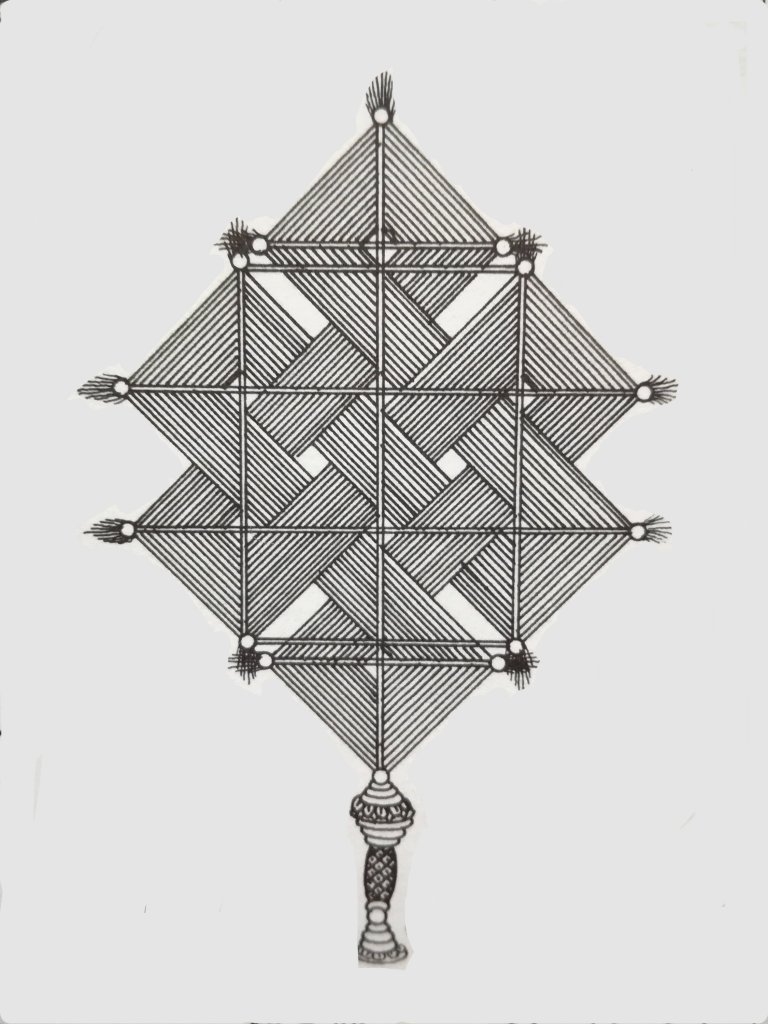
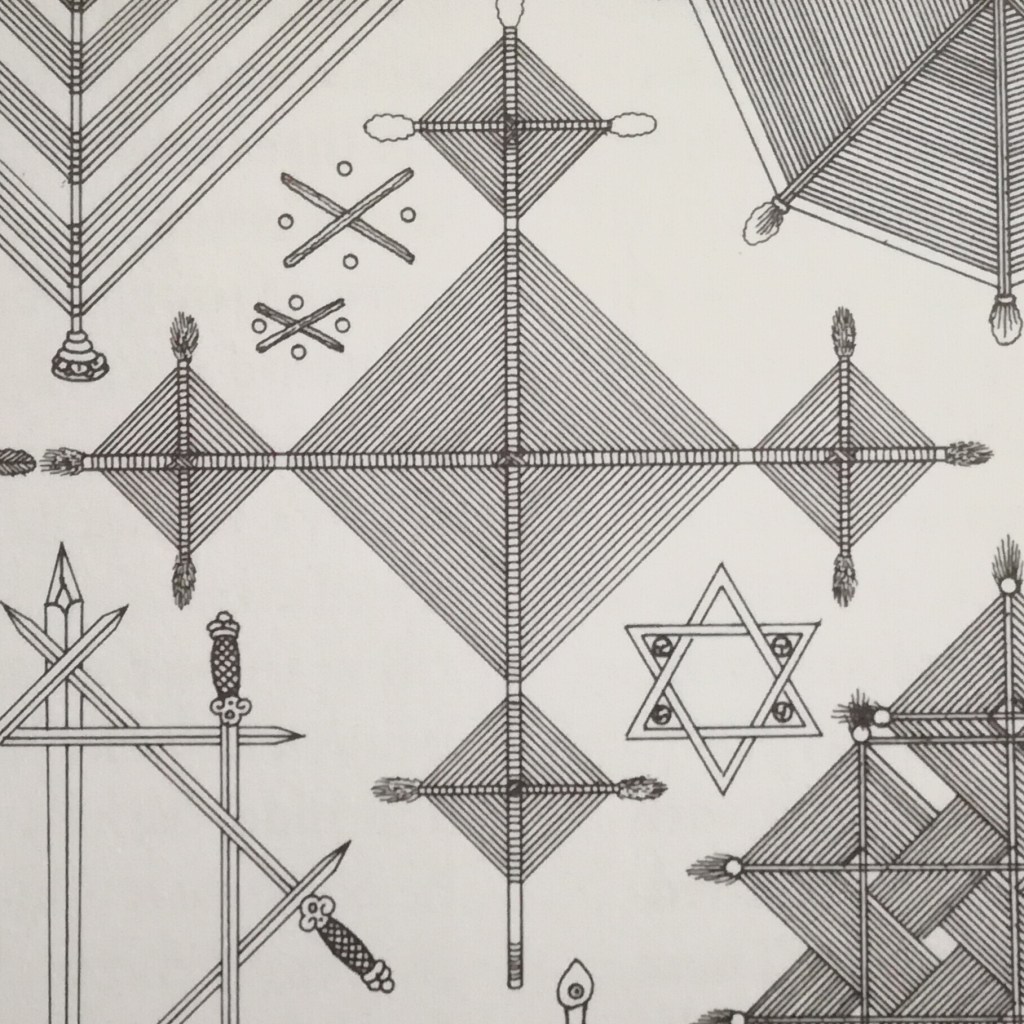
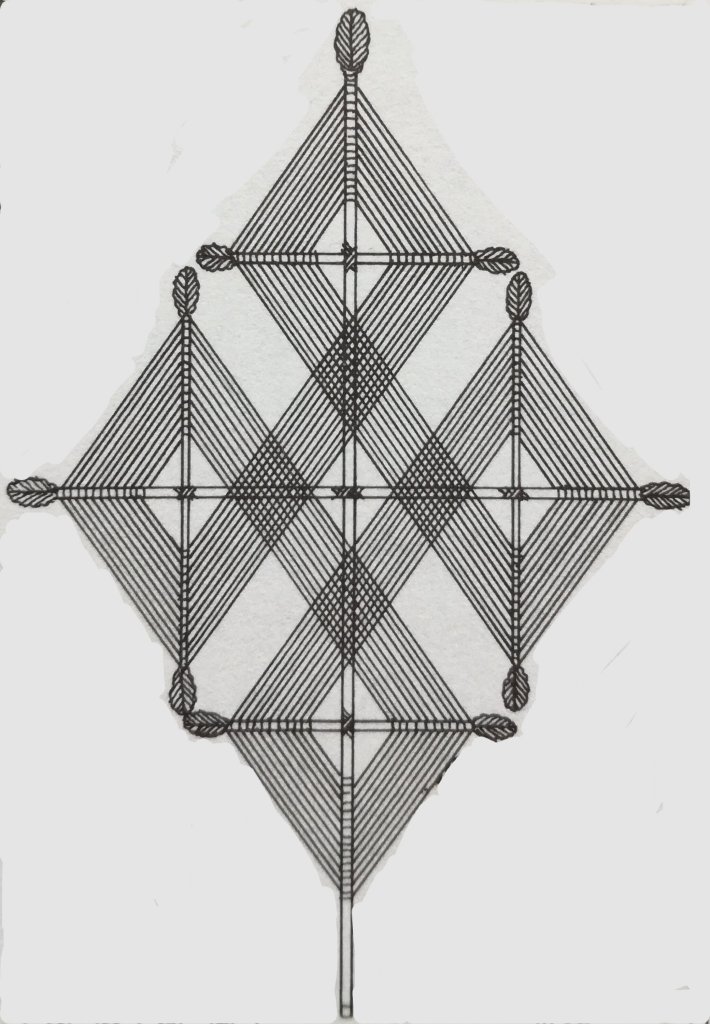
The Namkha of Tibet – history
The symbolic object of colourful threads woven on sticks existed in ancient cultures around the world.

The practice of Namkha was well-known in the ancient kingdom of Shang Shung and Tibet. Shamans were experts in the knowledge of the condition of the energy of the external and internal elements. They would examine the condition of a person’s elemental energy, the relationship between these elements and the energies of the elements of the external environment, as well as what possible positive or negative influences could arise from the relationship between these two. They would then use a method, such as Namkha, to harmonized those. The properly costructed thread-cross would then be consecrated with mantras and rituals that have power over the energy of the elements or that are closely linked to it, so that could directly transform the energies related to the elements, and to concretely produce the results desired.
The knowledge of these is attested by ancient historical documents. Among Bönpos and Tibetan Buddhists, many aspects of this ancient culture continue to this day without deterioration, as demonstrated by the fact that these practices are still performed. Since Bönpos and Buddhists in Tibet later continued to consider Namkhas to be necessary objects in ransom rites such as Dö, these objects have become indispensable in those contexts. As a consequence, the method of their construction has been handed down intact, and they have in fact been used in many Lüd and Dö ransom rites.
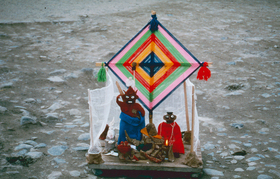
Dö discarded in the wild as a ransom for harm-causing spirits. Source 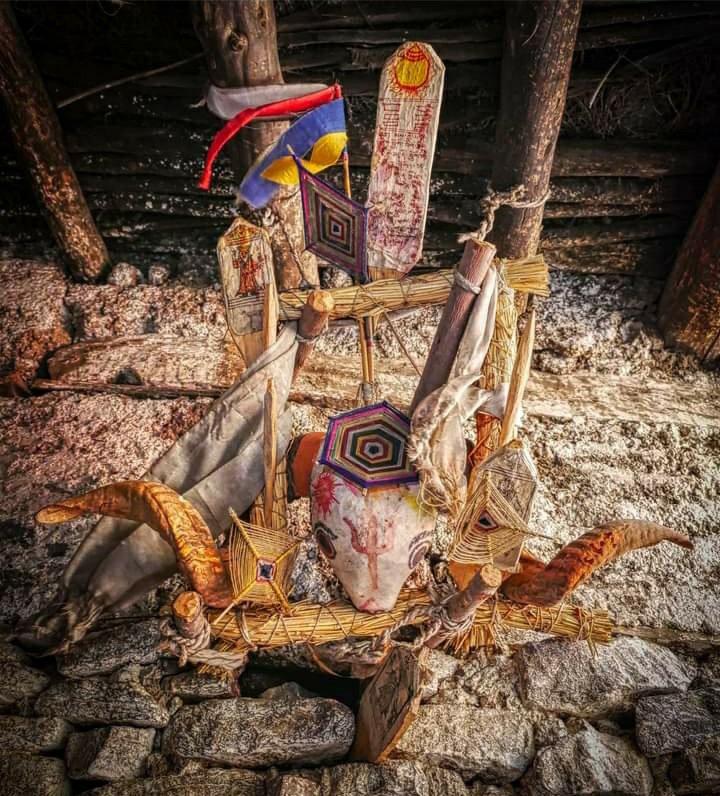

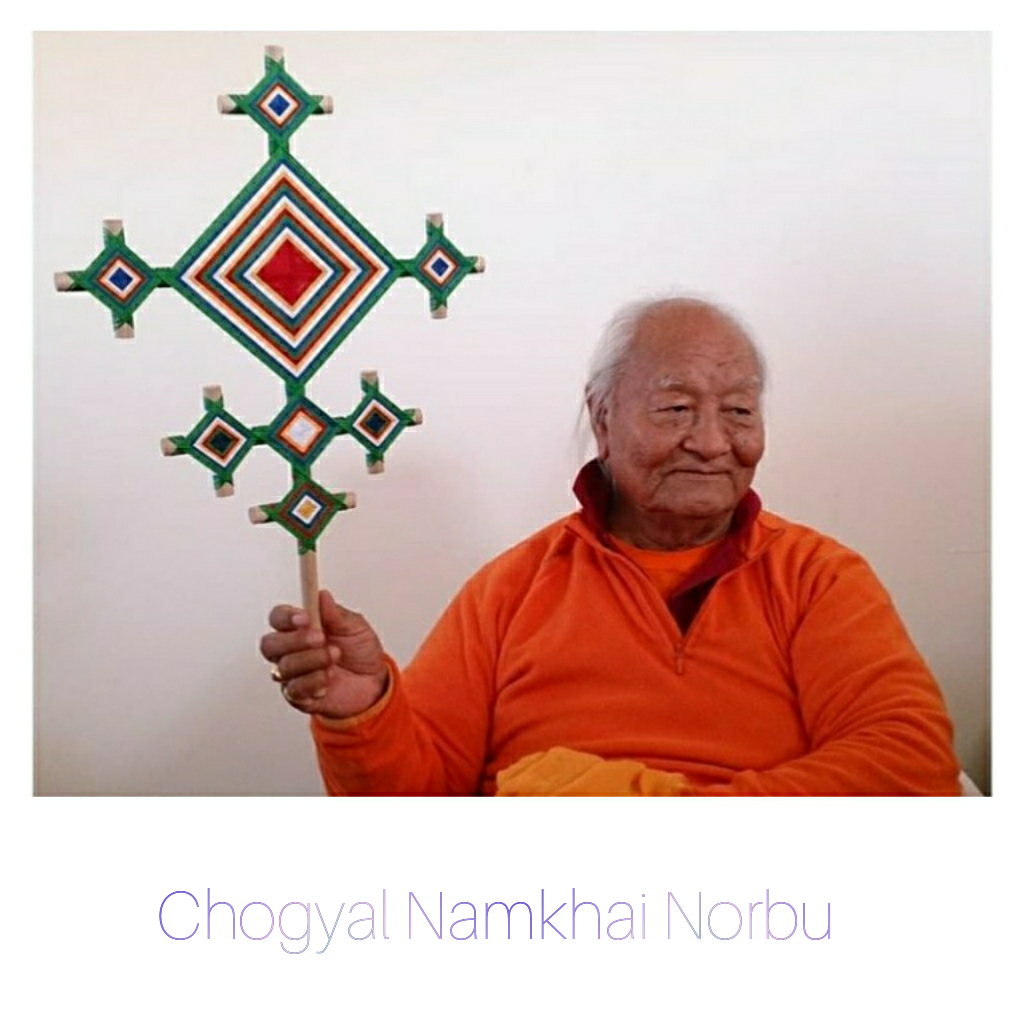
The knowledge of how Namkha harmonizes an individual’s energies of the five elements appears to have been lost in the course of time. To date, no traditional text has been found that explains the principle and practical application of this harmonization. In 1983, Chögyal Namkhai Norbu retrieved a terma from his dream state that laid out the method and way of consecrating a Harmonizing Namkha. He then taught it to his disciples. I have been making authentic Harmonizing Namkha according to his instructions since I received the transmission from him in 2016. You can Learn more in detail about this namkha.
In my research, I use information from the teachings of Namkhai Norbu Rinpoche and other scarce publications as well as interviews with Lamas and locals familiar with folk traditions.
Namkha Today: My Research so far (January 2022)
Namkha in Tibetan Buddhism
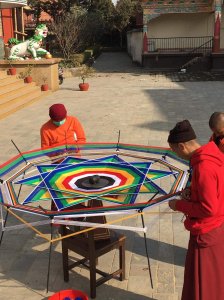
1. Buddhist Monastery. Information on Namkha is hard to come by, mainly as it is considered a fringe practice in Tibetan Buddhist monasteries. Institutionalized monks are generally not familiar with the history of Namkha as laid out above. Although they are meant to be the keepers of Buddhism, monasteries are educational institutions first and foremost. Rituals are institutionalized and limited to outer form, it seems. As a ritual practice, Namkha is likely to be practiced by yogis (ngakpa) out in the country, largely out of sight. Monks do occasionally perform Dö ransom rites, when instructed by divination. As part of Lüd during the yearly Gutor / Losar time, huge constructions are consecrated and burnt on the pyre as ransom to clear away obstacles.
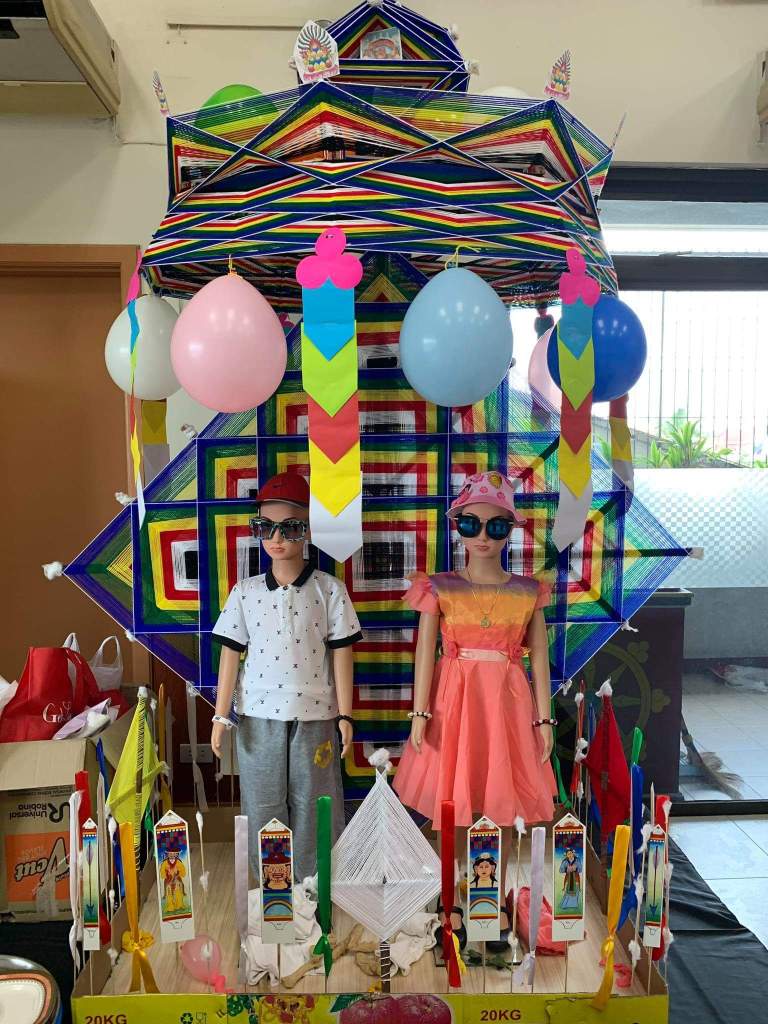
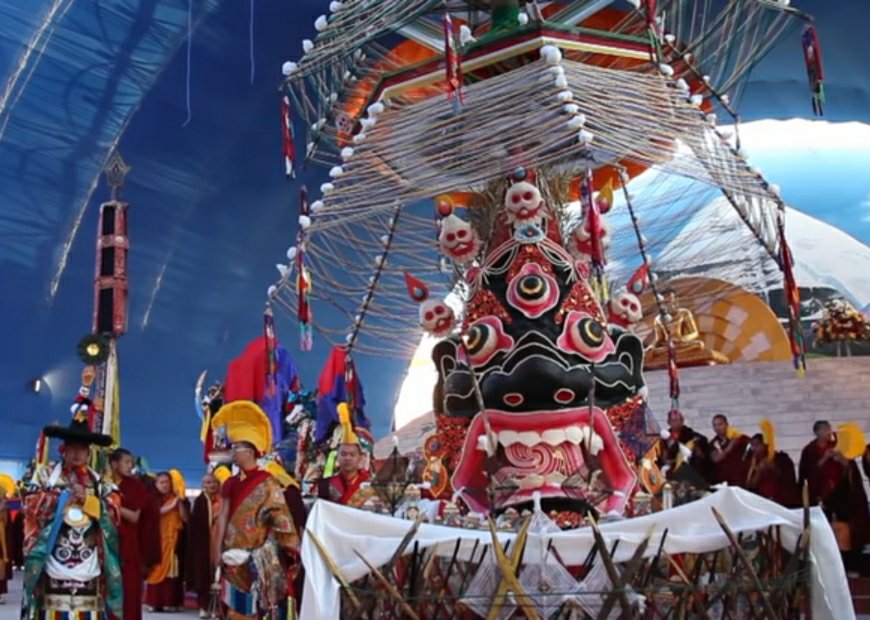
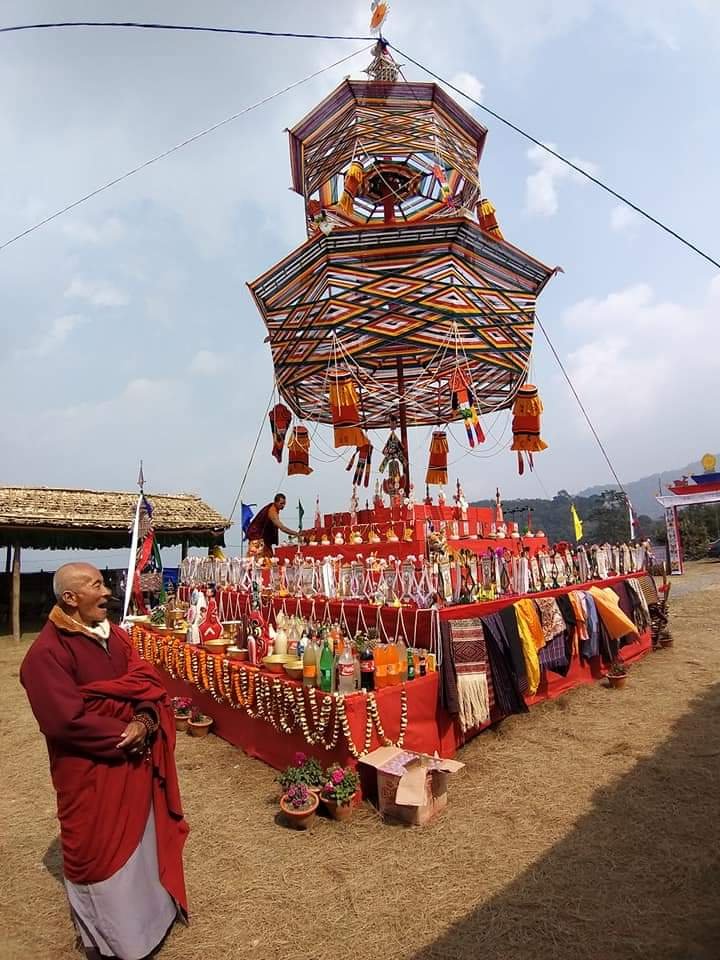
I am told by Dolpo Tulku Rinpoche from the Namdroling monastery that Namkha can be constructed as a solution to someone’s life crisis or health issues on the advice of a Lama or an Astrologer, who has done a mo (divination) that deems this appropriate. A thread-cross is constructed as part of a display called dö (mdos), which serves as a complex ransom offering to harmful spirits. The namkha-type structure represents the inflicted person’s life force. Together with torma and other symbolic offerings, the complete dö is offered to the spirits believed to be causing the harm. Having been empowered by a tantric ritual, the set-up is a symbolic representation of the person, which is offered as ransome to the evil spirit to release the actual person from its grasp. It is very elaborately constructed and empowered and then left in the wild, considered accepted by the harmful entity.
Rinpoche says that as these dö are often seen discarded in the wild, a regular Tibetan would regard a namkha as something to throw away rather than to keep as a sacred object. However, dö is just one of the ways namkha is traditionally used. But I have also heard that the older Tibetan generation still have an awareness of Namkha as an object kept for good fortune and protection.
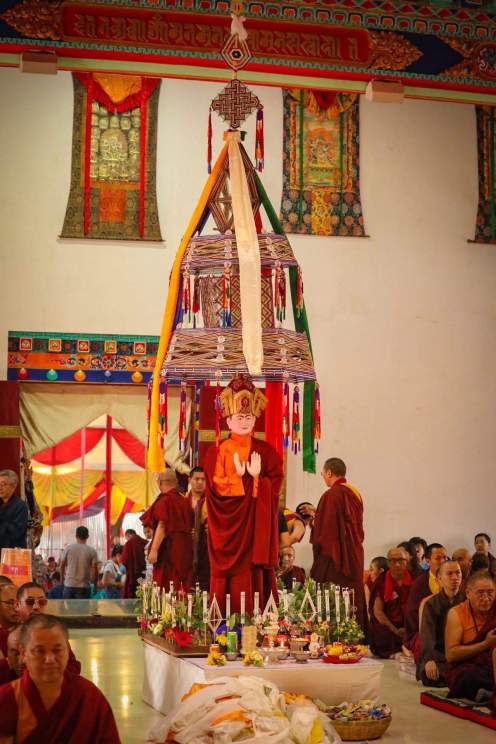
Read more about Namkha at Shechen >>>
2. Aro Ter. A Tibetan Buddhist tradition that regards Namkha as a practical method for improving the conditions of everyday life.
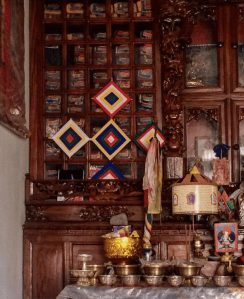
“Sky weaving is a way of harmonising the energy of our emotional personalities. Through the ancient practice of winding a woven matrix of threads, empowered through awareness-spell, we can subtly shift our experience of being in ways that profoundly alter our everyday experience”, says a holder of the Aro lineage, Khandro Dechen.
3. Harmonizing Namkha of the birth year. The Buddhist teacher Chogyal Namkhai Norbu has in recent decades revived the long-lost ancient practice of Namkha as a way to harmonize the Five Elements, related to Tibetan Astrology. A namkha, constructed according to a complex method and empowered by the consecration ritual, serves as a method to harmonize conflicts between the elements astrological pattern. This practice joins together the systems of Tibetan Astrology and the Five Elements, the Buddhist mantra, meditation, and tantric ritual into one powerful sacred object that functions as a personal amulet.
Namkhai Norbu received the guidance on construction and consecration of the Namkha from a deity in a dream. He then authorised his sangha, the Dzogchen Community, to practice Namkha, by transmission and teachings laid out in 2 books. Only persons with transmission are allowed to study those teachings and practice, which makes this method very niche, especially since the possibility of getting the transmission has been restricted with Rinpoche’s passing a few years ago. It would seem that despite all the effort to pass this unique sacred method down to us, its availability remains extremely rare.
As an authentic and dedicated Namkha practitioner, I have come to realize the potential of this practice to help harmonize and heal our increasingly chaotic world. I make Namkha accessible even beyond the circle of Dzogchen Community. Anyone sincere about Namkha is welcomed to approach me with their request for a commission. Find out about My work.
4. Mongolia. I am aware of an existant thread-cross tradition in Mongolia, which is a subject of my ongoing research.
Namkha in Bön
Wide, practical uses for Namkha seem to be popular in the Bön tradition even today. They are constructed as representations of sacred objects and to have a particular function.
Huge importance is given to Namkha in Menri Monastery. Its mseum houses a magnificent Namkha collection.
I met Geshe Sherab Phuntsok from Menri Monastery, who introduced me to the Bön approach to Namkha, and taught me how to construct the representation of the main Bon deity, Sidpe Gyalmo, authorizing me to consecrate it. Geshe’s vision was to construct the huge namkha for world peace to tour Europe. We planned his Prague stop together. Tragically, Geshe passed away of covid-19 in May 2021, aged 43.

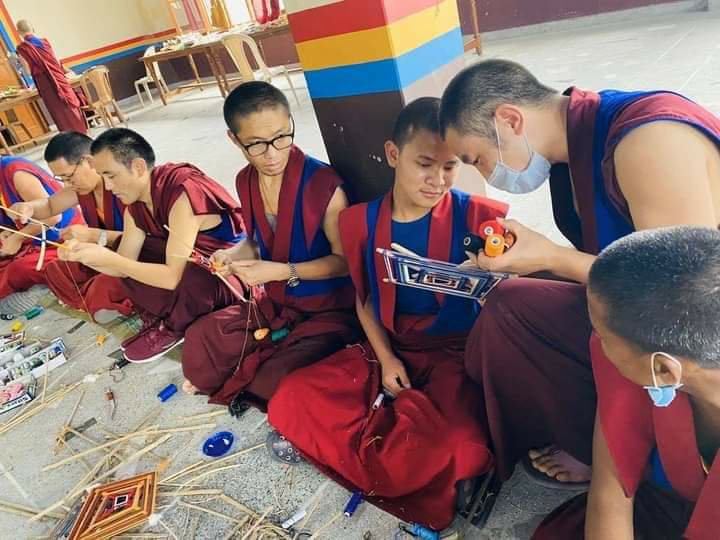
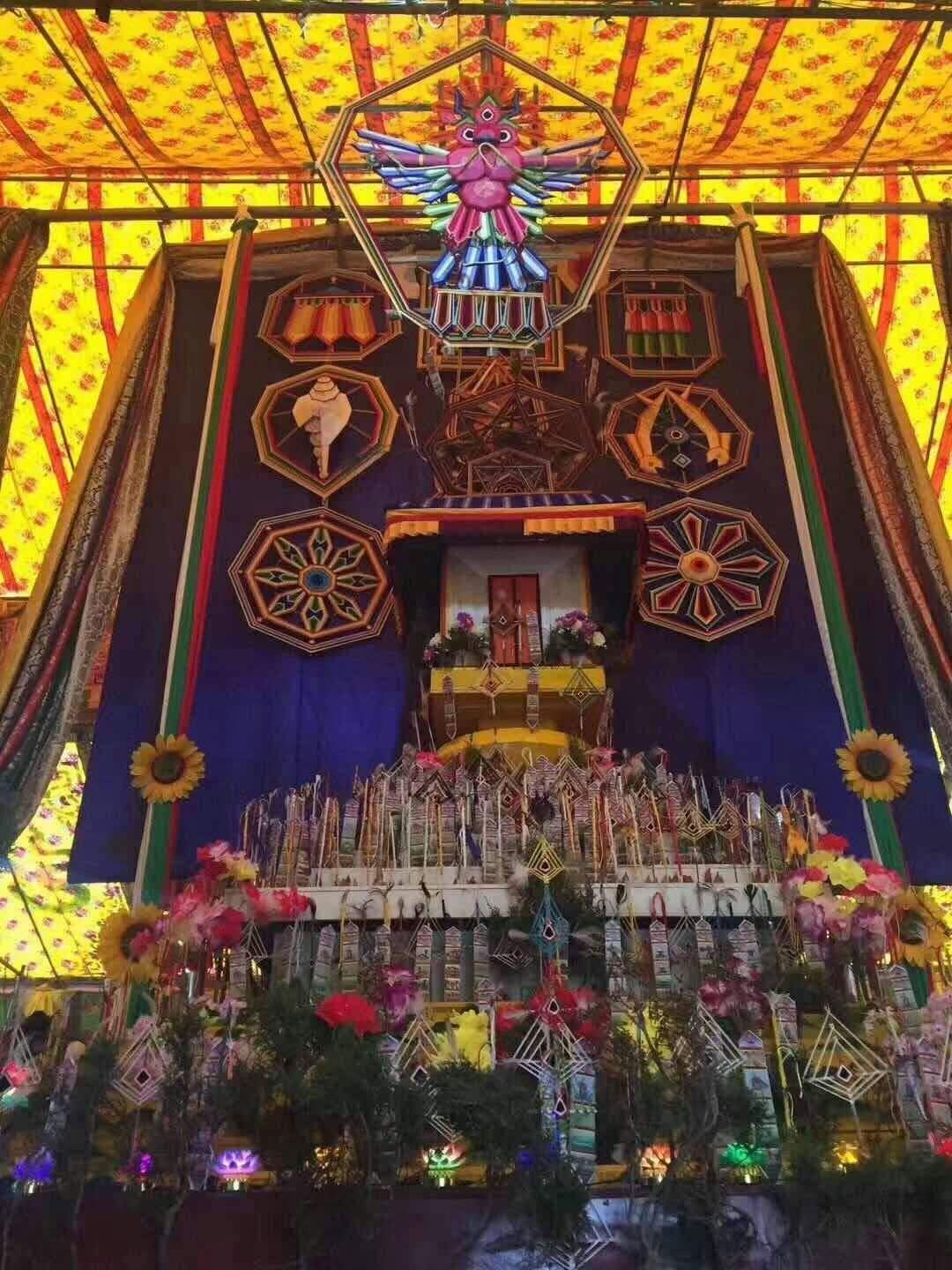
In the Bön tradition, namkha has many practical uses and functions, though they are not used as often as other means.
Commonly, namkhas are used as torma – ritual offerings for deities and spirits.
Complex namkhas can be constructed in place of statues and stupas.
Namkha may be constructed as a support for meditation and intention in one’s practice. They can represent a deity, a protector, each of the Five Elements, the Lungta etc. The uses in the Bön tradition seem to be limitless. I love the way namkha can be used with a particular function in mind.
There are namkhas for every aspect of ritual practice. Types of namkha include namkhas for the Five Elements, Lungta, etc.
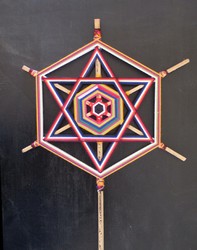
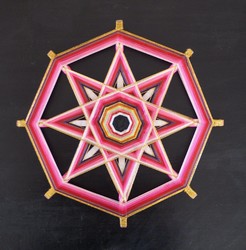
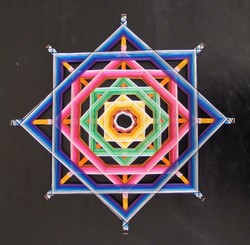
Some pics of Bön namkhas (Source)
Nepalese folk tradition
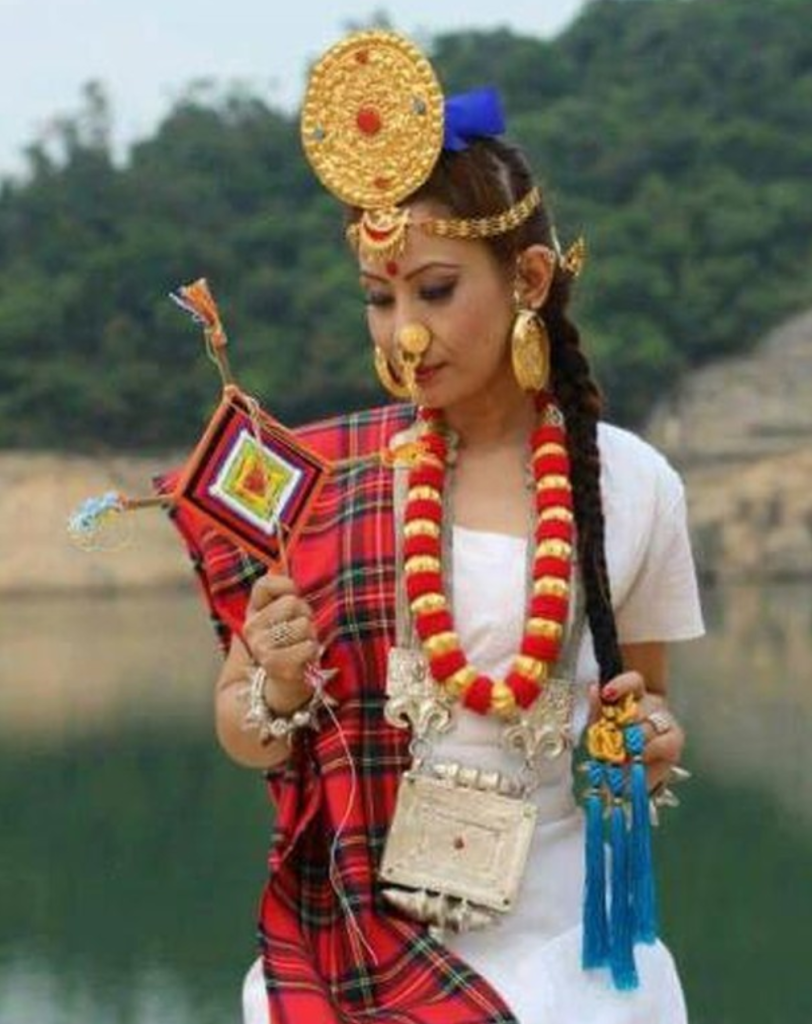
The Yakthung (or Rau or Limbu) people of the Kirat region in Nepal have a particular folk tradition of making a thread cross called Silamsakma.
A Yakthungpa has told me:
We have been making Silamsakma for ages, as part of Bon rituals. We also wear it as a badge, as we believe it protects us from negativity, evil spirits. Anybody in our tribe makes it. The colours represent nature and its elements, as we worship nature. There can be 7, 8, or 9 shades. Silamsikma that we make for deity is made of only five colours: red, yellow, green, white, and blue.
In popular culture
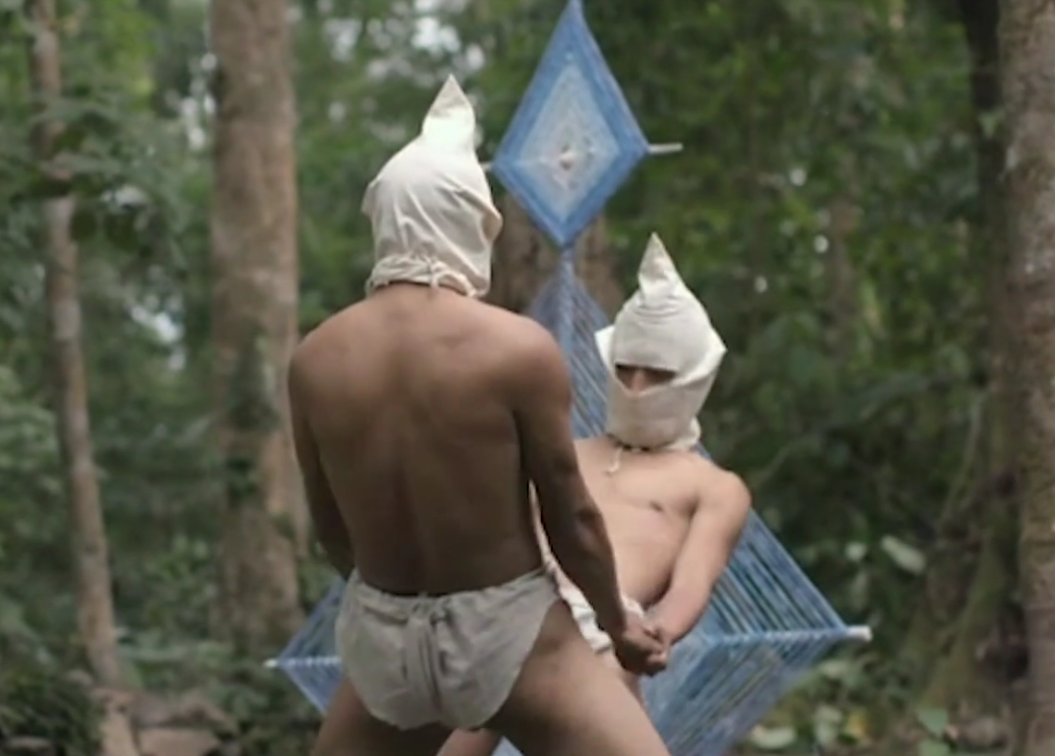
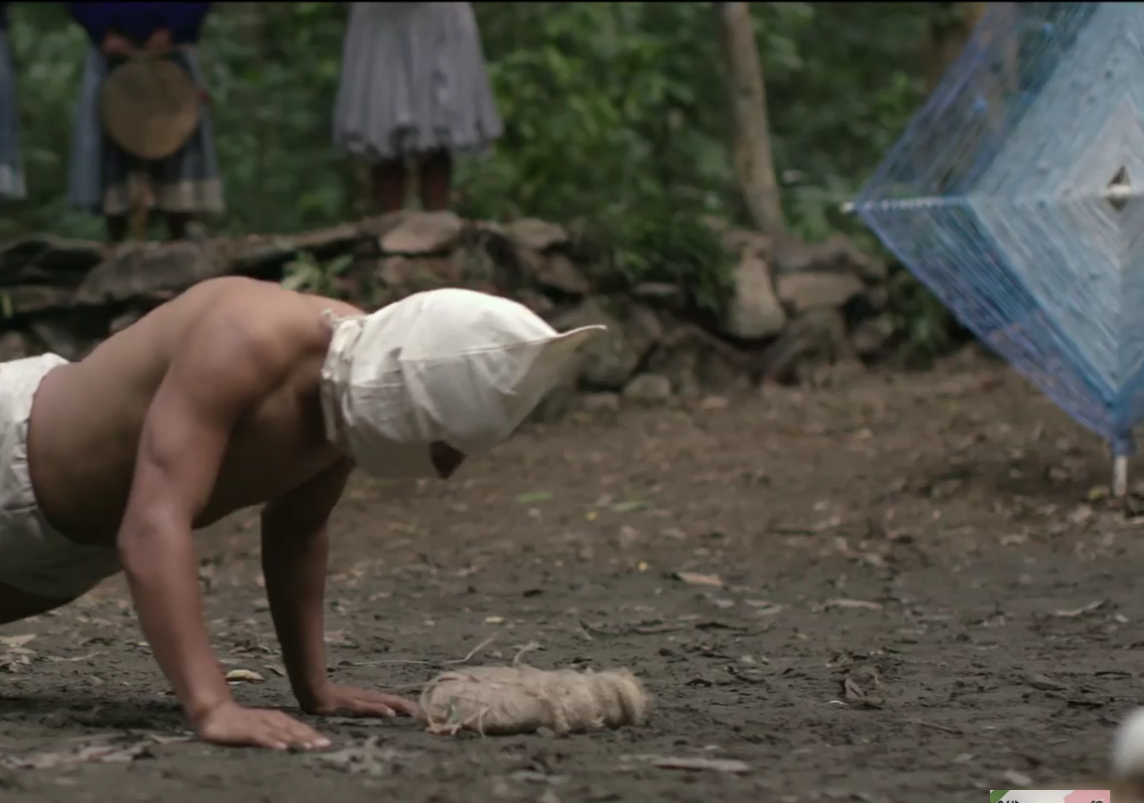
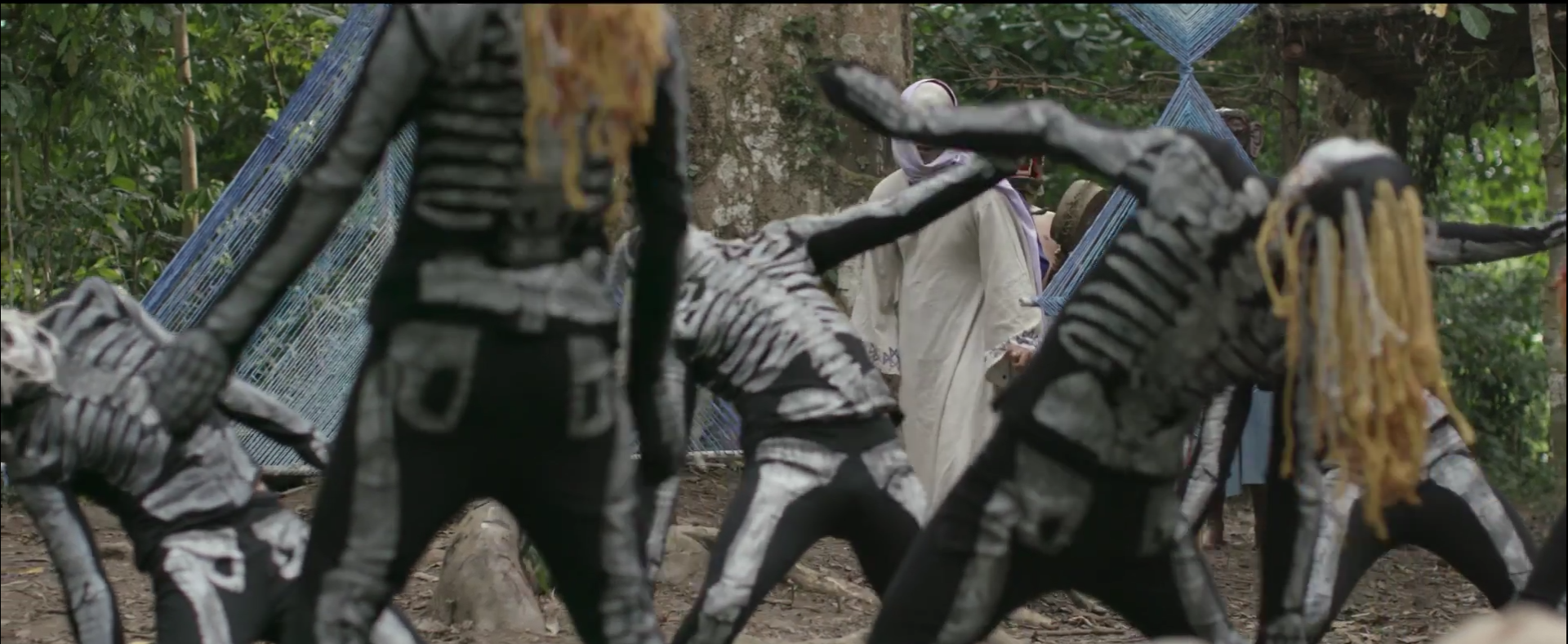
In his film, Hema Hema, Dzongsar Jamyang Khyentse Rinpoche uses large namkha structures as props.

My research is on-going. Do you have any interesting information or picture of a namkha? Contact me!
I travel to research and learn Namkha methods. Support me by having a namkha made or make a donation. Thank you!
NEWS
I am now accepting commissions. Please contact me for more information.
Special: Namkha to balance Water Rabbit year 2023. Commission now
Find detailed information about all My Work.
 NAMKHA