
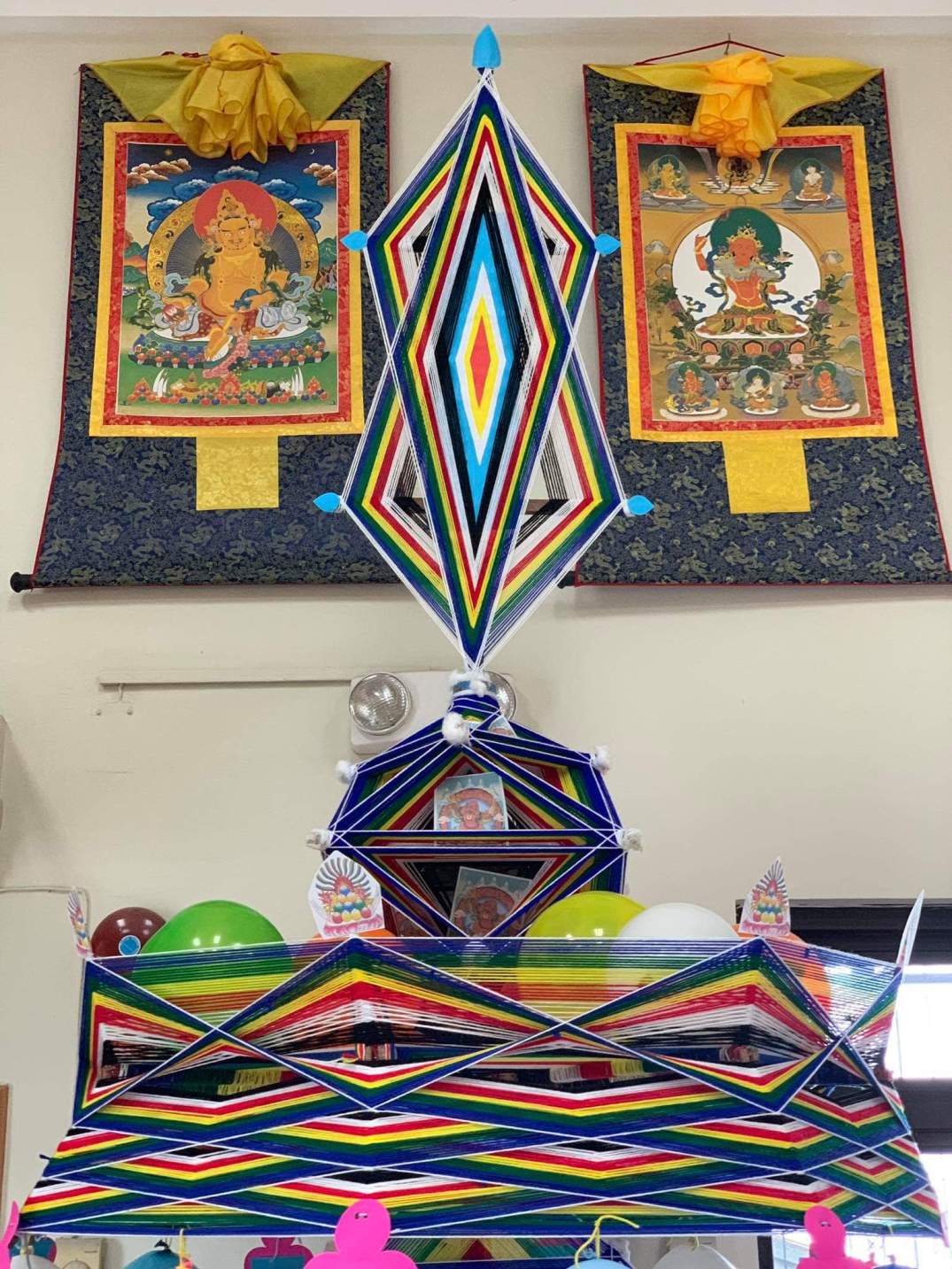
In the past few days, Tibetan Buddhist monks have been busy creating a huge namkha as part of the Tibetan New Year rituals.
Losar time, 29th day of 12th Tibetan month


Gutor is an important event that closely precedes Losar, the Tibetan New Year. I witnessed this ritual twice in Namdroling. The monks work for several days preparing for this elaborate ritual. Some prepare tormas, some practice lama dances and others prepare the namkha. The offering items are arranged in the temple and empowered by chanting and visualization practice by hundreds of monks lined up sitting in the temple. Two days before Losar, the main item, gegtor, a huge torma made of flour, is ceremoniously taken out of the temple and ushered by the monks to a nearby field outside the monastery wall. (See more photos of this on my other blog here). There, the ceremony continues with more chanting and lama dances. In the end, the offerings are thrown away or burnt. The energies of the old year thus considered cleaned away and the spirits appeased, the Losar festivities are free to begin.
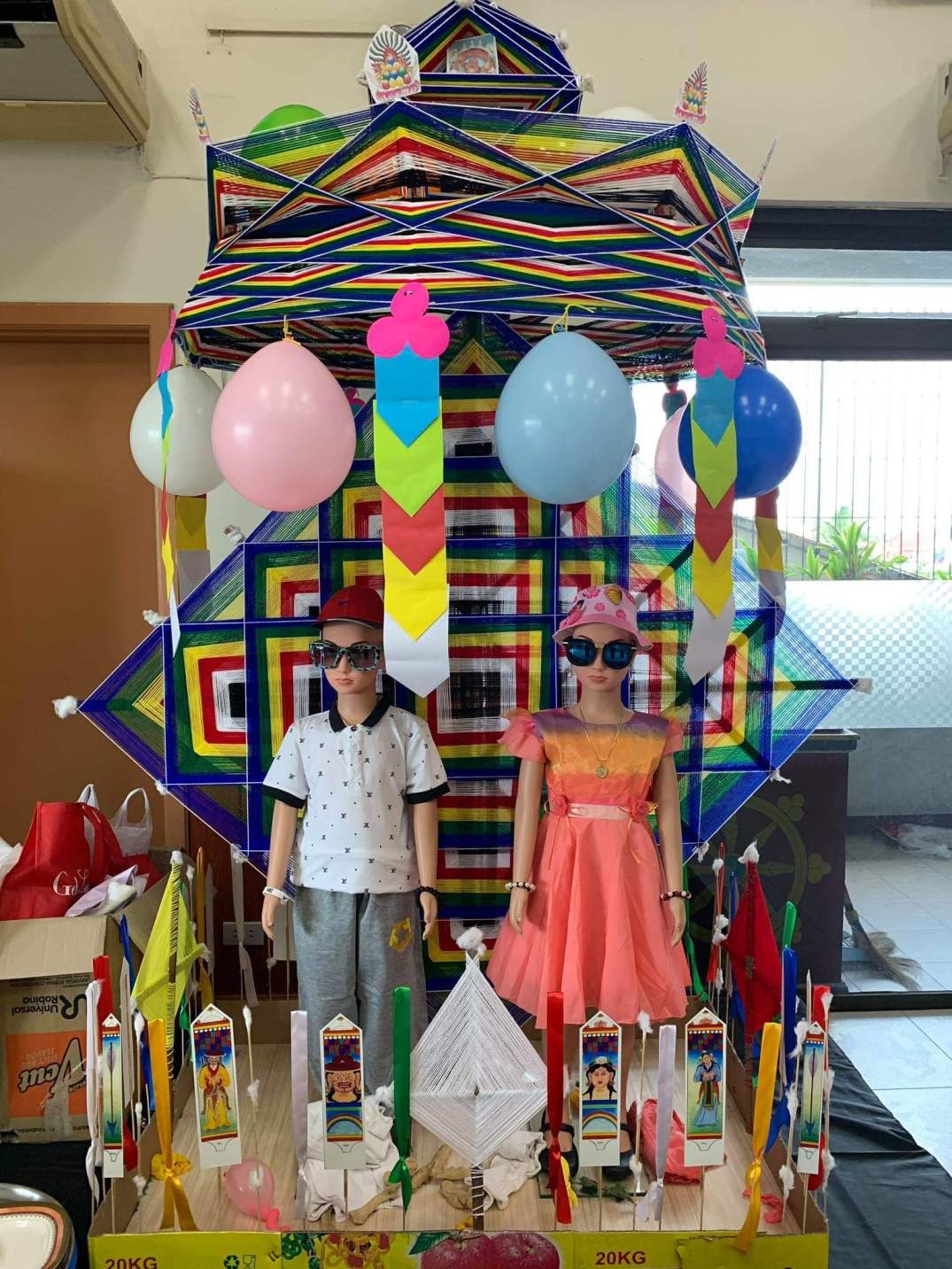
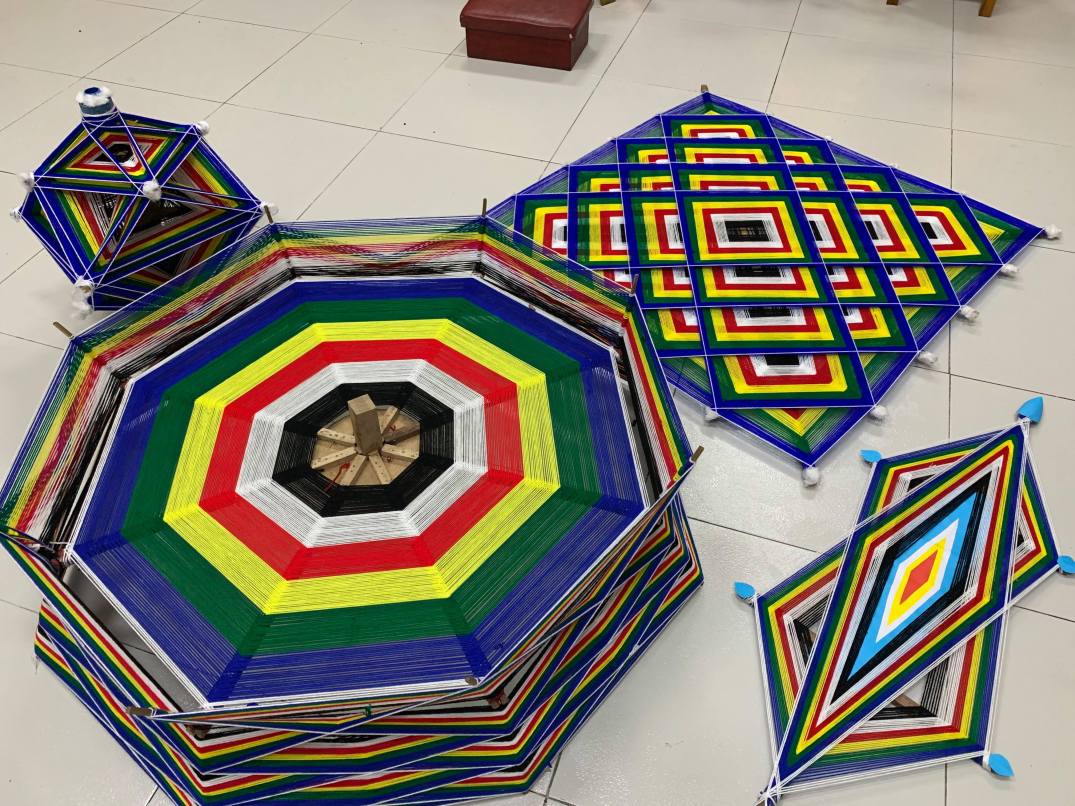
Namkha are thread cross constructions made with coloured strings. They are part of a display called dö [mdos], which includes namkha and other symbolic representations.
Gutor has been the same every year for centuries. Like any Tibetan Buddhist practice, it closely follows a prescribed step-by-step procedure written in ancient Buddhist texts called terma and no deviation is favoured. Creativity is bound by the sacred limits of the revered scriptures. The procedure for constructing of the “gutor” namkha, for example, is described in the Ratna Lingpa terma and is part of the Lü (Naga) offering ritual. The Lü are important beings to be on good terms with.
The namkha is constructed specifically as an offering to the Lü for prosperity and fortune in the coming New Year.


The shapes, colour-sequences and the whole procedure follow the description in the treasure text of Ratna Lingpa from 14th century.
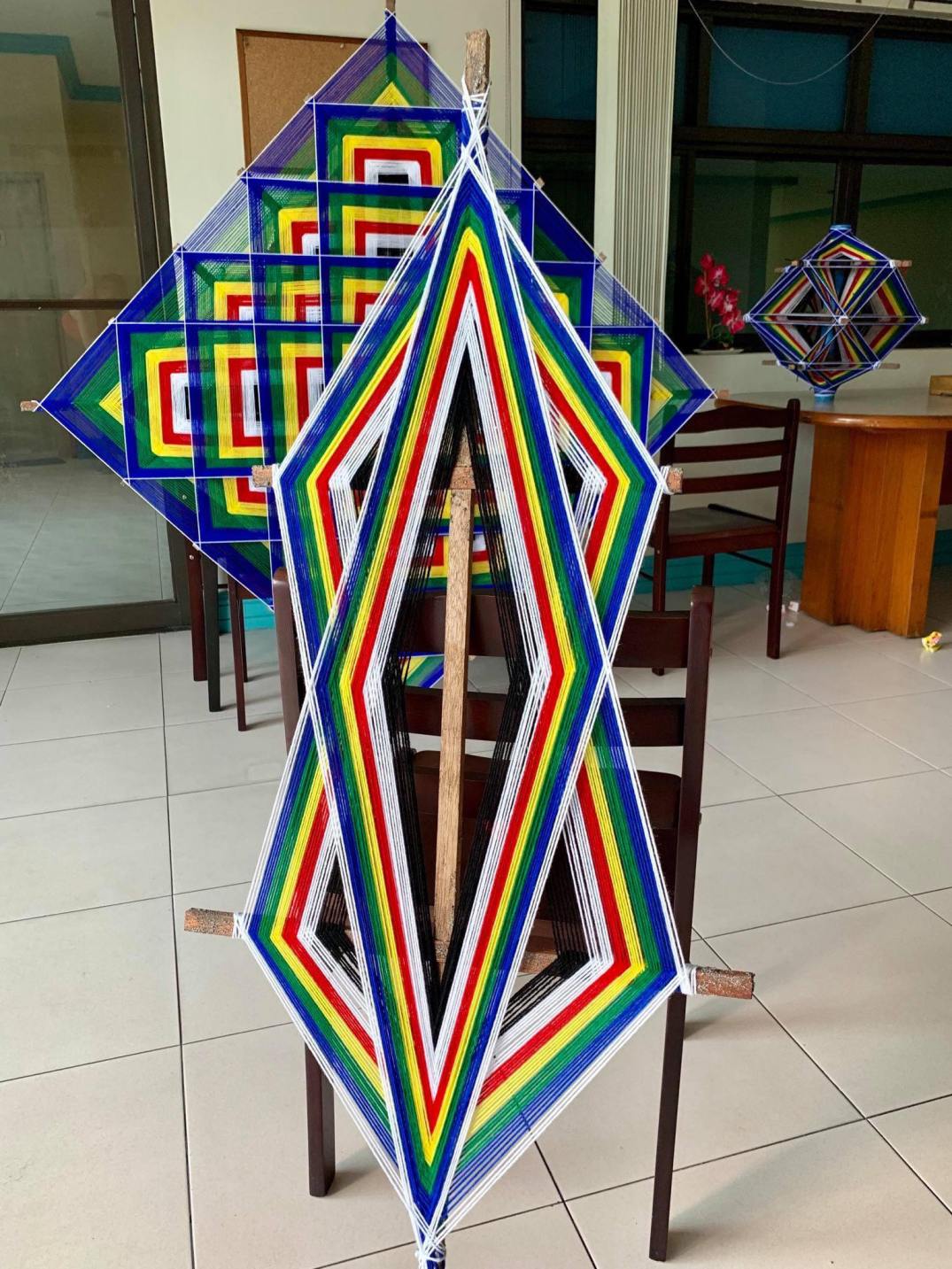
This is a fine example of a namkha thread cross of the Tibetan Buddhist tradition, and we are fortunate to be able to see these rare photos courtesy to my dear friend, Lama Tsultrim Palyul of Namdroling monastery, who supervised the construction of this particular namkha at the Palyul Centre in the Phillipines for Gutor this year (2019). The photos are used with his kind permission.


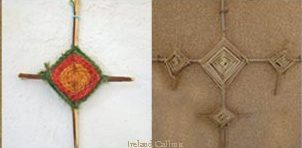


 NAMKHA